存储芯片

Search documents
宏观策略周论-市场-跌到位了-么
2026-04-01 09:59
Summary of Key Points from Conference Call Records Industry Overview - The macroeconomic environment is influenced by geopolitical tensions, particularly in the Strait of Hormuz, affecting oil supply and global demand dynamics [1][2][3] - The semiconductor industry is entering an AI-driven structural supercycle, with a shift in core bottlenecks from mature processes to advanced processes and cleanroom space [1][19] Core Insights and Arguments Geopolitical and Economic Impacts - April is a critical month for assessing the geopolitical situation, with expectations that if conflicts persist, oil prices may remain above $100, leading to insufficient pricing in equity markets, including US and Chinese stocks [2][4] - The market has already priced in pessimistic expectations for US Treasuries, gold, and copper, while equity markets have not fully reflected these concerns, indicating potential for an 8%-10% downward adjustment [4][8] Asset Pricing and Investment Strategies - Current market conditions suggest a need for strategic asset allocation based on the pricing of different assets. Bonds and gold are seen as having good left-side configuration value, while equities may face downward pressure if geopolitical tensions escalate [5][6][10] - The expectation of a delayed interest rate cut by the Federal Reserve until late 2027 reflects a pessimistic outlook, which is not fully mirrored in equity valuations [4][10] Semiconductor Market Dynamics - The semiconductor market is experiencing a shift in demand driven by AI, with a focus on advanced packaging and cleanroom space becoming critical bottlenecks [1][19][24] - The supply-demand balance for memory chips remains tight, with a transition from "quantity over price" to strong contractual obligations, leading to price increases of 15%-20% per generation for advanced packaging equipment [1][20] Additional Important Insights - Central banks' gold purchasing behavior is constrained by foreign reserve limits, with some countries beginning to reduce their gold holdings, indicating a potential decline in future gold demand [11][12] - The current liquidity crisis in global assets reflects a "mini version" of past financial crises, with significant challenges for non-US institutions in obtaining dollars [1][16] - The semiconductor industry's capital expenditure is shifting towards targeted investments in AI-related production lines, with a focus on supply chain security [19][24] Conclusion - The geopolitical landscape and its impact on oil prices are critical for market expectations and asset pricing. The semiconductor industry is poised for growth driven by AI, but faces significant supply chain and production challenges. Investors should consider these dynamics when formulating strategies for asset allocation and risk management.
2026年电子行业春季策略报告:兼顾周期与成长,看好存储芯片景气持续-20260401
Shanghai Aijian Securities· 2026-04-01 08:23
Group 1 - The report highlights a strong outlook for the semiconductor industry, particularly in the storage chip sector, driven by multiple factors including AI demand and smartphone upgrades [3][49][62] - The DeepSeek AI model has initiated a new wave of innovation in the industry, leading to significant market interest and investment opportunities [9][14][24] - The report notes a significant divergence in performance among electronic sub-sectors in 2025, with printed circuit boards and integrated circuit manufacturing showing substantial gains, while consumer electronics lagged [3][8][25] Group 2 - The three major storage giants, Micron, Samsung, and SK Hynix, have initiated price increases for their products, indicating a new growth cycle in the storage market [51][58] - Historical analysis shows that the storage chip market has experienced cyclical trends, with the current cycle being driven by both AI server demand and smartphone upgrades [62][68] - The report emphasizes the importance of the semiconductor industry in China, particularly in overcoming technological barriers and achieving breakthroughs in critical areas [3][29][47] Group 3 - The report identifies key investment opportunities in the semiconductor supply chain, particularly in storage chip modules, packaging, and manufacturing, as well as related equipment and materials [4][49][62] - The impact of U.S.-China trade policies is highlighted, with certain sectors benefiting from export restrictions while consumer electronics face challenges [25][29][31] - The global server market is projected to grow significantly, with China playing a crucial role in driving this growth [33][34][62]




内存涨价潮要结束了?“最痛苦的时刻还没来”
虎嗅APP· 2026-03-31 00:31
Core Viewpoint - The article discusses the recent price fluctuations in memory chips, particularly DDR5 and DDR4, highlighting a significant price drop in DDR5 but a mixed market response, indicating that the decline is not widespread and may not reflect a true supply-demand shift [5][6]. Group 1: Price Trends and Market Dynamics - Recent reports indicate that DDR5 memory prices have dropped by hundreds to over a thousand yuan, but this is not a universal trend across the market [5]. - The average transaction price for DDR5 on the second-hand market is around 1000 yuan, reflecting a decrease of 80 yuan from the previous week, while DDR4 prices have increased by 30 yuan to 415 yuan [5]. - Analysts suggest that the slight price decrease is influenced by market supply-demand dynamics and inventory holding behavior rather than a fundamental shift in supply-demand balance [6]. Group 2: Future Outlook and Industry Insights - Silicon Motion's CEO predicts that 2026 will be a challenging year for shortages and price increases, with 2027 expected to be even worse [6][16]. - The price of DRAM and NAND Flash has reached the highest levels since 2016, with some models experiencing cumulative increases of up to 369% [8]. - The rising costs of memory chips are significantly impacting the BOM (Bill of Materials) for smartphones, with memory now accounting for over 20% of costs, and in some mid-range models, this figure approaches 30-40% [9]. Group 3: Impact on Major Companies - Major smartphone manufacturers like Xiaomi are feeling the pressure from rising memory prices, with forecasts indicating that global memory chip prices in Q1 are approximately four times higher than the same period last year [9]. - Price adjustments have been observed across various smartphone brands, with Samsung, OPPO, and vivo all announcing price increases for their models [9]. - The ongoing memory price surge has led to strategic shifts, with some companies like Meizu halting new product development due to unsustainable costs [9]. Group 4: AI's Role in Market Changes - The rapid growth of AI infrastructure is driving unprecedented demand for storage solutions, leading to severe shortages in DRAM and NAND [12][13]. - North American cloud service providers are significantly impacting the supply chain by purchasing large quantities of memory resources, exacerbating shortages for other sectors [13]. - The shift in demand towards high-bandwidth memory (HBM) is causing traditional consumer electronics to face resource allocation challenges, as major manufacturers prioritize HBM production over standard memory chips [13][14]. Group 5: Long-term Industry Challenges - The cyclical nature of the memory market is being disrupted, with traditional analysis frameworks failing to predict the current crisis [16]. - Supply chain constraints and cautious capital expenditure from NAND manufacturers are expected to prolong the current shortage and price increases [16][17]. - The article emphasizes that the ongoing crisis is fundamentally a resource "crowding out" effect caused by AI infrastructure demands, leading to significant challenges for traditional consumer electronics [17][21].




财经透视镜丨“二手手机回收价大涨”?都是存储芯片供应被动挤压惹的“祸”
证券时报· 2026-03-31 00:04
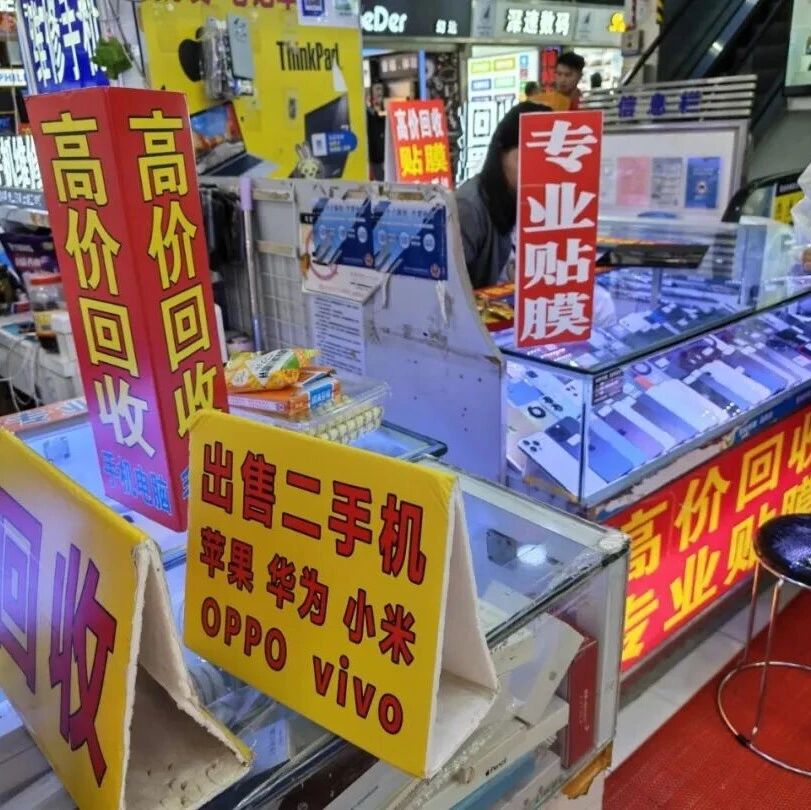
Core Viewpoint - The recent increase in mobile phone prices, including second-hand phone buyback prices, is driven by rising storage chip costs and the impact of AI infrastructure investments [1][6]. Group 1: Market Trends - The second-hand phone buyback prices in Shenzhen's Huaqiangbei market have generally increased, but not as dramatically as some online rumors suggest [3][4]. - The price of second-hand phones has been influenced by the rising costs of memory chips, which began to increase last summer [3][6]. - Specific models, particularly those with larger memory capacities, have seen more significant price increases in the buyback market [4][6]. Group 2: Price Data - A Huawei Mate 10 with 128GB memory that could not power on was quoted at around 80 yuan, up from 50 yuan last year, while an iPhone 8 was quoted at 200 yuan, with the 128GB version reaching over 300 yuan [4]. - The buyback prices for low-end models over six years old have started to rise significantly, with some prices increasing by 1.5 to 2 times since the second half of 2025 [5]. Group 3: Industry Insights - The increase in buyback prices is attributed to a shortage of storage chips caused by the booming AI industry, which has led to higher costs for consumer electronics [6][8]. - The proportion of memory costs in the bill of materials (BOM) for smartphones has surged from 10-15% historically to 30-40% currently [6]. - The competitive landscape in AI has driven significant investments in computing infrastructure, further straining the supply of storage chips for consumer electronics [8]. Group 4: Consumer Behavior - Consumers are advised to approach the buyback market with caution, as not all old phones will see significant price increases; actual buyback prices depend on model, memory, and condition [7][8]. - Some consumers are delaying phone upgrades while others are speculating on older models, which carries inherent risks [8].
一小时一个价,存储芯片涨幅200%超黄金,已有车型扛不住涨价5000元
21世纪经济报道· 2026-03-30 13:42
Core Viewpoint - The storage chip market, particularly automotive-grade chips, has experienced unprecedented price increases, significantly impacting vehicle production costs and the overall automotive industry dynamics [4][5][10]. Group 1: Price Trends and Market Dynamics - The price of automotive-grade storage chips has surged dramatically, with examples like Samsung's 8GB eMMC chip rising from approximately $50 to $100, marking a 200% increase [4][9]. - The price increase of storage chips is expected to add between 1,000 to 3,000 yuan to the cost of each vehicle, compounded by anticipated battery cost increases of 3,000 to 5,000 yuan [5]. - The current market for storage chips is characterized by volatility, with prices changing frequently, described as a "wild trading market" where prices can fluctuate hourly [9][10]. Group 2: Supply Chain and Production Challenges - The automotive industry is facing a unique situation where demand is relatively low, but major manufacturers can negotiate directly with chip suppliers to stabilize prices, unlike smaller manufacturers [5][21]. - The supply chain for automotive-grade chips involves multiple layers, including authorized agents and distributors, which complicates the procurement process for smaller manufacturers [13][16]. - The ongoing chip shortage and price increases are forcing automotive companies to explore alternative supply sources and long-term agreements to secure necessary components [25][26]. Group 3: Financial Implications for Automotive Companies - Major chip manufacturers like Samsung and SK Hynix have reported significant revenue increases, with SK Hynix's revenue reaching approximately 97.15 trillion won (about 472.1 billion yuan) in 2025, a 47% year-on-year growth [17]. - In contrast, Chinese automotive companies typically have profit margins ranging from 12% to 29%, highlighting the financial strain caused by rising chip costs [18]. - The pressure from rising costs is leading automotive companies to reconsider pricing strategies, with some opting for subsidies to maintain sales despite increased production costs [23][25]. Group 4: Future Outlook and Strategic Responses - The demand for storage chips in smart vehicles is expected to grow, particularly with advancements in autonomous driving technologies, which will further strain supply chains [8][10]. - Companies like Tesla are investing heavily in their own chip manufacturing capabilities to mitigate supply risks, while others are forming partnerships with chip manufacturers for direct supply [24][25]. - The long-term outlook for the chip market remains uncertain, with potential supply constraints and fluctuating demand complicating future production planning [27][28].


豪威集团(603501) - 2026年第一季度主要经营数据的公告
2026-03-30 11:01
| 证券代码:603501 | 证券简称:豪威集团 | 公告编号:2026-027 | | --- | --- | --- | | 转债代码:113616 | 转债简称:韦尔转债 | | 豪威集成电路(集团)股份有限公司 2026 年第一季度主要经营数据的公告 本公司董事会及全体董事保证本公告内容不存在任何虚假记载、误导性陈 述或者重大遗漏,并对其内容的真实性、准确性和完整性承担法律责任。 重要内容提示: 本公告所涉及的主要经营数据为初步核算数据,可能与公司 2026 年第一 季度报告中披露的数据存在差异,具体数据请以公司正式披露的 2026 年第一季 度报告为准。敬请投资者理性投资,注意投资风险。 一、2026 年第一季度主要经营数据 公司各业务线毛利率稳健,报告期内,公司主营业务结构稍有变化,半导体 代理业务收入占比较上年同期有所提升,导致公司整体毛利水平略有下降。 公司将持续优化业务结构,积极开拓新兴下游应用场景,稳健开拓公司产品 版图,并同时强化供应链管理与成本管控,力争改善盈利能力,推动公司业务实 1 现高质量发展。 三、风险提示 本公告所涉及的主要经营数据为初步核算数据,可能与公司 2026 年第 ...

存储短缺,会在2026年引发停产吗?
芯世相· 2026-03-30 06:52
Core Viewpoint - The article discusses the significant price increases and shortages in the memory chip market, driven by the rising demand for high-bandwidth memory (HBM) due to the AI boom, leading to a phenomenon termed "RAMageddon" [3][4]. Group 1: Causes of Memory Chip Shortage - The memory chip shortage is attributed to the complex transformation in the tech industry, particularly the increasing demand for HBM from companies like Nvidia and AMD, which is essential for the performance of AI models [3]. - Major semiconductor manufacturers are reallocating production capacity to HBM, resulting in decreased output of traditional DRAM and NAND chips, creating a supply-demand imbalance across various industries [4]. Group 2: Impacts on Industries - The high costs and limited supply of DRAM, NAND, and HBM are forcing companies to adopt different strategies to maintain production continuity while avoiding significant disruptions [5]. - Companies are facing profit compression as they absorb higher costs without immediately passing them on to consumers, particularly in sectors like consumer electronics and automotive [6]. - Price increases are becoming inevitable, with manufacturers like Dell and Lenovo planning to raise product prices by up to 20% in 2026, and IDC predicting a 14% increase in global smartphone average prices [7]. Group 3: Strategies to Cope with Shortages - Some manufacturers are considering redesigning products to reduce memory requirements, although this approach is costly and time-consuming, and may risk product quality and user experience [10]. - The automotive industry is also feeling the impact, with companies like Tesla indicating that DRAM shortages will affect production in 2026, leading to strategic allocation of resources to higher-margin vehicles [13]. - Consumer electronics manufacturers are signaling that DRAM shortages could constrain production, with expectations of flat or declining product shipments in the near term [12].

对话电子-押注预期差-锁定科技反弹
2026-03-30 05:15
Summary of Conference Call Records Industry Overview - **Industry**: Technology and Semiconductor Sector - **Key Trends**: The technology sector is experiencing a complex bottom formation rather than a V-shaped recovery, with significant demand and supply dynamics in the computing power supply chain and core components. Core Insights and Arguments 1. **Market Bottom Confirmation**: The sentiment quick line indicator triggered on March 23, 2026, suggests that the panic selling has established a market bottom, indicating a gradual upward trend rather than a sharp recovery [1][2][3]. 2. **Gold-Oil Ratio Recovery**: The gold-oil ratio has dropped from 75 to 40, a decline of approximately 40%, indicating potential for a significant recovery if geopolitical tensions ease and liquidity improves [1][2]. 3. **Tight Supply-Demand in Computing Power Chain**: TSMC's advanced process visibility extends to 2027, with overseas EML chip orders fully booked until the end of 2027, indicating a 100% capacity lock for 2026 [1][5]. 4. **Price Surge in Core Components**: The price of 100G EML has risen from $5 to $8, with DRAM/NAND prices expected to rise throughout the year, and clear upward trends in copper-clad laminates and aluminum foil starting in Q2 [1][6][7]. 5. **Technological Evolution**: NVIDIA's Rubin platform adopts liquid cooling across its product line, and power systems are evolving towards 800V platforms, driving demand for high-voltage aluminum electrolytic capacitors and high-end aluminum foil [1][8]. 6. **Domestic Computing Power Surge**: Domestic CSP manufacturers are expected to double their computing power investments in 2026, with new domestic computing cards set to be released between Q2 and Q3, with capacity largely pre-ordered [1][11]. 7. **Investment Directions for Q2**: Suggested focus areas include oversold non-ferrous metals, innovative pharmaceuticals, and the TMT computing power chain, particularly in overseas computing power, domestic chips, and semiconductor equipment [1][3]. Additional Important Insights 1. **TMT Sector Performance**: Despite a recent decline of over 10% in the TMT sector, the fundamentals remain strong, with signs of recovery in communication and electronics segments [4]. 2. **Storage Market Dynamics**: The storage chip market is currently in a state of supply-demand imbalance, with prices expected to rise throughout 2026, particularly for DRAM and NAND [6]. 3. **Optical Communication Market Trends**: The optical communication market is experiencing a supply-demand imbalance, with core component prices continuing to rise, including a significant increase in EML prices [7]. 4. **AI Data Center Trends**: The AI data center sector is seeing significant changes in cooling and power systems, with a shift towards liquid cooling and back power supply systems, creating new opportunities for component manufacturers [8][9]. 5. **Investment Opportunities in Passive Components**: The demand for aluminum electrolytic capacitors is expected to increase significantly as AI servers transition to 800V platforms, presenting investment opportunities in upstream materials [9][10]. This summary encapsulates the key points from the conference call records, highlighting the current state and future outlook of the technology and semiconductor sectors, along with potential investment opportunities.
三星海力士赴美上市背后:存储泡沫正在吹响集结号
美股研究社· 2026-03-29 11:42
Core Viewpoint - The semiconductor industry, particularly in the storage chip sector, is experiencing a peak in profitability and is aggressively seeking financing for capacity expansion, which may signal a dangerous turning point in the industry cycle [1][3][5]. Group 1: Current Industry Dynamics - SK Hynix and Samsung Electronics are pursuing ADR listings to optimize their capital structures, coinciding with record-high spot prices for memory chips and strong financial performance [1][3]. - The demand for high bandwidth memory (HBM) and DDR5 driven by AI applications has transformed storage chips into "strategic scarce resources," leading to unprecedented profit margins [3][5]. - Despite high profits and sufficient cash flow, the industry is rushing to raise capital, with SK Hynix's ADR financing expected to reach up to $10 billion, indicating a potential misalignment with market conditions [3][4]. Group 2: Historical Context and Risks - Historically, when semiconductor companies aggressively finance during peak profitability, it often precedes a downturn, as seen in previous cycles (2017-2018 and 2010) [4][8]. - The current scenario mirrors past cycles where high demand narratives, such as AI, mask underlying supply risks, leading to potential oversupply and price declines [5][8]. - The storage industry is characterized as supply-driven, meaning that decisions made during high price periods can lead to significant imbalances when capacity is released [8][9]. Group 3: Future Implications - The influx of capital from ADRs may exacerbate supply expansion, potentially leading to a supply-demand imbalance as companies invest in new equipment for future capacity [6][7]. - Optimistic market expectations regarding AI-driven storage demand may overlook efficiency improvements that could dampen actual demand, increasing the risk of oversupply [7][9]. - The current environment shows signs of a classic cycle peak, with strong performance, aggressive expansion plans, and overly optimistic market sentiment, raising concerns about future price corrections [9][10].

卖不出了?2026开年笔记本电脑线上销量近乎腰斩
猿大侠· 2026-03-29 04:21
Core Viewpoint - The notebook market is experiencing a significant downturn, with sales volume dropping by 40.5% year-on-year to 947,000 units, and sales revenue falling to 5.99 billion yuan, also down over 40% [1][2]. Group 1: Market Dynamics - Lenovo holds the largest market share at approximately 35%, followed by HP at around 14%, ASUS at about 12%, and Mechanical Revolution and Apple at approximately 8% and 7% respectively [4]. - A typical fluctuation in consumer electronics sales ranges from 10% to 20% annually, but a decline exceeding 40% indicates deeper issues, such as high previous year demand or market problems like rising costs and lack of consumer interest [4]. Group 2: Causes of Decline - The 40.5% drop in notebook sales is attributed to a combination of rising storage chip prices and demand being pulled forward from future periods [5]. - The surge in storage chip prices is identified as a direct trigger for the sales decline [6]. - By the second half of 2025, AI server demand is expected to significantly reduce the production capacity available for consumer-grade DRAM and NAND Flash, leading to substantial price increases [7]. Group 3: Price Trends - NAND Flash contract prices are projected to rise by 33% to 38% quarter-on-quarter by Q4 2025, while DRAM prices may increase by 45% to 50% [7]. - In Q1 2026, consumer electronic storage prices are anticipated to rise over 60%, with NAND prices exceeding 70% [7]. - The government subsidies released in 2024-2025 have led to a concentrated demand for upgrades, resulting in a 30% to 40% reduction in terminal prices during promotional periods, which is expected to normalize in Q1 2026 [7]. Group 4: Future Outlook - According to Wedbush Securities, DRAM and NAND prices are expected to rise significantly, with potential increases of 130% to 150% for DRAM and similar levels for NAND in the first half of 2026 [8]. - The cost structure of notebooks is likely to be affected as both storage chips and CPUs are set to increase in price, with CPU price hikes of 10% to 15% announced by Intel and AMD [10]. - The combined cost of storage chips and CPUs in the bill of materials (BOM) could rise from approximately 45% to 58%, potentially leading to a 40% increase in the retail price of mainstream notebooks [10].