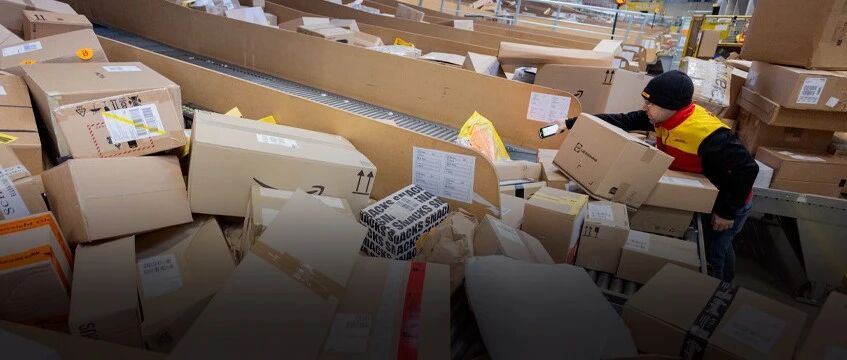
快递驿站

Search documents
曾经爆火的创业项目遭嫌弃:有人每天干十几个小时,月赚五六千元,只有春节才能休!有人6万元盘下,几个月后2万多才脱手
Mei Ri Jing Ji Xin Wen· 2026-01-14 10:28
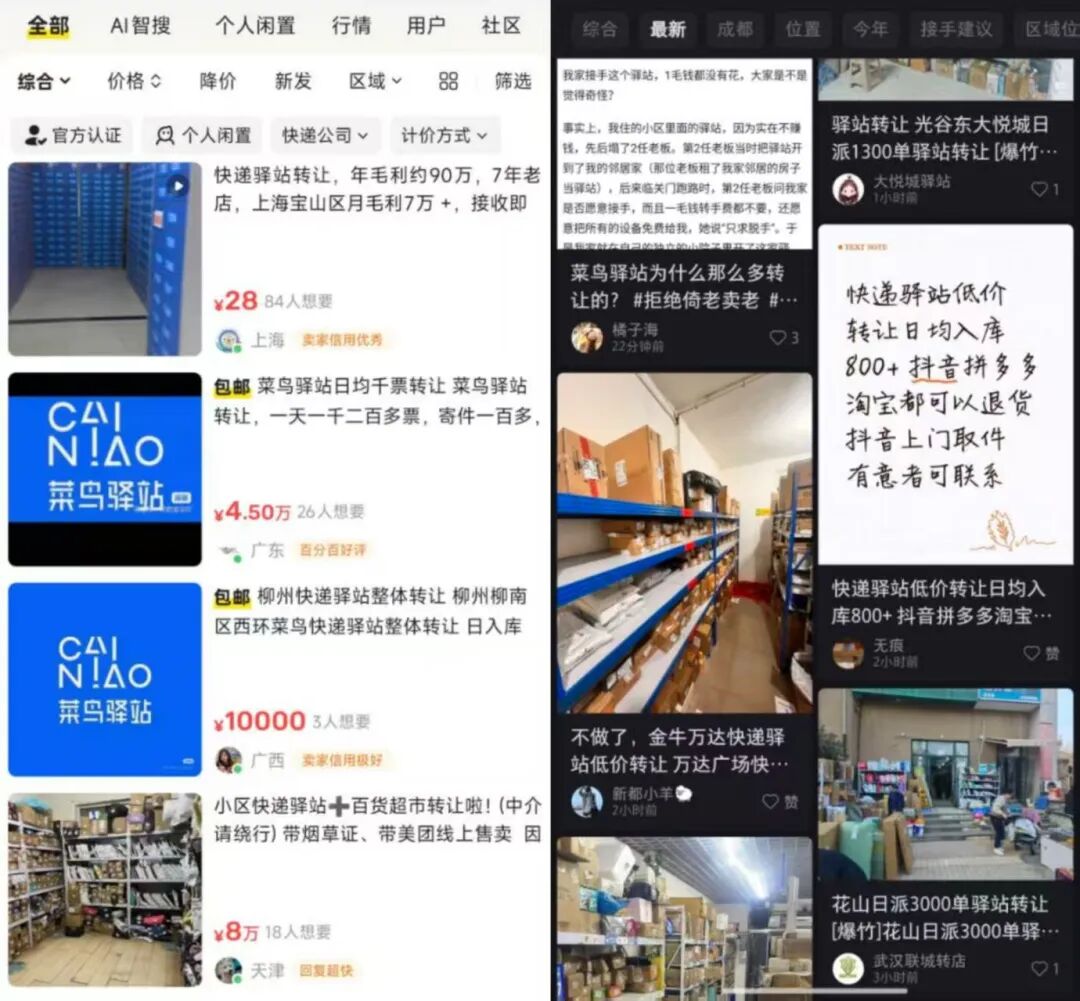
Core Viewpoint - The express delivery station business, once considered a low-threshold and stable cash flow opportunity for ordinary people, is now losing its appeal due to declining profitability and increasing operational challenges [3][10]. Group 1: Business Performance and Trends - A delivery station owner, Cheng Si, sold his station for over 60,000 yuan just a month after acquisition, but the price dropped to over 20,000 yuan, taking two months to sell [1]. - Many delivery stations are changing owners frequently, with some even shutting down, indicating instability in the business model [1]. - Online platforms like Xianyu and Xiaohongshu show numerous listings for delivery station transfers, often labeled with "low price" and "urgent transfer" [3]. Group 2: Operational Challenges - The cost-effectiveness of running a delivery station is decreasing, with long working hours (typically 9 AM to 9 PM) and minimal time off, leading to operator fatigue [4][6]. - Operators report that the income generated is often "hard-earned money," with significant penalties for customer complaints, which can reach 200 yuan for repeated issues [6][10]. - After deducting costs, some operators only make 5,000 to 6,000 yuan per month, leading to comparisons with less stressful jobs like security work [6]. Group 3: Market Dynamics - The average price per delivery has significantly decreased from 28.55 yuan in 2007 to 7.62 yuan in 2025, contributing to reduced income for delivery stations [7]. - The average delivery fee has dropped from 1.5 yuan to 1 yuan or even 0.7 yuan, further squeezing the revenue of delivery stations [7]. - The number of delivery stations is increasing, with some neighborhoods having multiple stations, leading to oversupply in the market [9]. Group 4: Future Outlook - Experts suggest that traditional delivery stations are becoming obsolete, with a shift towards a model combining delivery stations and lockers, focusing on home delivery services [10]. - The industry is evolving, with delivery stations transitioning from buffer nodes to responsibility nodes, facing increased pressure to meet service standards [10].


一年躺赚20万的快递驿站,开始塌房了
36氪· 2025-12-07 13:30
Core Viewpoint - The express delivery station business, once seen as a low-cost and low-barrier entrepreneurial opportunity, is now facing significant challenges, leading many owners to consider exiting the industry due to intense competition and financial losses [6][8][10]. Group 1: Industry Challenges - Many express delivery station owners are experiencing financial difficulties despite high package volumes, with some reporting monthly losses even during peak seasons like Double Eleven [9][10]. - The competitive landscape has intensified, with numerous new entrants and aggressive tactics among existing players, including price wars and complaints to regulatory bodies [17][34]. - The lack of formal contracts with delivery personnel has led to instability, as stations can lose business to competitors quickly [45][68]. Group 2: Financial Dynamics - Revenue from package delivery fees is declining, with some owners reporting a drop in daily sales from thousands to just a few hundred [68][82]. - High operational costs, including employee wages, rent, and various fines from delivery companies, are eroding profits, with fines sometimes accounting for over 70% of income [55][58]. - Despite the overall growth in express delivery volume, the average delivery fee has decreased, further squeezing profit margins for station owners [72][73]. Group 3: Owner Experiences - Many owners are resorting to diversifying their business models, incorporating additional services or products to supplement income from the delivery station [79][82]. - Some successful owners have managed to maintain profitability through strategic location and operational efficiencies, but these cases are becoming rarer [83][84]. - The ongoing pressure from competition and financial strain is prompting many owners to seek buyers for their stations, indicating a potential shift in the market dynamics [66][88].