
意大利面酱

Search documents
金宝公司第一财季业绩超预期 包装食品需求回升
Xin Lang Cai Jing· 2025-12-09 13:20
格隆汇12月9日|金宝公司公布第一财季业绩,营收为27亿美元,高于分析师预期的26.6亿美元,主要 得益于罐装汤和即食食品的强劲需求;调整后每股收益为0.77美元,亦高于预期的0.73美元。该公司预 计2026财年调整后每股收益将在2.4至2.55美元之间,而分析师预期为2.45美元。此外,金宝汤将收购La Regina公司49%的股份,这笔2.86亿美元的交易将增强其意大利面酱市场。该交易预计将于2026财年下 半年完成。 来源:格隆汇APP ...
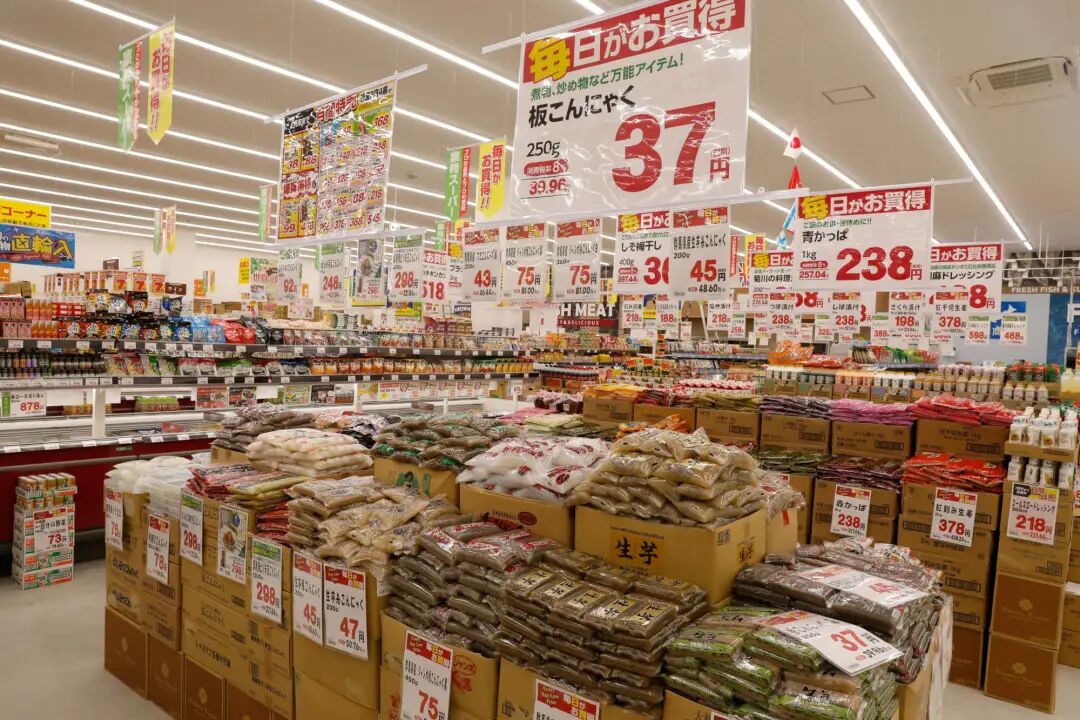
十年利润增长400%,它凭什么成为日本超市“隐形冠军”?
3 6 Ke· 2025-11-12 07:31
Core Insights - The article highlights the success of a discount supermarket chain in Japan, known for its low prices and high-quality products, primarily sourced from China, and its origins in a food factory in Dalian [1][4]. Group 1: Business Model and Growth - The supermarket operates with a cost-driven "everyday low price" strategy, leveraging a self-owned supply chain to maintain competitive pricing and quality [4][8]. - From 2015 to 2024, the supermarket's net sales grew by 154.7%, with an average annual growth rate of approximately 10.9%, and it accounted for over 90% of the parent company's total sales [4][6]. - The number of stores increased from 713 to 1084 over ten years, with an average of 37 new stores added annually, indicating a steady expansion pace [4][6]. Group 2: Supply Chain and Product Strategy - The company has developed a "food production and sales integration" system over nearly 30 years, allowing it to offer low-priced, high-quality products [8][9]. - The product range includes national brand (NB) items, local private brand (PB) products, and imported PB products, focusing on uniqueness, low prices, and high quality [9][10]. - As of Q3 FY2025, the sales proportion of self-owned brands was 34.3%, with goals to increase this to over 40% by FY2026 [10]. Group 3: Franchise Model and Operations - The supermarket employs a convenience store-style franchise model, with only 4 out of over 1100 stores being company-owned, allowing for a focus on product development and support for franchisees [11][12]. - Each store typically covers an area of about 150 tsubo (approximately 490 square meters) and selects 2500 to 3000 products from a total of around 7000 SKUs [12]. - The main revenue source comes from wholesale of products produced by the company's factories and directly imported goods, rather than franchise fees [12]. Group 4: Market Adaptation and Future Plans - Initially avoiding fresh produce due to high spoilage rates, the company has adapted its strategy to include limited fresh and alcoholic products based on market trends [13][15]. - The company is expanding into the restaurant sector with new brands and aims to enhance existing stores through renovations and upgrades [13][15]. - The company strategically avoids high-rent urban areas, focusing on suburban locations and adhering to a principle of opening one store for every 50,000 residents to ensure profitability [15][16]. Group 5: Competitive Advantage - The supermarket's success is attributed to its focus on supply chain advantages and a balance between cost-effectiveness and product variety, appealing to budget-conscious families while providing a unique shopping experience [16].

Campbell Soup(CPB) - 2025 FY - Earnings Call Transcript
2025-09-04 13:15
Financial Data and Key Metrics Changes - The company reported an organic growth expectation for fiscal 2026 ranging from -1% to +1%, indicating flat organic growth at the midpoint [10] - The EPS guidance for fiscal 2026 is expected to decrease by approximately $0.40 year-over-year, primarily due to tariff headwinds [12][13] - The company increased its cost savings target from $250 million to $375 million, reflecting confidence in achieving further savings [61] Business Line Data and Key Metrics Changes - Meals and Beverages are expected to maintain momentum due to ongoing at-home cooking trends, while Snacks are anticipated to stabilize in the second half of fiscal 2026 [10][40] - The company noted that Rao's brand has high single-digit growth and strong household penetration, indicating a positive outlook for this segment [36] Market Data and Key Metrics Changes - The company is facing a dynamic operating environment with challenges such as tariffs impacting costs, particularly in the Meals and Beverages division [7][58] - The overall cookie category is down, yet the Milano Cookies brand experienced a 27% growth, showcasing the effectiveness of innovation [49] Company Strategy and Development Direction - The company aims to return to sustainable profitable growth by focusing on its strong brand portfolio and investing in innovation [4][68] - A growth office has been established to enhance capabilities and drive consistent growth across the organization [68] Management's Comments on Operating Environment and Future Outlook - Management emphasized the importance of adapting to evolving consumer trends, such as premiumization and health and wellness [6] - The CEO expressed confidence in the company's ability to navigate challenges and achieve growth, despite a dynamic operating environment [67][68] Other Important Information - The company is focusing on surgical pricing strategies to mitigate the impact of tariffs and inflation on costs [58][60] - Marketing spend is targeted to be in the 9% to 10% range of net sales, with expectations to gradually phase into this level [55] Q&A Session Summary Question: What are the key drivers of organic sales performance in the Meals and Beverages segment for fiscal 2026? - The company highlighted the positive trend of cooking at home and the value offered by its meal solutions as key drivers [20] Question: How does the company balance pricing actions with consumer sensitivity in the soup category? - Management stated that value is not solely defined by price and emphasized a surgical approach to pricing while monitoring consumer response [21][24] Question: What is the outlook for the Rails brand and its growth potential? - The company is optimistic about the Rails brand, expecting continued high single-digit growth and exploring distribution opportunities [36][38] Question: What is the plan for stabilizing the Snacks business? - Management anticipates gradual improvement in the Snacks segment, with stabilization expected in the second half of fiscal 2026 [40][41] Question: How does the company view its long-term growth strategy? - The CEO reaffirmed the commitment to sustainable growth and the importance of leveraging the company's scale and brand portfolio [68]
