意式咖啡机

Search documents
中国第二大咖啡机品牌,「格米莱」冲刺港股IPO
Xin Lang Cai Jing· 2026-02-01 07:59
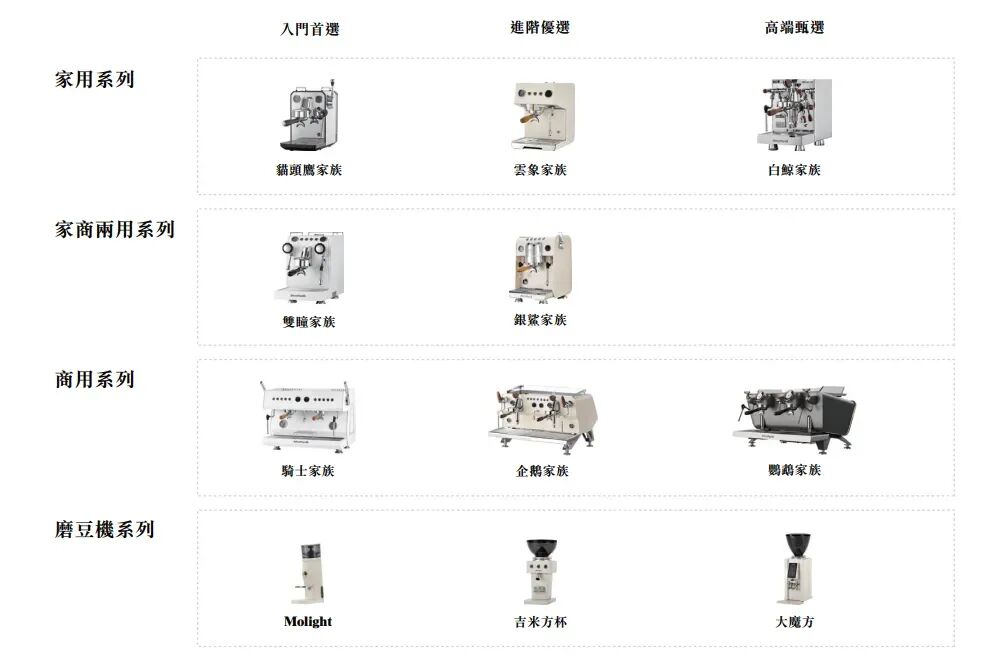
Core Viewpoint - Gemi Lai, a leading professional coffee machine company in China, submitted its IPO application to the Hong Kong Stock Exchange, aiming to raise capital for further growth and expansion in the coffee machine market [1][18]. Company Overview - Gemi Lai is recognized as the second-largest coffee machine brand in China by revenue, with a market share of approximately 7.5% in 2024 [9]. - The company has established a comprehensive business model that includes product design, research and development, manufacturing, sales, and after-sales service, covering the entire value chain of the coffee machine industry [1][2]. Financial Performance - For the fiscal year ending December 31, 2024, Gemi Lai reported revenues of approximately RMB 4.98 billion and a net profit of RMB 0.4 billion, with a gross margin of 40.54% [4]. - In the first nine months of 2025, the company achieved revenues of RMB 4.49 billion and a net profit of RMB 0.54 billion, reflecting a year-on-year growth of 363.36% [4]. Market Position - According to Frost & Sullivan, the global coffee machine market is projected to grow from USD 15.3 billion in 2019 to USD 30.6 billion by 2024, with a compound annual growth rate (CAGR) of 14.9% [6]. - The Chinese coffee machine market is expected to expand from RMB 2 billion in 2019 to RMB 5.3 billion by 2024, with a CAGR of 21.5% [6]. Product Range - Gemi Lai offers a diverse range of espresso machines suitable for various settings, including homes, offices, restaurants, and cafes, and has expanded its product line to include professional grinders, coffee beans, and other accessories [1]. Competitive Landscape - The top five market participants in the Chinese coffee machine industry accounted for approximately 44.1% of the market share in 2024, with Gemi Lai being the largest domestic brand [9][10]. - The company competes with international brands and has positioned itself as a leader in the semi-automatic espresso machine segment, holding a market share of about 16% [1][9]. Shareholder Structure - Prior to its IPO, the major shareholder structure includes Ms. Xie holding 47.24% through BrewBond Capital, making her the largest shareholder [13]. Other significant shareholders include Mr. Ye and Mr. Zhu, holding 9.30% and 7.41% respectively [13]. Comparable Companies - Gemi Lai's IPO is compared with companies like Xinbao Co., Ltd., and Lek Electric, which have also undergone public offerings in the same industry [11][12]. Underwriting and Legal Team - The underwriting for Gemi Lai's IPO is led by CITIC Securities, with a total of nine intermediaries involved in the process [18][19].

格米莱递交港交所上市申请书:中国咖啡机行业第二大品牌,年收入近5亿
Xin Lang Cai Jing· 2026-01-30 03:17
Core Viewpoint - Gemilai Holdings Limited, a professional coffee machine company, has submitted its IPO application to the Hong Kong Stock Exchange, with CITIC Securities as the sole sponsor [2][21]. Business Overview - Gemilai positions itself as a leading professional coffee machine enterprise in China, covering the entire value chain from design, R&D, manufacturing, sales, to after-sales service [4][24]. - The core product is the Italian coffee machine, with a complete product system suitable for various settings including homes, offices, restaurants, and cafes, featuring a rich SKU lineup [4][24]. - The product line has expanded to include professional grinders, coffee beans, and other accessories, creating a professional ecosystem around coffee preparation [4][24]. Market Position - Gemilai's products are sold in over 60 countries and regions, with cumulative sales exceeding 2 million units [4][23]. - According to Frost & Sullivan, Gemilai ranks as the second-largest brand in China's coffee machine industry by revenue in 2024, holding a market share of approximately 7.5% [5][25]. - In the semi-automatic coffee machine segment, Gemilai is the leading brand in China with a market share of about 16.0%, and in the split-type semi-automatic coffee machine segment, it holds a market share of approximately 27.9% [6][26]. Sales Strategy - Gemilai employs an integrated online and offline sales model, utilizing platforms like Tmall, JD.com, Douyin, Amazon, and its own website to effectively reach consumers [8][29]. - The offline channel consists of a nationwide dealer network that provides sales, technical support, and localized services to commercial and professional clients [8][29]. Market Growth - The global coffee machine market is projected to grow from $15.3 billion in 2019 to $30.6 billion in 2024, with a CAGR of 14.9%, and is expected to reach $59.5 billion by 2029 [9][30]. - The Chinese coffee machine market is experiencing even faster growth, with the market size expected to increase from 2 billion yuan in 2019 to 5.3 billion yuan in 2024, reflecting a CAGR of 21.5% [9][30]. - By 2029, the market is anticipated to reach 12.5 billion yuan, with a projected CAGR of 18.7% over the next five years [9][30]. Financial Performance - Gemilai's total revenue has shown rapid growth, reaching 307.7 million yuan in 2023 and projected to increase to 497.6 million yuan in 2024, a year-on-year growth of approximately 61.7% [10][31]. - For the nine months ending September 30, 2025, the company achieved revenue of 449.3 million yuan, a 44.1% increase compared to the same period in 2024 [10][31]. - The self-owned brand revenue grew significantly from 213 million yuan in 2023 to 410 million yuan in 2024, marking a year-on-year increase of about 92.5% [12][32]. Use of IPO Proceeds - The net proceeds from the IPO will be used for capacity expansion and digital upgrades, brand and service system enhancement, R&D investment, information infrastructure development, and general corporate purposes [13][34][38].
新股消息 | 中国咖啡机龙头格米莱递表港交所 2024年市场份额约7.5%
智通财经网· 2026-01-29 23:19
Company Overview - Gemilai Holdings Limited is a leading professional coffee machine company in China, focusing on enhancing the coffee experience. The company has developed a comprehensive business model covering product design, R&D, manufacturing, sales, and after-sales service, achieving full coverage of the coffee machine industry's value chain. Its products are distributed in over 60 countries and regions, with cumulative sales exceeding 2 million units and serving over 400,000 users, establishing itself as a representative Chinese coffee machine brand in the international market [4][5]. - The company has developed a diverse product line of espresso machines suitable for various usage scenarios, including homes, offices, restaurants, and cafes. It offers a wide range of SKUs to provide professional, reliable, and aesthetically pleasing coffee-making equipment for different user groups. Additionally, the product line has expanded to include professional grinders, coffee beans, and other coffee machine accessories [4]. Market Position - According to Frost & Sullivan, Gemilai ranks as the second-largest coffee machine brand in China by revenue and the largest domestic coffee machine brand, with an estimated market share of approximately 7.5% in 2024. In the semi-automatic espresso machine segment, it holds the top position with a market share of about 16.0%, and in the split-type semi-automatic espresso machine sector, it leads with a market share of approximately 27.9% [5]. Financial Performance - For the fiscal years ending September 30, Gemilai reported revenues of approximately RMB 308 million, RMB 499 million, and RMB 449 million for 2023, 2024, and the first nine months of 2025, respectively [6]. - The company's profit for the same periods was approximately RMB 22.01 million, RMB 40.01 million, and RMB 53.97 million [7]. - The gross profit margins for the fiscal years were 41.9%, 40.5%, and 44.1% for 2023, 2024, and the first nine months of 2025, respectively [9]. Industry Overview - The global coffee machine market size increased from USD 15.3 billion in 2019 to USD 30.6 billion in 2024, with a compound annual growth rate (CAGR) of 14.9%. It is expected to further expand to USD 59.5 billion by 2029, with a CAGR of 14.1%. The home coffee machine market is projected to grow from USD 9.3 billion in 2019 to USD 20.6 billion in 2024, with a CAGR of 17.2%, and is expected to reach USD 43.3 billion by 2029 [11]. - In China, the coffee machine market size grew from RMB 2 billion in 2019 to RMB 5.3 billion in 2024, with a CAGR of 21.5%. It is anticipated to expand to RMB 12.5 billion by 2029, with a CAGR of 18.7%. The home coffee machine market is expected to grow from RMB 1.1 billion in 2019 to RMB 3.8 billion in 2024, with a CAGR of 28.1%, and reach RMB 10.3 billion by 2029 [13]. - The online coffee machine market in China is projected to grow from RMB 1.3 billion in 2019 to RMB 4.2 billion in 2024, with a CAGR of 26.4%, and is expected to reach RMB 10.9 billion by 2029 [15].
喝点VC|a16z:AI正彻底改变在线购物,更合适、更个性化、更定制化的产品更在等你下单
Z Potentials· 2025-04-05 02:49
Core Insights - AI-driven tools are transforming the online shopping experience, enabling hyper-personalization and customization that were previously unattainable in mass production [1][9][16] Group 1: AI and Personalization - AI assistants learn from personal data, creating a "flywheel effect" that enhances user experience through tailored recommendations based on browsing habits, chat history, and purchasing patterns [2][14] - The online shopping experience is evolving to become more intelligent and intuitive, with AI predicting user needs and preferences, thus eliminating the need for extensive searching [4][14] Group 2: Virtual Try-Ons and Customization - Virtual try-on technologies allow consumers to see how clothing fits their actual bodies, enhancing the shopping experience by providing accurate previews [5][9] - AI tools enable users to customize products in real-time, adjusting dimensions, colors, and designs based on individual preferences, making mass customization feasible [9][14] Group 3: Smart Shopping Assistants - Startups are developing personalized shopping assistants that utilize multimodal models to interact with users through text, images, and visual inputs, enhancing product discovery [11][14] - Brands are leveraging AI to automate customer service tasks, improving efficiency and customer satisfaction [13][14] Group 4: Future of AI-Driven Shopping - The future of shopping is expected to be characterized by a fully integrated personal shopping assistant that understands user style and preferences, continuously learning from interactions [14][16] - The shift from traditional "one-to-many" shopping models to personalized clothing generation is redefining fashion discovery and curation [15][16]