
咖啡豆

Search documents
大钲资本收购蓝瓶咖啡,后者尚在亏损中|36氪独家
36氪· 2026-03-04 09:20
Core Viewpoint - The acquisition of Blue Bottle Coffee by Dazhong Capital from Nestlé for under $400 million highlights a strategic move to enhance high-end coffee offerings and accelerate international expansion for Luckin Coffee, which Dazhong controls [4][8][9]. Group 1: Acquisition Details - Dazhong Capital has reached an agreement with Nestlé to acquire Blue Bottle Coffee's global stores for a price below $400 million, while Nestlé retains the fast-moving consumer goods segment [4]. - Blue Bottle Coffee reported approximately $250 million in revenue over the past 12 months, with $150 million from the U.S. and $100 million from the Asia-Pacific region, and is expected to achieve profitability by 2026 [4]. - The acquisition is part of Nestlé's strategy to divest from heavy asset retail businesses, as indicated by their willingness to sell Blue Bottle at a discount compared to the original acquisition price [13][14]. Group 2: Strategic Implications - Dazhong Capital's acquisition of Blue Bottle Coffee is seen as both financially beneficial and strategically significant, particularly for enhancing Luckin Coffee's high-end market positioning [8]. - The move is expected to accelerate Luckin's international expansion, especially in the U.S. market, leveraging Blue Bottle's established brand and customer base [9]. - Dazhong Capital's existing stake in Luckin Coffee (23.28% ownership and 53.6% voting rights) allows for significant influence over strategic decisions, including the integration of Blue Bottle Coffee [8]. Group 3: Market Context - Blue Bottle Coffee, founded in California in 2002, is positioned as a high-end specialty coffee brand, emphasizing fresh roasting within 48 hours [5]. - The competitive landscape in China’s coffee market is intensifying, with rapid expansion from local brands like Peet's Coffee, which added nearly 200 stores from 2022 to 2024 [7]. - The acquisition of Blue Bottle Coffee is seen as a response to the competitive pressures faced by Luckin Coffee, which has experienced profit declines despite a 32.9% revenue increase in Q4 2025 [8].


大钲资本收购蓝瓶咖啡,后者尚在亏损中|独家
36氪未来消费· 2026-03-04 06:58
Core Viewpoint - The acquisition of Blue Bottle Coffee by Dazhong Capital from Nestlé for under $400 million highlights a strategic move to enhance high-end coffee offerings and accelerate international expansion for Luckin Coffee, of which Dazhong is a major shareholder [3][8][12]. Group 1: Acquisition Details - Dazhong Capital has reached an agreement to acquire Blue Bottle Coffee's global stores from Nestlé for a price below $400 million, while Nestlé retains Blue Bottle's fast-moving consumer goods business [3]. - Blue Bottle Coffee reported approximately $250 million in revenue for the 12 months ending June 30, 2025, with $150 million from the U.S. and $100 million from the Asia-Pacific region [3]. - The acquisition is part of Nestlé's strategy to divest from heavier retail operations, as it seeks to lighten its asset base [12][13]. Group 2: Strategic Implications - The acquisition provides both financial value and strategic significance for Dazhong Capital, which holds a 23.28% stake in Luckin Coffee and aims to enhance its high-end market positioning [8]. - Blue Bottle Coffee's brand, known for its premium offerings and fresh roasting standards, aligns with Dazhong's strategy to elevate Luckin's brand image in the competitive coffee market [5][8]. - The deal is expected to facilitate Luckin's overseas expansion, particularly in the U.S. market, leveraging Blue Bottle's established presence and customer base [9]. Group 3: Market Context - Blue Bottle Coffee, founded in California in 2002, has been positioned as a high-end specialty coffee brand, with a focus on freshly roasted coffee [5]. - The coffee market in China is experiencing rapid expansion, with competitors like Peet's Coffee also scaling up their operations significantly [7]. - Dazhong Capital previously considered other coffee brands like Costa and %Arabica for investment, indicating a broader strategy to capture market share in the premium coffee segment [10][14].

春晚流量之王 DM CAFE:商业价值全解析,咖啡赛道的下一个风口
Jiang Nan Shi Bao· 2026-02-27 12:14
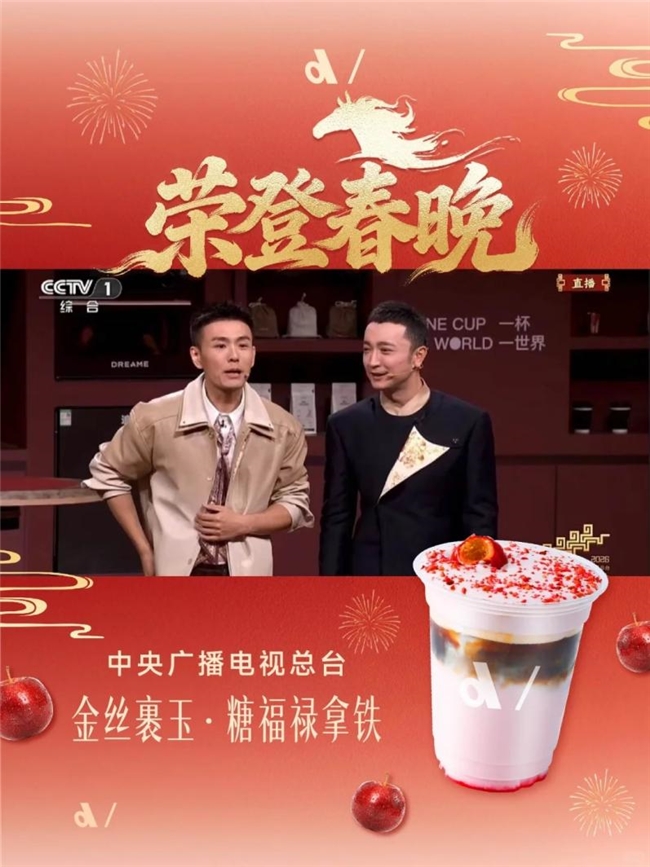
Core Insights - DM CAFE has emerged as a significant player in the Chinese coffee market, leveraging its unique positioning and innovative business model to stand out amidst intense competition and price wars [1][3] - The brand's participation in the Spring Festival Gala has elevated its visibility and credibility, allowing it to transition from a new brand to a potential national contender [1][3] Industry Overview - The Chinese coffee market is experiencing growth, but the era of widespread benefits is over, with increasing competition leading to a "low-price" battle among brands [3][5] - Despite the growth in per capita coffee consumption, it remains below the global average, indicating substantial room for development [3] DM CAFE's Business Model - DM CAFE targets the mid-price coffee segment, which is currently underserved, with an average transaction value around 80 yuan, focusing on high quality and strong customer experience [6][10] - The brand employs a profit-sharing model with franchisees, only taking a cut from profits, which fosters a collaborative relationship and reduces risks for franchisees [7][10] - DM CAFE has diversified its revenue streams through a "coffee + ecosystem + day-night bar" approach, enhancing profitability and resilience against market fluctuations [8][10] Store Design and Expansion Strategy - The company has introduced two store formats: quick-service stores for community and office areas, and flagship stores in prime locations, allowing for efficient scaling and brand presence [9][10] - This modular approach to store design supports standardized operations while lowering entry barriers for franchisees, facilitating rapid expansion [9] Long-term Investment Potential - DM CAFE's unique positioning in the mid-price coffee market presents a structural opportunity for profit and growth, appealing to investors seeking sustainable business models [10][11] - The brand's innovative profit-sharing model, diverse revenue sources, and technological integration position it favorably for long-term success in the competitive landscape [10][11] - DM CAFE's rise signifies a shift in the coffee industry towards innovation and value creation rather than mere price competition, making it an attractive investment opportunity [11]
新宝股份:公司自主品牌Barsetto(百胜图)有咖啡豆配套销售,业务量很小
Mei Ri Jing Ji Xin Wen· 2026-02-27 10:34
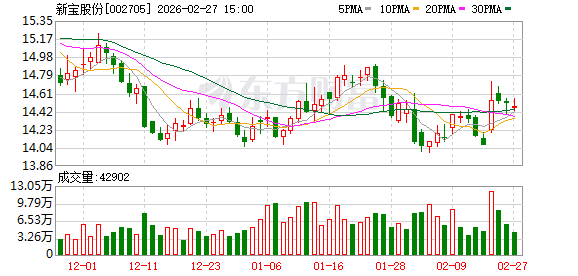
Core Viewpoint - The company, Xinbao Co., Ltd. (002705.SZ), has confirmed that it sells coffee beans under its own brand Barsetto, although the sales volume is relatively small [2]. Group 1 - The main business of the company is focused on the research, development, production, and sales of small home appliances [2]. - The coffee beans sold by the company are part of the product offerings that accompany its coffee machines [2].

雀巢销售额下滑2%至7285.3亿元,提价策略遭遇全球挑战
Sou Hu Cai Jing· 2026-02-22 16:11
Core Viewpoint - Nestlé Group is facing significant challenges in its pricing strategy amid global economic fluctuations and inflation pressures, leading to a slight decline in annual sales and net profit [2][5]. Financial Performance - In 2026, Nestlé reported annual sales of 89.49 billion Swiss francs (approximately 728.53 billion RMB), a decrease of 2% compared to the previous year [2]. - The company's net profit fell by 17% to 9 billion Swiss francs, marking a rare decline [5]. Pricing Strategy and Market Response - Nestlé's aggressive pricing strategy, implemented in response to a doubling of coffee bean and cocoa costs, contributed 2.8% to annual sales growth, while actual sales volume growth was only 0.8% [2]. - Price increases in the candy and coffee segments reached 10.6% and 6.0% respectively, but consumer sensitivity to these price hikes has led to a shift towards private label brands, resulting in customer loss [3]. Challenges in Key Markets - In the Greater China region, Nestlé faced a significant organic growth rate of -6.4%, with an internal growth rate of -4.5% and a pricing contribution rate of -1.9%, which heavily impacted the overall performance of the group [3]. - The company experienced non-operating losses due to a recall of infant formula linked to contamination, leading to an inventory write-down of approximately 1.1 billion Swiss francs (about 895 million RMB) and potential sales losses of up to 1.2 billion Swiss francs (about 977 million RMB) in 2026 [3]. Strategic Adjustments - Nestlé's CFO indicated that the company is adjusting its business model in China from a distribution-driven approach to one focused on consumer demand, which is expected to gradually alleviate growth impacts by the second half of 2026 [4]. - The company has identified four core pillars for future growth: coffee, pet care, nutrition, and food & snacks, with the first three accounting for 70% of total sales [5]. Organizational Changes - Nestlé is undergoing a restructuring process, including the integration of its nutrition and health science units and the potential divestiture of its remaining ice cream business [5]. - The company plans to reduce its workforce by approximately 16,000 positions, representing 6% of its total employees, as part of its efforts to streamline operations [6].


【环球财经】日本核心CPI连续53个月同比上涨
Xin Hua Cai Jing· 2026-02-20 02:51
Group 1 - The core consumer price index (CPI) in Japan, excluding fresh food, rose by 2.0% year-on-year to 112.0 in January, marking the 53rd consecutive month of increase [1] - The main driver of the CPI increase is the rising food prices, with food prices excluding fresh items increasing by 6.2% year-on-year [1] - Specific food items saw significant price increases, including coffee beans up by 51.0%, regular japonica rice up by 27.9%, and chocolate up by 25.8% [1] Group 2 - Prices for housing repairs, communication fees, and hotel accommodations also experienced year-on-year increases [2] - Prime Minister Sanna Marin announced plans to convene a bipartisan "National Conference" to discuss social security and tax system reforms, in response to the two-year commitment to eliminate the food consumption tax [2] - The International Monetary Fund (IMF) expressed skepticism regarding the tax reduction measures, advising Japan to avoid cutting consumption taxes due to potential fiscal risks [2]
刚刚!联合国秘书长罕见“喊话”西方:请所有发达国家,学中国!
Sou Hu Cai Jing· 2026-02-18 08:17
Core Viewpoint - China will implement a zero-tariff policy on all goods from 53 African countries starting May 1, 2026, which is a significant move beyond mere tax exemptions and reflects a deeper diplomatic recognition of these nations' equal status in international relations [1][5][11] Group 1: Policy Details - The zero-tariff policy applies to all product categories, eliminating previous tariffs such as the 12% tax on Ethiopian coffee beans, thereby reducing costs for African goods entering the Chinese market [3][5] - The policy simplifies import standards, removing the need for certifications often imposed by Western countries, thus making it easier for African producers to access the Chinese market [3][7] Group 2: Trade Dynamics - The trade volume between China and Africa is projected to reach 2.1 trillion yuan in 2024, with China being Africa's largest trading partner for 16 consecutive years [9] - A significant shift is observed in the types of goods exported from Africa to China, with 30% now consisting of industrial products rather than just oil and minerals, indicating an acceleration in Africa's industrial upgrade [9] Group 3: Financial Implications - The People's Bank of Ethiopia has begun trialing RMB settlements, and South Africa's Standard Bank has signed a currency swap agreement with the Industrial and Commercial Bank of China, suggesting a growing role for the RMB in African trade [10] - The zero-tariff policy is seen as a redistribution of market rule-making and access rights, previously dominated by Western nations, now shifting towards African countries [11] Group 4: International Relations - The urgency expressed by UN Secretary-General Guterres highlights the current international trade landscape, where Western nations impose high tariffs on African exports, contrasting sharply with China's approach [7][10] - African nations are actively pursuing free trade agreements with China, with 12 countries reportedly researching such agreements, while U.S. trade with Africa has been declining [10]

2026年大宗商品展望
Guolian Minsheng Securities· 2026-02-13 08:59
Report Information - Report Title: 2026 Commodity Outlook - Research Team: Guolian Minsheng Securities Forward-looking Research Team - Report Date: February 13, 2026 [1] Investment Recommendations - Industrial metals: Due to the demand from the electric vehicle, energy storage, wind power, and photovoltaic sectors, and the long - term insufficient capital expenditure in copper mines and China's electrolytic aluminum production capacity approaching the limit, copper and aluminum are recommended for their potentially positive fundamentals [3]. - Minor metals: Benefiting from China's macro - regulation and supervision of strategic minerals and the supply being restricted by mining quotas, rare earths, antimony, and tungsten are recommended [3]. - Precious metals: With their defensive properties, the prices of silver and platinum are expected to enter an upward cycle, so they are recommended [3]. Core Views - The factors influencing commodity prices are divided into short - to - medium - term disturbances, cyclical factors, and trend/structural forces. Capital expenditure in the next 3 - 5 years will affect commodity supply and pricing [3]. Summary by Section 1. Commodity Price Drivers 1.1 Medium - to - Long - Term Influencing Factors: Capital Expenditure Cycle - Copper prices follow the marginal cost pricing principle, while oil prices do not fully conform. The oil price center may have a 5 - year cycle [12][14][15]. 1.2 Short - to - Medium - Term Disturbing Factors: Geopolitics and Supply - Side Restrictions - Commodity price fluctuations caused by geopolitics and supply - side restrictions usually correct within half a year to a year. The flexibility of US shale oil production can offset the impact of OPEC's production changes on oil prices to some extent, and OPEC+ production agreements affect oil prices within 6 months [23]. 1.3 Impact of Technological Progress - The impact of electric vehicle technology on oil demand is slower than on lithium carbonate demand. The new nickel production process has led to a large release of nickel ore capacity, and nickel prices have not outperformed inflation. US natural gas prices have underperformed inflation due to technological progress, and agricultural technological progress has significantly affected agricultural product prices [24][29][34][38]. 2. Traditional Energy: "Stable with Changes", Reshaping the Supply - Demand Structure 2.1 Oil Market - Global oil and gas upstream investment has been increasing since 2020, but it may not return to the high level of 2014 - 2015. OPEC's production recovery may be limited by remaining capacity. Trump's impact on US oil production may be limited. Global oil consumption is increasing, with China and India being the main contributors. The oil market may be in an oversupply situation in 2025 - 2026 [45][51][63][82][87]. 2.2 Natural Gas Market - Asian natural gas demand is stable, and China's dependence on imported LNG has weakened in 2025. US LNG project capacity is expected to grow rapidly, while Europe faces greater LNG import demand [91][98][104][112]. 2.3 Coal Market - Coal remains an important "ballast stone" in the power system. Global coal consumption growth is slowing, and supply is relatively stable. China's coal market is expected to operate stably under the policy of increasing supply and ensuring stable prices [120][126][132]. 3. Steel Industry: Weak Demand, Excess Capacity - Construction steel demand is in a low - growth state, and China's steel exports may be restricted by trade policies. Iron ore supply is expected to be loose, and the coking coal market supply - demand gap is narrowing, with prices fluctuating [134][139][149][159]. 4. Industrial Metals: Improving Supply - Demand Structure, Positive Fundamentals 4.1 Copper - Copper demand is facing a shift in growth drivers, with new energy sectors such as electric vehicles, wind power, and photovoltaics becoming important demand sources. However, copper exploration investment has been low, and the growth of ore - end resources has been suppressed. The slowdown of recycled copper smelting and the decline of processing fees may support copper prices [165][172][178][192]. 4.2 Aluminum - China's bauxite supply is tight, and imports account for a large proportion, with potential overseas supply disruptions. Global electrolytic aluminum production growth is slowing, and China's production is restricted by the capacity ceiling, which may support aluminum prices [199][208][219]. 4.3 Rare Earths - China's rare earth mining and smelting quota growth has slowed down, and the increase in overseas supply is limited [224]. 4.4 Antimony - The demand for antimony in the photovoltaic glass industry is expected to increase, but domestic antimony mine production growth is limited, and global supply is tightening [230][235]. 4.5 Tungsten - The downstream demand for tungsten is expected to improve with the recovery of the manufacturing industry. However, domestic tungsten mine production growth may slow down, while overseas supply may increase [240][246]. 5. Precious Metals: Entering an Upward Cycle - Silver and platinum - group metals may continue to be in a shortage situation. The industrial demand for silver, especially in the photovoltaic sector, is strong, while the demand for platinum and palladium in the automotive industry may decline due to the increase in electric vehicle penetration [252][257]. 6. Agricultural Products: Climate Change Challenges, Regional Market Differentiation 6.1 Soybeans - The global soybean supply - demand structure is expected to remain loose. China's soybean consumption may decline, the US renewable fuel production has decreased, and trade policies may affect the soybean trade pattern. North American and South American soybean production has different trends, and China's soybean import volume may decrease [264][269][273][278][294]. 6.2 Corn - Global corn supply is tightening, with inventory decreasing. China's corn consumption is growing steadily, the US corn production has decreased but exports have increased significantly, Brazil's corn production has different trends, and its domestic ethanol production restricts exports [299][300][309][315][320]. 6.3 Wheat - The global wheat market is in a tight - balance state. China and India's imports may increase, Russia and the EU's supply has decreased due to bad weather, while North America and Australia's wheat production has been positively affected by the weather. The supply of major exporting countries is tight, and prices are stabilizing [321][331][332][339][340].
云南:“红果果”变成助农致富“红宝石”
Shang Hai Zheng Quan Bao· 2026-02-12 17:42
Core Viewpoint - Yunnan's coffee industry is experiencing significant growth, with increased production, improved quality, and expanding export markets, driven by government support and collaboration with major companies like Nestlé [7][9]. Group 1: Industry Growth - Yunnan's coffee production accounts for over 98% of China's total, with a planting area of 1.463 million acres [7]. - By 2025, Yunnan's coffee bean production is projected to reach 138,900 tons, representing a year-on-year increase of 16.9% [7]. - The agricultural output value of Yunnan's coffee is expected to soar to 8.66 billion yuan, marking a 77.8% increase [7]. Group 2: Quality Improvement and Innovation - The industry is shifting towards a boutique development path, focusing on seed optimization, planting techniques, and brand building [8]. - Yunnan has preserved over 1,500 varieties of coffee, with high-quality varieties covering 162,000 acres [8]. - The introduction of biodiversity practices, such as under-tree planting, is helping to reduce pest risks and enhance coffee quality [8]. Group 3: Export Expansion - Yunnan coffee is gaining recognition in both domestic and international markets, with exports to 43 countries and regions, including new markets in Central Asia and Eastern Europe [8]. - From 2023 to 2025, Beigui Coffee Manor plans to export over 1,000 tons of coffee annually, generating over 30 million USD in revenue [8]. Group 4: Government Support and Future Plans - The Yunnan provincial government aims to support the coffee industry through policy initiatives, brand development, quality assurance, and expanding export pathways [9]. - The commitment to enhancing the unique "Chinese flavor" of Yunnan coffee is expected to strengthen its global presence [9].

巴西2026/27年度咖啡豆产量预计同比增长10.1%
Shang Wu Bu Wang Zhan· 2026-02-11 17:36
Core Insights - Brazil's coffee bean production for the 2026/27 season is projected to reach 69.3 million bags, reflecting a year-on-year increase of 10.1% [1] Industry Summary - The anticipated favorable production conditions for Arabica coffee in the 2027 season are attributed to the end of several years of extreme weather events [1]