慈姑

Search documents
热气腾腾的中国年|江苏无锡:人潮涌动中,藏着最暖“中国年”
Xin Lang Cai Jing· 2026-02-15 13:48
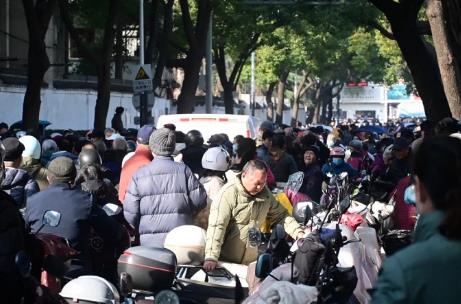
Core Viewpoint - The festive atmosphere of the Spring Festival is vibrant in Wuxi, with markets bustling and traditional customs being celebrated, highlighting the cultural significance of the holiday in the region [1][3][8]. Group 1: Market Activity - The local markets, particularly the Chaoyang Agricultural Market, are experiencing an overwhelming influx of shoppers, with over 30,000 visitors recorded in just one morning, equivalent to a full day's traffic [3]. - Popular items include spring citrus and traditional snacks, with long queues forming at various stalls, indicating a strong demand for festive goods [3][4]. - Supermarkets are also crowded with shoppers, reflecting a widespread enthusiasm for purchasing New Year goods [4]. Group 2: Culinary Traditions - The traditional New Year's Eve dinner in Wuxi consists of a carefully curated menu, including four cold dishes, four stir-fried dishes, five main dishes, and two soups, symbolizing completeness and prosperity [5]. - Key dishes include braised fish, pork, chicken, and sweet rice, which are integral to the celebration and reflect local culinary heritage [5][7]. - Specific vegetables are included for their auspicious meanings, such as water celery for hard work and spinach for vitality, emphasizing the cultural significance of food during the holiday [5]. Group 3: Cultural Celebrations - The city is adorned with festive decorations, including new door gods and large spring couplets, enhancing the celebratory atmosphere [8]. - Various cultural events and performances are planned throughout the holiday, with nearly a hundred entertainment shows and interactive activities set to engage both residents and visitors [8]. - Traditional games and modern light shows are being integrated into the celebrations, showcasing a blend of heritage and contemporary festivities [8].

炎夏荷塘追“鲜”人
Hang Zhou Ri Bao· 2025-07-18 02:39
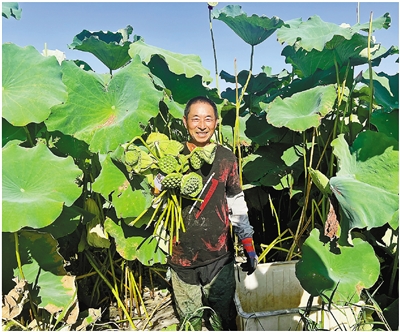
Core Insights - The article highlights the significance of fresh lotus seeds, particularly in the summer, and the labor-intensive process of harvesting them, emphasizing the connection between local culture and agriculture [2][3][4] Group 1: Company Overview - The company, Hangzhou Bay Lotus and Water Plant Cooperative, was established in 2006 by Ma Lianghao, who mobilized over 20 local farmers to invest together [3] - The cooperative has evolved into a modern agricultural enterprise, managing 4,500 acres of land for the cultivation of rice and aquatic vegetables, including lotus, water chestnuts, and other crops [3][4] Group 2: Product and Market - Fresh lotus seeds, known as "fruit lotus," have become a recent focus for the cooperative, with a planting area expansion from 120 acres last year to 200 acres this year [4] - The cooperative's lotus seeds are sold at a price of 5 yuan per lotus pod and 9.9 yuan per box (0.17 kg) for peeled seeds supplied to "Hema Fresh" [4] Group 3: Labor and Employment - During the peak harvesting season from late July to early August, the cooperative employs over 30 lotus harvesters, with daily wages set at 200 yuan for an 8-hour workday, plus an additional 50 yuan daily subsidy during high temperatures [4] Group 4: Future Aspirations - Ma Lianghao envisions establishing a comprehensive lotus cultural park in his hometown, which would integrate educational, agricultural, and tourism experiences, allowing visitors to engage with the lotus harvesting process and appreciate agricultural culture [4]