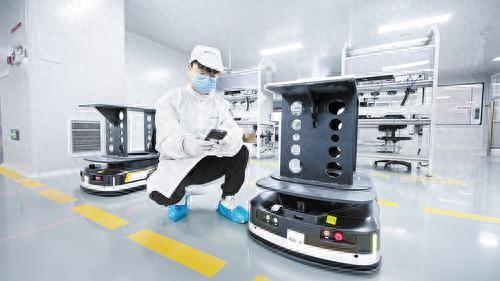
抓取机器人

Search documents
视频丨养老人才短缺如何破解?看“养老服务师”的机遇与挑战
Yang Shi Xin Wen Ke Hu Duan· 2025-11-02 07:21
Core Insights - The aging population in China has surpassed 310 million, accounting for 22% of the total population, making it a national strategic priority to address this issue [2] - The emergence of the "elderly care service worker" as a new profession highlights the industry's struggle with a "youth talent shortage" [2][10] Group 1: Industry Challenges - The story of Li Qinggang, a 1997-born elderly care service worker, illustrates the challenges faced by the industry, including high turnover rates among young professionals [4][8] - Currently, only about 5 out of 45 graduates from Li's class remain in the elderly care sector, indicating a significant retention issue [8][10] - The potential demand for elderly care personnel in China is over 10 million, yet there are only about 300,000 currently employed [10][19] Group 2: Innovative Solutions - Jiangsu province has pioneered a nursing title system to attract and retain young talent in the elderly care sector, aiming to provide clear career advancement opportunities [10][19] - The establishment of a nursing title subsidy system in Jiangsu is designed to enhance the professional status and financial incentives for elderly care workers [18][21] - In Zhejiang, a multi-faceted approach involving policy incentives, improved compensation, and technological empowerment is being implemented to address workforce challenges [21][27] Group 3: Workforce Development - The collaboration between Jiangsu's Ministry of Civil Affairs and Nanjing University of Chinese Medicine aims to create a specialized college for elderly service management, addressing the talent gap [19] - The introduction of a special allowance system for elderly care workers in Zhejiang has led to a significant increase in certified caregivers per 10,000 elderly individuals, from 16 to 25 [27] - Despite these efforts, the industry still faces issues such as high workload and stress levels among frontline caregivers, with a significant portion of the workforce being over 50 years old [29][31]


机器人上岗,生产效率提升2倍多
Huan Qiu Wang Zi Xun· 2025-05-08 02:20
Core Insights - The introduction of robots in the production process at Xiong'an Baixin Information Technology Co., Ltd. has led to an increase in production efficiency by over 200% [3][4][5] Company Overview - Xiong'an Baixin is a supplier of computing hardware for the digital economy, primarily providing self-controlled server products [3] - The company moved into the Xiong'an New Area's Science and Technology Innovation Center in September 2023 [3] Technological Implementation - The production facility utilizes over a thousand QR codes on the floor to guide AGV (Automated Guided Vehicle) robots in their operations [3][4] - Currently, five AGV robots are in operation, which autonomously transport heavy server components weighing up to 300 kilograms [4] Robotics in Production - Various types of robots are employed in the production process, including: - Grabbing robots that accurately pick server chassis and components [4] - Stacking robots that automatically stack finished servers for packaging [4] - Palletizing robots that organize packaged servers for transport [4] Smart Management System - The company has developed a "Smart Production Cockpit" system for real-time production management, allowing monitoring of production status, order sources, inventory, and environmental conditions [5] - The integration of hardware (robots) and software (management system) enhances production flexibility and improves the overall quality of products [5]