无抵押汽车消费贷

Search documents
深挖车贷“黑产” 金融机构如何补齐风控短板?
Zhong Guo Jing Ying Bao· 2026-02-10 01:28
Core Viewpoint - The rise of unsecured auto consumer loans has attracted fraudulent activities, leading to significant financial losses for banks and necessitating enhanced risk management measures in the automotive finance sector [1][2]. Group 1: Fraudulent Activities - A recent case revealed that individuals were recruited to apply for auto loans under false pretenses, resulting in over 6.7 million yuan in losses for banks due to fraudulent activities involving fake documents and rapid vehicle resale [1][2]. - The investigation indicated that the fraud involved a network of auto trade companies and intermediaries who played roles in recruiting borrowers and fabricating documents [2][3]. Group 2: Regulatory and Risk Management Measures - Financial institutions are urged to establish comprehensive risk management systems that encompass all stages of the loan process to prevent fraud, particularly in light of the increasing demand for auto loans and the low down payment requirements [1][4]. - Analysts recommend that banks enhance identity verification and repayment capability checks by utilizing multi-dimensional data sources, such as social security and tax records, to identify suspicious loan applications [5]. Group 3: Recommendations for Financial Institutions - It is suggested that financial institutions implement a vehicle registration and loan disbursement linkage mechanism to prevent rapid resale of financed vehicles, thereby reducing opportunities for fraud [5]. - Collaboration with used car trading platforms and regulatory bodies is recommended to create a monitoring network for unusual transaction patterns, which could help mitigate risks associated with fraudulent activities [5].
异常车贷牵出骗局!轻信“无抵押消费贷”,不少人征信受损、背负债务
Yang Zi Wan Bao Wang· 2026-02-09 13:13
Core Insights - The rise of unsecured auto loans has led to an increase in fraud, with criminal groups exploiting the system to defraud banks and harm individuals' credit [1][2] Group 1: Fraud Mechanism - Criminals recruited individuals with no credit history ("white households") to apply for auto loans using forged documents, taking advantage of automatic approval for loans under 200,000 yuan [1] - The fraud involved 38 overdue loans, resulting in direct economic losses to banks exceeding 6.7 million yuan [1] Group 2: Impact on Individuals - Many "white households" participated without genuine intent to purchase vehicles, often receiving only a small fee (5,000 yuan) while incurring significant debt and damaging their credit [2] - Individuals involved in the fraud face legal consequences and long-term impacts on their credit reports, which can affect future loan approvals and daily life [2] Group 3: Warnings and Recommendations - The People's Bank of China (PBOC) warns the public to be cautious of false advertisements promising easy profits and to avoid lending personal information to prevent becoming tools for fraud [3] - The PBOC also cautions against illegal intermediaries offering "credit repair" services, which are often scams aimed at extracting sensitive information and fees [3] - Individuals should promptly report any misuse of their identity for loans or suspicious credit records to the relevant authorities [3]
央视披露:犯罪团伙在全国招募借款人,以虚假材料骗取车贷,造成银行经济损失670多万元,在多地抓获37名犯罪嫌疑人;警方还原犯罪链条
Zhong Guo Ji Jin Bao· 2026-02-01 03:57
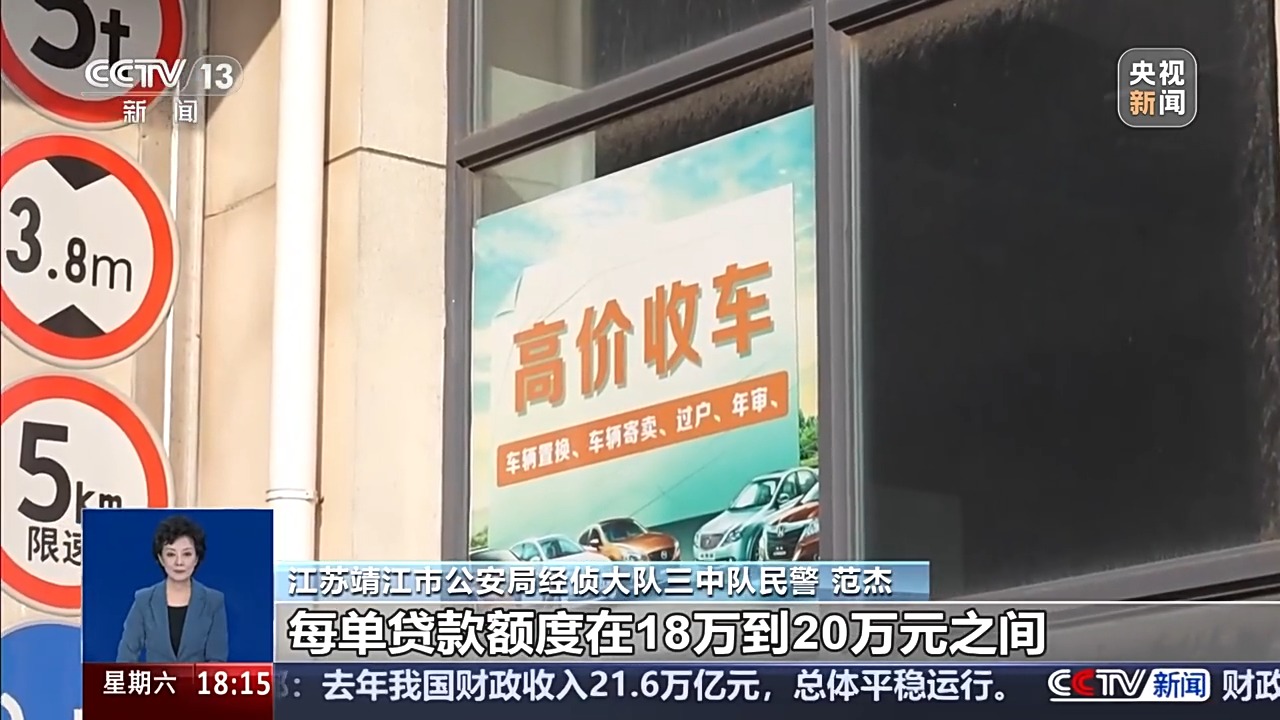
Core Viewpoint - A criminal gang has exploited the auto loan market in China, using fake documents to defraud banks, resulting in over 6.7 million yuan in losses. The police have arrested 37 suspects and uncovered a well-organized fraud scheme [1][2]. Group 1: Fraud Scheme Overview - The gang recruited borrowers nationwide, using false materials to obtain car loans, leading to significant financial losses for banks [1]. - In a specific case, 38 out of 44 loans processed by a bank in Jiangsu were defaulted on shortly after disbursement, indicating a systematic fraud operation [1][2]. - The loans ranged from 180,000 to 200,000 yuan, which were approved automatically by the bank due to their amount being below the threshold for manual review [1]. Group 2: Criminal Operations - The gang's operations involved a clear division of labor, from recruiting borrowers to falsifying documents and selling the cars quickly after purchase [3][8]. - The main perpetrators, identified as Gong and Zhang, orchestrated the scheme by providing upfront payments for the cars while recruiting individuals with good credit histories, referred to as "white households" [3][8]. - The gang utilized online platforms to attract individuals desperate for money, offering them loans with the promise of quick cash [3][5]. Group 3: Execution of the Fraud - Once the loans were secured, the gang would sell the cars within days, often within 2 to 3 days, and the proceeds were funneled into the accounts of the gang leaders [2][9]. - The gang trained the borrowers to respond to bank inquiries with pre-prepared excuses to delay detection of the fraud [7][9]. - The borrowers, while receiving a small fee for their participation, ended up with significant debts and legal consequences due to their involvement in the scheme [9].
异常车贷暴露骗局 起底“无抵押消费贷”诈骗违法犯罪
Xin Lang Cai Jing· 2026-01-31 12:16
Core Viewpoint - The rise of unsecured auto loans has led to an increase in fraudulent activities, with criminal groups exploiting these loans to defraud banks, resulting in significant financial losses. Group 1: Fraudulent Activities - Criminal gangs have targeted unsecured auto loans, using fake documents to obtain loans, leading to direct economic losses exceeding 6.7 million yuan for banks [1][7]. - In a specific case, 38 out of 44 loans processed by a bank in Jiangsu were defaulted after only 1 to 3 repayment periods, with borrowers untraceable [1][3]. Group 2: Modus Operandi - The fraudulent scheme involved recruiting individuals with good credit, referred to as "white households," who were misled into applying for loans without genuine intent to purchase vehicles [5][9]. - The loans, typically ranging from 180,000 to 200,000 yuan, were approved automatically by banks due to their low amounts, increasing the success rate of the fraud [3][5]. Group 3: Criminal Organization Structure - The criminal organization had a clear division of labor, from recruiting borrowers to falsifying documents and selling vehicles quickly after purchase [7][24]. - Key players in the scheme included the main perpetrators who financed the down payments and managed the recruitment of "white households," ensuring a smooth operation [7][16]. Group 4: Impact on Victims - Individuals recruited as "white households" often received minimal compensation, such as 5,000 yuan, while incurring significant debts and damaging their credit records [11][24]. - Many victims were unaware of the full implications of their involvement, leading to legal consequences and financial burdens [13][24].