无糖糕点

Search documents
【提示】无糖食品真的不含糖分吗?来看科普→
Xin Lang Cai Jing· 2026-01-31 13:19
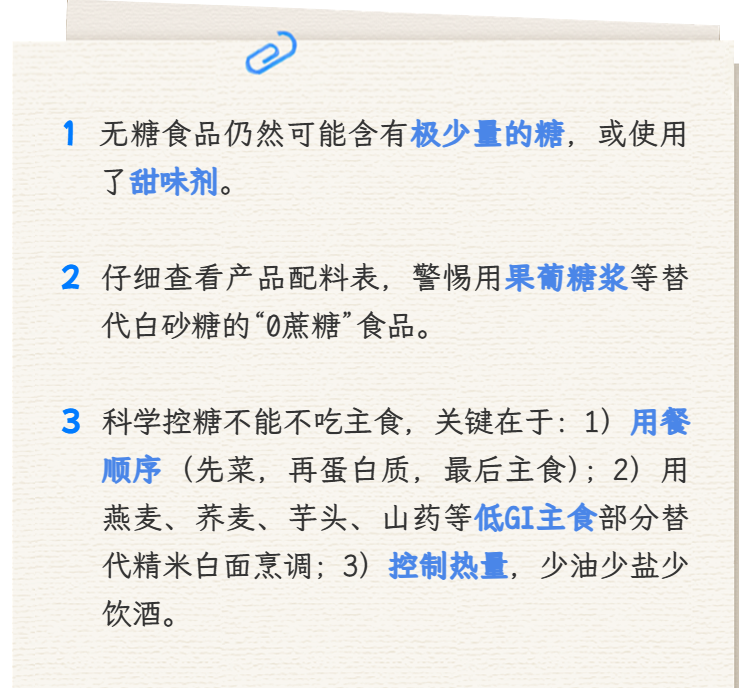
Core Viewpoint - The rise of "sugar-free" products in the market is misleading, as these items may still contain sugar or ingredients that can affect blood sugar levels, making it essential for consumers, especially those with diabetes, to be cautious and informed about their choices [1][3]. Group 1: Misconceptions about "Sugar-Free" Products - "Sugar-free" does not mean 100% free of sugar; products can be labeled as such if they contain ≤0.5 grams of sugar per 100 grams or 100 milliliters [3]. - Many "sugar-free" products use sweeteners but still contain ingredients like flour and fats that can convert to glucose, potentially leading to increased blood sugar levels if consumed excessively [3]. - The term "0 sugar" can be misleading, as some products may contain high-glycemic ingredients like starch syrup or maltose syrup, which can raise blood sugar levels more than regular sugar [3]. Group 2: Dietary Misconceptions for Diabetics - Misconception 1: Avoiding staple foods entirely can lead to low blood sugar or muscle loss; a balanced intake of 200-300 grams of staple foods daily is recommended, with an emphasis on whole grains and legumes [5]. - Misconception 2: A purely vegetarian diet may lead to protein deficiency; it is advised to include quality proteins from fish, poultry, and lean meats along with plenty of dark vegetables [6]. - Misconception 3: Not all fruits should be avoided; low-GI fruits can be consumed in moderation when blood sugar levels are stable [7]. Group 3: Guidelines for Healthy Eating - The 2023 "Adult Diabetes Dietary Guidelines" emphasize the importance of meal order and food variety, recommending starting with vegetables, followed by proteins, and then carbohydrates to slow sugar absorption [7]. - Preferred staple foods include oats and buckwheat, which can help improve blood sugar control [7]. - Cooking should adhere to the "three less" principle: limit daily oil to ≤25g, salt to ≤5g, and alcohol to ≤15g for women and ≤25g for men [7]. - Effective diabetes management focuses on total intake control and optimizing food structure rather than simply avoiding sweets; "sugar-free" products can be included but should be consumed with caution regarding total caloric intake and ingredient scrutiny [7].