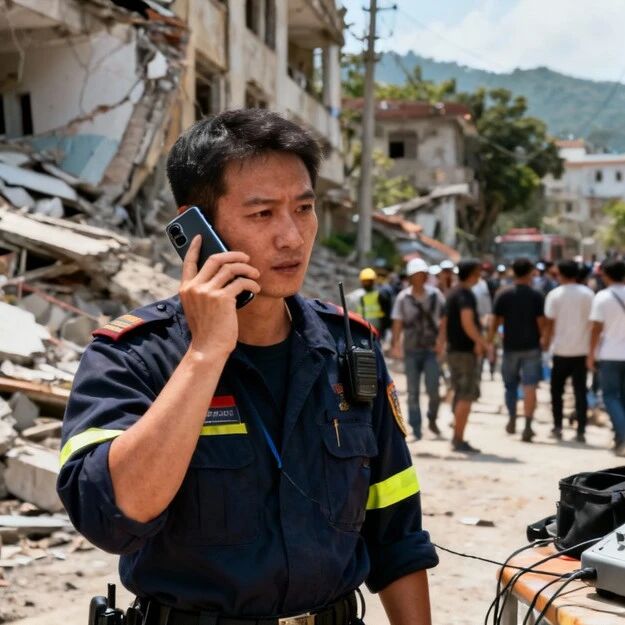
无网应急通信

Search documents
超轻薄手机遇冷,真“AI手机”登场? 聊聊2025年手机行业的新玩意
Xin Lang Cai Jing· 2025-12-18 14:23
Core Insights - The mobile market in 2025 is witnessing significant changes, including the introduction of ultra-thin designs, emergency communication technologies, new folding phone forms, and AI-integrated smartphones, all impacting industry development [1][38]. Ultra-Thin Design - Major manufacturers like Samsung and Apple have launched ultra-thin smartphones, with Samsung's Galaxy S25 Edge at 5.8mm and 163g, and Apple's iPhone Air at 5.6mm and 165g, both priced from 7999 yuan [3][40]. - Despite the hype, sales for these ultra-thin models have been disappointing due to a mismatch between product definition and market positioning, sacrificing essential features for thinness [5][42]. - The ultra-thin design captures a niche market focused on portability and aesthetics, but it is not a mainstream demand, indicating a need for balance between functionality and design [7][45]. Emergency Communication Technology - Huawei's Mate 80 series introduced a "black technology" called emergency communication, allowing point-to-point communication without external networks, crucial for disaster scenarios [9][46]. - This technology operates on a 700MHz frequency, enabling communication over distances of up to 13km and penetrating obstacles like concrete walls, making it vital for rescue operations in extreme conditions [11][50]. - Huawei's approach to emergency communication is distinct from other manufacturers, focusing on critical situations like natural disasters, thus creating a new category of mobile communication [18][55]. New Folding Phone Forms - The folding phone market sees competition with Huawei's Mate XT and Samsung's Galaxy Z TriFold, which have different folding mechanisms and design philosophies [20][57]. - Both devices offer large screens around 10 inches, with Samsung's design providing better protection for the inner screen, while Huawei allows for more flexible screen usage [23][60]. - The emphasis is on software ecosystem development to maximize the advantages of larger screens, as both companies aim to enhance user experience through innovative designs [27][64]. AI-Integrated Smartphones - The introduction of the "Doubao AI phone" marks a significant advancement in AI integration within smartphones, featuring a deep system-level AI assistant capable of multi-modal interactions and automated operations [28][65]. - This AI assistant can perform complex tasks like price comparisons across platforms and provide contextual information, representing a leap towards AI agents in mobile technology [30][70]. - However, concerns regarding execution efficiency and user privacy persist, highlighting the need for ongoing exploration in balancing innovation with data security [35][72].




聊聊华为新推出的无网应急通信
虎嗅APP· 2025-12-01 13:21
Core Viewpoint - Huawei's Mate 80 series introduces a new emergency communication feature that operates without external network support, utilizing the 700MHz frequency band for enhanced coverage and reliability in disaster scenarios [3][4][11]. Group 1: Emergency Communication Features - The Mate 80 series supports two types of emergency communication: one based on 2.4GHz for general use and the other on 700MHz specifically for emergency situations [3][4]. - The 700MHz emergency communication can cover a radius of over 13 kilometers and penetrate through three walls, making it suitable for use in disasters like earthquakes and floods [4][15]. - This feature allows for point-to-point communication without relying on traditional network infrastructure, which is crucial in scenarios where conventional networks are down [6][10]. Group 2: Technical Aspects of 700MHz - The 700MHz frequency band is considered a "golden band" for wireless communication due to its strong coverage capabilities, especially in rural areas [12][14]. - Huawei's implementation of this frequency for emergency communication is notable as it is the first instance of a telecom operator directly authorizing a frequency for terminal manufacturers [17]. - The 700MHz band is part of the 5G spectrum, and while it offers excellent coverage, it has limitations in bandwidth and speed compared to higher frequency bands [14][15]. Group 3: Potential Use Cases and Concerns - The emergency communication feature can support temporary communication setups, such as using drones to establish communication links in disaster areas [21]. - There are several unanswered questions regarding the compatibility of this feature across different brands and the operational details for users in emergency situations [33][35]. - The safety and security of this decentralized communication method are also concerns, particularly regarding authentication and potential vulnerabilities [36]. Group 4: Market Implications - The introduction of this technology highlights the growing interest in private protocols among terminal manufacturers, which may offer better performance compared to public standards [36]. - The success of this feature will depend on its real-world applicability and the resolution of compatibility and security issues [36].