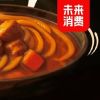
日式鸡肉咖喱饭

Search documents
年销10亿后,「莫小仙」王正齐说要换种活法
36氪未来消费· 2025-10-22 15:00
Core Insights - The article discusses the transformation of the Chinese retail landscape, emphasizing the shift from channel-driven growth to product-driven strategies for brands like Mo Xiaoxian [4][5][11]. Group 1: Company Transformation - Mo Xiaoxian, a fast-food brand established in 2017, has experienced significant growth, achieving over 1 billion yuan in sales by 2022, driven by e-commerce and offline channels [4][5]. - The founder, Wang Zhengqi, has shifted focus from sales to product development, indicating a new phase in the company's strategy as the retail environment evolves towards a quality-driven market [4][5][11]. - The recent launch of a curry product line, developed in collaboration with the Japanese company House Foods, marks a strategic pivot towards creating differentiated products [9][10][11]. Group 2: Market Dynamics - The retail environment in China is undergoing profound changes, with a consensus among industry players that profit maximization is essential, leading to the closure of unprofitable channels [5][15]. - The fragmentation of the retail channel system is evident, with various players targeting specific consumer segments, making competition more intense and necessitating a focus on unique product offerings [15][19]. - The acceptance of curry flavors in China is increasing, with over 2 million posts on Xiaohongshu discussing curry, indicating a growing consumer interest that Mo Xiaoxian aims to capitalize on [9][10]. Group 3: Product Development and Strategy - The development of the curry product line took over nine months, highlighting the company's commitment to quality and consumer experience [11][12]. - Wang Zhengqi emphasizes the need for differentiation and cost leadership in product development, aiming to create unique offerings that resonate with consumers [12][19]. - The company plans to explore more global flavors and traditional Chinese culinary elements, indicating a broader strategy for product diversification [12][19].