
渠道变革

Search documents
国泰海通|食品饮料:春糖反馈理性,把握结构性机会——2026春季糖酒会总结专题
国泰海通证券研究· 2026-03-29 15:17
Group 1 - The core investment recommendation highlights a clear main line for the spring sugar and alcohol fair, indicating that the liquor industry is bottoming out, with increasing differentiation in consumer goods, and strong resilience in condiments, beer, and beverages [1] - The report suggests focusing on liquor companies with price elasticity, leading condiment companies with channel strength and clear price increase expectations, and strong dividend attributes [1] - It emphasizes the importance of leading beer brands with national strategies and strong growth potential, as well as top dairy companies and leading livestock enterprises [1] Group 2 - The spring sugar fair saw stable foot traffic compared to previous years, with rational investment from liquor companies and a shift in focus towards new categories and channels [2] - The liquor industry is experiencing a shift towards C-end operations, with major brands like Moutai and Wuliangye stepping back from hotel exhibitions, reflecting a more pragmatic approach [2] - The report notes that the overall liquor market remains in a bottoming phase, with expectations that the adjustment will take several more quarters to complete, and highlights the need to monitor annual and quarterly reports for performance indicators [2] Group 3 - The report indicates that the demand for condiments is improving due to a marginal recovery in restaurant demand, with a continuous trend of structural upgrades [2] - Beer brands are favored by distributors for their flagship products, with innovations in flavors and channels accelerating [2] - The report also mentions that snack brands are focusing on expanding distribution channels, with a positive outlook for bulk channels and a rising interest in konjac products [2]


汤臣倍健:2025年报点评-20260323
Huachuang Securities· 2026-03-23 08:35
Investment Rating - The investment rating for the company is Neutral (Maintain) with a target price of 12.5 CNY [2]. Core Views - The company reported a total revenue of 6.265 billion CNY for 2025, a year-on-year decrease of 8.38%, while the net profit attributable to shareholders was 782 million CNY, an increase of 19.81% year-on-year [2]. - The fourth quarter of 2025 saw a revenue of 1.35 billion CNY, representing a year-on-year increase of 22.20%, and a net profit of -125 million CNY, which is an improvement from -216 million CNY in the same period last year [2]. - The company is focusing on channel adjustments and new product launches to drive growth, with a target of double-digit revenue growth for 2026 [2][6]. Financial Summary - **Revenue and Profit Forecasts**: - 2025A: Revenue 6,265 million CNY, Net Profit 783 million CNY - 2026E: Revenue 6,959 million CNY, Net Profit 862 million CNY - 2027E: Revenue 7,671 million CNY, Net Profit 972 million CNY - 2028E: Revenue 8,449 million CNY, Net Profit 1,099 million CNY [2][12]. - **Key Financial Ratios**: - Earnings per Share (EPS) for 2025 is projected at 0.46 CNY, with a Price-to-Earnings (P/E) ratio of 25 [2]. - The company’s asset-liability ratio stands at 19.95% [3]. Market Performance - The company’s stock price as of March 20, 2026, is 11.37 CNY, with a market capitalization of 19.234 billion CNY [3]. - The stock has shown a performance of -12% over the past year compared to the CSI 300 index [5]. Strategic Initiatives - The company plans to enhance its online sales through interest e-commerce and cross-border e-commerce, while also optimizing offline channels [6]. - New product launches are expected to contribute significantly to revenue, with nearly 20% of total sales coming from new products in 2025 [6]. Conclusion - The company is undergoing significant adjustments to improve its operational margins and is expected to benefit from new product launches and channel optimizations in the coming years [6].

三全食品(002216):改革成效渐显,经营拐点已至
GF SECURITIES· 2026-03-20 06:39
Investment Rating - The report assigns a "Buy" rating to the company [3]. Core Insights - The report highlights that the reform effects are gradually becoming evident, indicating that the operational turning point for the company has arrived [2]. Industry Overview - The recovery in the restaurant sector is driving demand rebound, and the marginal improvement in the competitive landscape creates strategic opportunities for leading companies. The restaurant demand has slowly recovered from the bottom, with the frozen food industry experiencing stable volume but weak pricing, leading to a gradual easing of competition [14][15]. - The restaurant industry's revenue is expected to reach 5.80 trillion yuan in 2025, reflecting a year-on-year growth of 3.2%, indicating the increasing importance of restaurant consumption in the overall social consumption structure [15]. Short-term Outlook - The company is in a critical period of switching between old and new growth drivers, with product innovation and channel transformation driving strategic changes. The first reform period from 2019 to 2022 established a profit-centric operational model, significantly improving net profit margins [36]. - The company faced a growth bottleneck starting in 2023, with revenue declining due to intense competition and price wars. However, there are signs of marginal improvement in revenue and net profit in 2025, reflecting a shift towards emphasizing profitability and efficiency [37]. Long-term Strategy - The company is expanding its product categories and pursuing overseas expansion to unlock long-term growth potential. It has established a meat products division to diversify its offerings and plans to invest approximately 280 million Australian dollars to build a factory in Australia, aiming to penetrate the Oceania and Southeast Asian markets [9][9]. - The company is focusing on product innovation aligned with health and scenario-based consumption trends, which is expected to drive revenue growth in the future [53]. Financial Forecast - The company is projected to achieve a net profit of 540 million yuan in 2025, with a corresponding PE ratio of 19.3. The estimated fair value per share is 13.43 yuan, based on a target PE of 20 times for 2026 [9][9].

重庆啤酒(600132):2025年年报点评:高档产品驱动结构优化,诉讼和解增厚25年利润
EBSCN· 2026-03-11 07:09
Investment Rating - The report maintains a "Buy" rating for Chongqing Beer (600132.SH) with a current price of 57.04 CNY [1] Core Insights - In 2025, Chongqing Beer achieved a revenue of 14.72 billion CNY, a year-on-year increase of 0.5%, and a net profit attributable to shareholders of 1.23 billion CNY, up 10.4% year-on-year [5] - The company experienced a slight increase in sales volume, driven by high-end products, with beer sales reaching 2.9952 million kiloliters, a year-on-year increase of 0.68% [5] - The company’s gross margin improved to 50.88% in 2025, up 2.3 percentage points year-on-year, primarily due to lower raw material costs and supply chain optimization [7] Summary by Relevant Sections Revenue Performance - In Q4 2025, the company reported revenue of 1.66 billion CNY, a year-on-year increase of 5.2% [5] - The average price per ton of beer was approximately 4,774 CNY, a year-on-year increase of 0.22% [5] Product Segmentation - Sales of high-end, mainstream, and economy products in 2025 were 1.504 million, 1.379 million, and 0.112 million kiloliters, respectively, with year-on-year changes of +3.2%, -2.0%, and +0.5% [6] - High-end products, particularly the Carlsberg and Fenghua Xueyue brands, showed strong performance [6] Cost and Profitability - The company’s sales expense ratio was 18.03% in 2025, an increase of 0.88 percentage points year-on-year, reflecting increased investment in brand and channel support [7] - The net profit margin for 2025 was 16.83%, an increase of 1.47 percentage points year-on-year [7] Future Outlook - For 2026, the company expects stable barley costs but potential increases in aluminum packaging costs, indicating a narrowing of cost advantages compared to 2025 [8] - The company plans to continue its "Jiasu Yangfan" strategy, focusing on channel deepening and innovation, particularly in non-dining and instant retail channels [8]

“亿滋血”注不进迈大,皇冠曲奇奥利奥不好卖了?
3 6 Ke· 2026-03-09 08:57
Core Insights - The resignation of Zhu Yijing from Mayda Group highlights the challenges faced by foreign snack brands in China, as they navigate a significant market transformation [1][2][3] - The restructuring at Mondelez China indicates a strategic shift in response to declining sales and increasing competition from discount snack retailers [8][9] Group 1: Company Changes - Zhu Yijing's departure from Mayda Group occurred just over a year after her appointment, with Henry Atmadja temporarily taking over her role [1] - Zhu's previous experience at Mondelez China involved leading the market and sales strategies for brands like Oreo, which had a significant market share in the Chinese cookie sector [3][4] - The rapid personnel changes initiated by Zhu at Mayda, including the hiring of former Mondelez employees, created integration challenges within the existing team [4][5] Group 2: Market Dynamics - The snack industry is experiencing a "mid-life crisis," characterized by a decline in traditional retail channels and the rise of discount snack stores [2][5] - The high-end gift market is facing a "K-shaped" differentiation, with consumers favoring more cost-effective products over premium options [4][5] - Mayda's positioning of its Crown Danish Cookies as a mid-to-high-end product lacks competitive pricing against discount retailers, exacerbating its market challenges [5] Group 3: Channel Conflicts - Mondelez is undergoing a significant channel restructuring, splitting its new retail development department into two to address conflicts between traditional and emerging snack retail channels [8][11] - The phenomenon of "price inversion" is prevalent, where products are sold at significantly lower prices in discount channels compared to traditional supermarkets, creating challenges for brand pricing strategies [9][10] - The fragmentation of distribution channels complicates price control for foreign brands, leading to potential brand value dilution as they struggle to maintain their premium positioning [10][12] Group 4: Competitive Landscape - The rise of discount snack retailers has shifted the competitive landscape, with these stores capturing a significant market share and emphasizing cost efficiency over brand loyalty [13][14] - The market for snack retail has seen a dramatic shift, with discount channels now accounting for 37% of sales, surpassing traditional supermarkets [14] - Brands like Oreo are attempting to adapt by introducing customized products for discount channels, but face challenges in maintaining their premium brand identity [15]

兔宝宝20260303
2026-03-04 14:17
Summary of Conference Call for Company "兔宝宝" Industry Overview - The company operates in the wood-based panel industry, focusing on products such as particleboard and home furnishing solutions. Key Points and Arguments Sales and Inventory Management - Inventory for the panel business has decreased to 15-20 days, with a sales target of 15.5 billion yuan for 2026, emphasizing the recovery of retail channels [2][3] - The particleboard business is experiencing explosive growth, with sales of the property board expected to reach 16 million units in 2025 (a 300% increase year-on-year) and a target of 25 million units for 2026 [2][3] Product Strategy - The company is focusing on high-end product development, launching the "Pure New Board" to enhance gross margins, with brand usage fees increasing from 5 yuan (for colored steam boards) to 12 yuan [2][8] - The product structure is being upgraded, with a target of producing 2.5 million units of the "Pure New Board" and a total of 25 million units of particleboard by 2026 [7] Financial Performance and Risks - Accounts receivable risks are concentrated with Vanke, amounting to 347 million yuan, with potential provisions for long-term receivables reaching up to 100% [2][9] - The company anticipates a stable gross margin in 2026, supported by high-margin auxiliary materials and structural optimization [2][6] Business Segments Performance - The home furnishing segment, primarily focused on custom solutions, showed slight growth in 2025, while the Yufeng Hantang business is expected to cease production in 2026 due to significant losses [3][4] - The revenue for Yufeng Hantang is projected to shrink to around 100 million yuan in 2026, with a small loss expected [5] Dividend Strategy - The company plans to increase dividend payouts gradually over the next few years, with no major capital expenditures anticipated for 2026-2027 [2][10][11] Market Dynamics - The overall market for particleboard is expected to stabilize in 2026 after a period of decline, with potential for slight price increases due to supply and demand changes [5][6] - The company is enhancing its retail channel strategy, focusing on upgrading store formats and expanding into rural markets [4][15] Competitive Landscape - The company’s market share in the furniture factory channel is currently low, estimated at around 2%, indicating significant room for growth as the industry consolidates [13][14] - The competitive environment is intensifying, particularly in the home decoration and custom furniture sectors, necessitating a focus on product innovation and customer service [17][18] Future Outlook - The company aims to strengthen its operational capabilities in rural markets and enhance its online retail presence, with plans to open 100 model stores showcasing integrated solutions [15][16] Additional Important Information - The company is actively managing its receivables and assessing potential impairments, particularly concerning major clients [9] - The focus on high-margin products and structural optimization is expected to mitigate competitive pressures and maintain profitability [6][17]

鸣鸣很忙(01768):鸣响渠道变革,忙驭万店星辰
GOLDEN SUN SECURITIES· 2026-02-27 11:32
Investment Rating - The report initiates coverage with a "Buy" rating for the company [3]. Core Insights - The company is leading a transformation in the retail sector by disrupting traditional operating models, aiming to meet consumer demand for cost-effectiveness and streamlining supply chains [1][15]. - The company has rapidly expanded its store network, reaching over 21,000 stores by November 2025, and is projected to achieve revenues of 393.4 billion RMB in 2024, with a two-year CAGR of 203.0% [1][3]. - The company is expected to become the largest chain retailer of snacks and beverages in China, with significant growth in net profit and net profit margin anticipated [1][3]. Summary by Sections Company Overview - The company, established as a leading player in the discount snack sector, has expanded its store count significantly, with a focus on meeting consumer needs for value [1][15]. - By the end of 2025, the company aims to have over 21,000 stores across 28 provinces, achieving a GMV of 661 billion RMB in the first three quarters of 2025, reflecting a year-on-year increase of 74.5% [15]. Industry Transformation - The retail landscape in China is evolving towards discount models, with the company leveraging upstream direct procurement and centralized pricing to enhance cost advantages [2][23]. - The market for snacks and beverages is projected to grow significantly, particularly in lower-tier cities, with the company positioned to capitalize on this trend [2][23]. Growth Path - The company's robust management and digital empowerment across its supply chain have contributed to its resilience and operational stability, allowing it to maintain a lower closure rate compared to competitors [3][15]. - Future growth is expected to be driven by further expansion in northern and lower-tier markets, alongside refined operational strategies [3][15]. Financial Projections - The company is projected to achieve revenues of 649.8 billion RMB in 2025, with net profits expected to reach 22.5 billion RMB, reflecting a year-on-year growth of 169.8% [3][5]. - The financial outlook indicates a steady increase in both revenue and profitability, with net profit margins expected to improve as operational efficiencies are realized [3][5].
一斤松子抵20斤猪肉?实探新春“炒货市场”
Hua Xia Shi Bao· 2026-02-22 02:03
Core Viewpoint - The rising prices of nuts and seeds during the Spring Festival have led to consumer hesitation, with some products priced significantly higher than traditional food items, prompting discussions about the pricing logic in the snack industry [4][9][19] Pricing Trends - Prices for nuts have surged, with sunflower seeds reaching 23.8 yuan per jin and hand-shelled pine nuts as high as 218 yuan per jin, leading to comparisons where one jin of nuts can buy 20 jin of pork [4][9][11] - The pricing strategy has shifted from a focus on raw material costs to include factors like rental costs, emotional premiums, and storytelling, reflecting a fundamental change in the industry’s pricing paradigm [13][14] Consumer Behavior - Consumers are increasingly opting for bulk purchases to manage costs, with many expressing discomfort over high prices and the shift from traditional pricing methods to per-piece pricing [6][9] - The perception of high-end brands like Xueji has changed, with consumers now viewing them as benchmarks for value rather than luxury [9][14] Market Dynamics - The contrast between bustling retail stores and quieter wholesale markets indicates a significant transformation in the distribution channels and value structures within the nut industry [11][13] - The growth of gift box products during the festive season highlights a shift in consumer preferences, where the social currency of gifting is becoming more important than the actual food value [16][18] Future Outlook - Analysts predict a dual strategy for brands, focusing on both premium gift boxes and affordable bulk options to cater to diverse consumer needs [18][19] - The industry is expected to return to a focus on value, with a potential shift towards transparency in pricing and product quality to regain consumer trust [19]
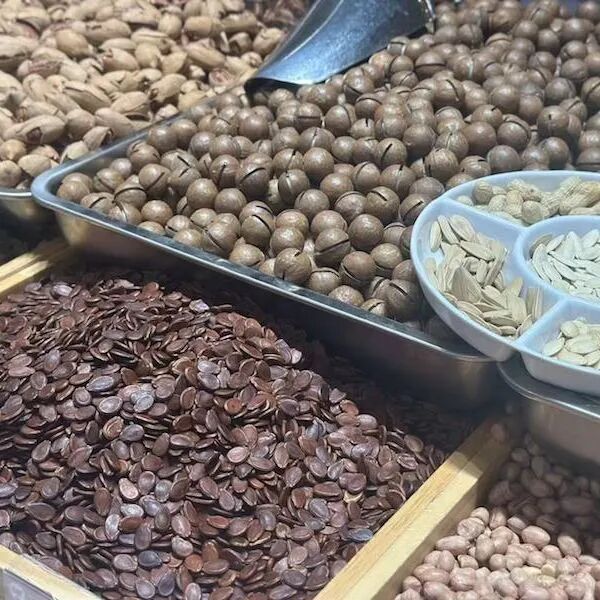
一斤松子抵20斤猪肉?实探新春“炒货市场”|新春走基层
Sou Hu Cai Jing· 2026-02-21 09:22
Core Viewpoint - The rising prices of snack foods during the Spring Festival have led to consumer hesitation, with some products priced significantly higher than traditional food items, prompting discussions about the pricing logic behind these snacks [4][6][12]. Group 1: Price Trends and Consumer Behavior - Snack prices have surged, with sunflower seeds exceeding 23 yuan per jin and hand-shelled pine nuts reaching 218 yuan per jin, leading to comparisons with luxury brands [4][6]. - Consumers are increasingly opting for bulk purchases to manage costs, reflecting a shift in purchasing behavior from traditional fixed weights to more flexible options [5][8]. - The psychological impact of high prices has altered consumer perceptions, with traditional snacks now viewed as premium products rather than everyday items [8][11]. Group 2: Market Dynamics and Pricing Logic - The pricing strategy in the snack industry has shifted from a focus on raw material costs to include factors like rental costs and emotional value, resulting in higher consumer prices [11][12]. - The disparity between wholesale market conditions and retail store dynamics highlights a transformation in the snack industry, with retail locations experiencing high foot traffic but also incurring significant operational costs [9][11]. - The emergence of gift boxes as a significant product category reflects a change in consumer expectations, where the social value of snacks is becoming more important than their nutritional value [12][15]. Group 3: Future Trends and Industry Insights - Analysts predict a dual strategy for brands, focusing on both premium gift packaging and affordable bulk options to cater to diverse consumer needs [16][17]. - The snack industry is expected to face challenges in balancing quality, innovation, and pricing, as consumer expectations evolve alongside market dynamics [17][18]. - Transparency in pricing and product quality will be crucial for brands to build consumer trust and maintain competitiveness in a rapidly changing market [16][17].
瑞尔特业绩预告致股价震荡,机构看好长期增长
Jing Ji Guan Cha Wang· 2026-02-14 09:41
Group 1 - The core focus of the market on Ruilite (002790) is the ongoing impact of the 2025 performance forecast and the volatility of its stock price [1] - Ruilite's 2025 performance forecast, released on January 28, 2026, indicates a net profit decline of over 50% year-on-year, primarily due to intensified competition in the home and bathroom industry and insufficient market demand [2] - The company's stock price has shown a downward trend, with a cumulative decline of 1.61% over the past seven trading days, closing at 8.53 yuan on February 13, 2026 [3] Group 2 - Institutional views as of February 14, 2026, suggest a target price of 10.40 yuan for Ruilite, indicating a potential upside of 20.51% from the current stock price [4] - The forecast for 2025 indicates earnings per share of 0.24 yuan, with a net profit decline of 44.77%, but a potential recovery in positive growth is expected in 2026 [4] - The implementation of 3C certification for smart toilets may optimize the competitive landscape of the industry, with a focus on channel transformation and product innovation being long-term highlights for the company [4]
