
时空壶W4 Pro

Search documents
2025翻译硬件变局:讯飞绑定办公,有道潜入学习,时空壶攻占耳朵
3 6 Ke· 2025-12-20 01:50
Core Viewpoint - The translation hardware industry is evolving from a niche market to a more integrated capability within various devices, driven by advancements in AI translation technology, which allows translation to be abstracted from dedicated hardware to a functional capability that can be embedded in multiple products [1][22][24]. Group 1: Industry Challenges - Translation hardware has historically faced a paradox where manufacturers aim to create mass-market products, but users only utilize them in specific scenarios, leading to low repeat purchases [1][5]. - The core selling points of translation devices, such as accuracy and offline capabilities, have diminished due to the maturity of mobile translation apps, making it difficult for dedicated devices to justify their necessity [5][12]. Group 2: Product Evolution - By 2025, the translation hardware category is expected to undergo significant changes, not due to a surge in demand but rather through product upgrades that leverage AI advancements, resulting in a qualitative leap in translation quality [5][22]. - Companies like Youdao and iFlytek are focusing on embedding translation capabilities into broader AI systems rather than creating standalone products, emphasizing long-term utility over short-term trends [6][8]. Group 3: New Product Forms - The emergence of translation headphones, as exemplified by the product W4 from Shikonghu, illustrates a shift from dedicated devices to more frequently used wearable technology, enhancing user experience with minimal intrusion [8][11]. - Smart glasses are also entering the translation market, offering features like subtitle translation, although they face challenges such as latency and noise interference [11][12]. Group 4: AI Integration - The transition from machine translation to AI translation represents a fundamental shift, allowing devices to understand context and user intent, which is crucial for natural conversation flow [12][16]. - AI models are enabling translation devices to support real-time, bidirectional communication, enhancing the overall user experience and making conversations more fluid [16][18]. Group 5: Future Market Dynamics - The translation hardware market is not expected to see a dramatic increase in shipment volumes but is undergoing a critical transformation in how translation capabilities are perceived and integrated into various products [22][24]. - The future competition will focus on understanding real-world scenarios and refining translation details, with companies that invest in long-term improvements likely to succeed [22][24].

AI耳机大爆发,不到500元搭载大模型,传统耳机完犊子了?
3 6 Ke· 2025-10-09 00:32
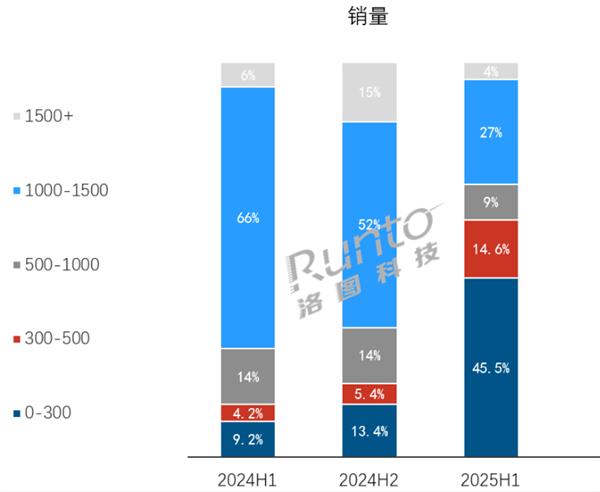
Core Insights - AI headphones are becoming mainstream in the wireless headphone market, with over 60% of sales for AI headphones priced below 500 yuan [1][3] - The rapid adoption of AI headphones is outpacing the previous trend of TWS (True Wireless Stereo) headphones [3][15] - The integration of AI into wireless headphones enhances features such as voice interaction, noise cancellation, and translation, making them more appealing to consumers [4][11] Market Trends - The prevalence of AI headphones is driven by a strong demand for application ecosystems and a significant reduction in AI costs [15][22] - Many AI headphones now include features like smart voice assistants and AI translation, even at lower price points [4][11] - The market for AI headphones is expected to continue expanding, particularly in the entry-level segment priced below 500 yuan, while mid-to-high-end products will focus on differentiated features [22][23] Technological Advancements - AI headphones leverage AI models to provide enhanced functionalities, such as adaptive noise cancellation and real-time translation, improving user experience [12][14] - The cost of implementing AI in hardware has decreased significantly, allowing for broader adoption of AI features in headphones [15][17] - The reliance on smartphone apps for AI functionality minimizes the need for additional hardware costs in headphones [17][18] User Experience - While AI headphones offer improved functionalities, user experiences can vary significantly, with some products failing to deliver on their promises [18][21] - Professional-grade AI headphones provide superior performance in real-time translation compared to standard models [19][21] - Concerns regarding privacy and data security in AI headphones are prevalent, as many features require internet connectivity for processing [21][22] Future Outlook - The future of AI headphones is likely to see a clear distinction between entry-level and premium products, with the latter focusing on specific user needs [22][23] - The integration of AI into headphones is expected to become standard, similar to the evolution of smartphones, making AI a fundamental aspect of wireless headphones [23]
L3 级 AI 同传标杆,重塑跨语言沟通场景的时空壶W4Pro
Zhong Guo Chan Ye Jing Ji Xin Xi Wang· 2025-06-17 03:11
Core Insights - The W4 Pro is the world's first L3 level AI simultaneous translation headset, redefining cross-language communication capabilities and marking a milestone in industry technological innovation [1][2] Group 1: Technology Advancement - The AI simultaneous translation technology is categorized from L1 to L5, with L1 being limited to text translation and L5 representing the most advanced capabilities [1] - W4 Pro achieves real-time bidirectional translation with a response time of 3-5 seconds, integrating AI contextual understanding and personalized translation features [1][3] Group 2: Application Scenarios - In business settings, W4 Pro supports 40 languages and 93 accents, enhancing communication efficiency during international meetings and negotiations by automatically summarizing key points [2] - For travel, W4 Pro acts as a "personal translator," automatically recognizing and translating speech in various everyday situations, while its noise-cancellation technology ensures clarity in noisy environments [2] - In education, W4 Pro facilitates real-time translation of lectures and can adapt to different learning needs, improving both learning efficiency and experience [2] Group 3: Core Technologies - The bidirectional translation technology allows for natural and fluid conversations, suitable for high-frequency interaction scenarios [3] - The integration of AI algorithms supports contextual relevance and semantic correction, ensuring accurate translations of complex sentences and professional terminology [3] - The HybridComm system achieves a high accuracy rate of 98% in audio reception, with translation response times reduced to 0.2 seconds, enabling immediate feedback [3] Group 4: Future Developments - The company plans to advance W4 Pro to L4 and L5 levels by enhancing AI emotional recognition and cultural semantic analysis capabilities, aiming to reduce communication delays to under 1 second for specialized scenarios [3]