
星衍

Search documents
突破天文观测深度极限,AI绘制“最深”深空星系
Xin Lang Cai Jing· 2026-02-23 08:22
Core Insights - Tsinghua University has developed an astronomical AI model named "Xingyan" that enhances the detection of faint celestial bodies, unlocking key information about the origins and evolution of the universe [2][3] - The model overcomes limitations of traditional astronomical observations, which are hindered by hardware upgrades and complex noise interference, by utilizing self-supervised spatiotemporal denoising technology [2] Group 1 - The AI model "Xingyan" has improved the deep space detection depth by one magnitude and increased detection accuracy by 1.6 magnitudes when applied to the James Webb Space Telescope [3] - This enhancement is equivalent to increasing the effective aperture of the space telescope from approximately 6 meters to nearly 10 meters [3] - The team discovered over 160 early candidate galaxies from 200 million to 500 million years after the Big Bang, tripling the number found in previous studies [3] Group 2 - The model has produced the deepest images of deep space galaxies to date, providing new critical data for exploring the origins of galaxies during the cosmic dawn [3] - "Xingyan" is capable of decoding vast amounts of data from space telescopes and is compatible with various detection devices, positioning it as a potential universal deep space data enhancement platform [3]

青年早新闻|“日本没资格要求入常”
Xin Lang Cai Jing· 2026-02-21 00:47
Group 1 - China's UN representative reiterated that Japan has no qualification to demand a permanent seat on the Security Council due to its refusal to reflect on historical aggression and interference in other countries' sovereignty [1] - The representative emphasized that Security Council reform should not only benefit a few powerful countries but also enhance the representation and voice of developing countries, particularly addressing historical injustices faced by Africa [1] - The need for a strategic and long-term perspective in planning Security Council reforms was highlighted, indicating that current world dynamics should not be the sole consideration [1] Group 2 - Chinese scientists developed an astronomical AI model named "Xingyan" that can detect signals from faint celestial bodies, achieving the deepest space imaging known to date, reaching over 13 billion light-years [3] - A groundbreaking AI-based diagnostic system for rare diseases, named DeepRare, was published in the journal Nature, providing a solution to the global challenge of high misdiagnosis rates in rare diseases [4]
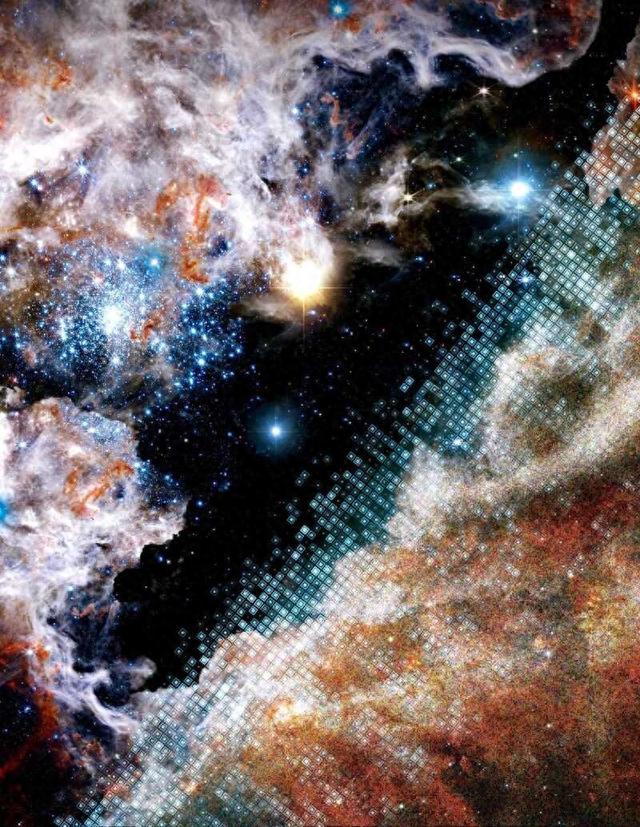
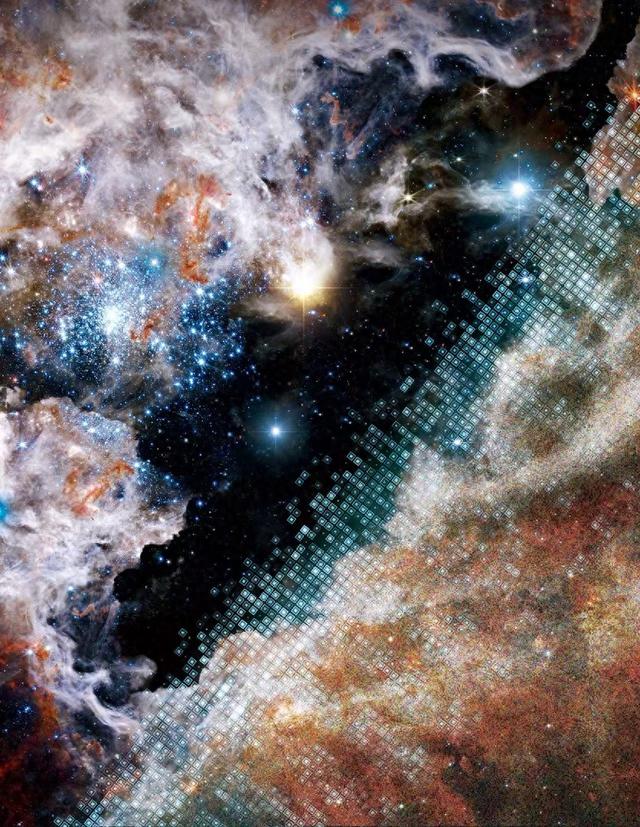
我国科学家用天文AI模型绘制“极致深空图”,刷新深空探测极限
Xin Lang Cai Jing· 2026-02-20 09:19
Core Viewpoint - Chinese scientists have developed an astronomical AI model named "Xingyan" based on computational optics principles and artificial intelligence algorithms, capable of unlocking faint celestial signals and detecting galaxies over 13 billion light-years away, achieving the deepest space imagery known internationally [1] Group 1 - The "Xingyan" model can decode massive data from space telescopes and is compatible with various detection devices, positioning it as a potential universal deep space data enhancement platform [1]
刷新深空探测极限 我国科学家用天文AI模型绘制“极致深空图”
Xin Hua She· 2026-02-20 09:05
Core Viewpoint - Chinese scientists have developed an astronomical AI model named "Xingyan" based on computational optics principles and artificial intelligence algorithms, capable of unlocking faint celestial signals and detecting galaxies over 13 billion light-years away, achieving the deepest space images known internationally [1] Group 1 - The "Xingyan" model can decode massive data from space telescopes and is compatible with various detection devices, positioning it as a potential universal deep space data enhancement platform [1]