星闪SLE

Search documents
2025年华为园区网络星闪SLE物联数采技术白皮书-华为
Sou Hu Cai Jing· 2025-11-25 13:24
Core Insights - The article introduces Huawei's Sparklink Low Energy (SLE) technology, which aims to provide efficient and reliable wireless data collection solutions for IoT scenarios, addressing the limitations of traditional short-range communication technologies in terms of connection density, bandwidth, latency, and power consumption [1][13]. Group 1: Technology Overview - SLE technology is designed to meet the diverse data collection needs in various IoT applications, including smart homes, smart manufacturing, and the power industry [1][3]. - The SLE technology architecture consists of three layers: access layer, basic service layer, and basic application layer, supporting various communication scenarios [1][15]. - The access layer supports multiple communication scenarios, including G-T node communication, G-G node communication, and T-T node relay communication, utilizing modulation methods such as GFSK, QPSK, and 8PSK [1][19]. Group 2: Advantages and Comparisons - Compared to traditional technologies like Wi-Fi, BLE, and LoRa, SLE offers significant advantages, including an air interface rate of 12 Mbps, which is six times that of BLE, and an 8 dB improvement in coverage capability [2][10]. - SLE supports up to 20 concurrent connections and employs dual authentication and national encryption algorithms (SM4/AES), enhancing security while maintaining comparable power consumption to similar technologies [2][10]. Group 3: Application Scenarios - A typical application focuses on data collection in the power industry, providing a unified access solution that meets the low-power access needs of narrowband sensors while supporting high-bandwidth terminals for data transmission [3][11]. - The SLE technology is positioned as an efficient domestic solution for IoT data collection, with potential applications in smart manufacturing and smart cities [3][11].


新华财经晚报:6部门发布19条举措加强金融支持
Xin Hua Cai Jing· 2025-06-24 13:22
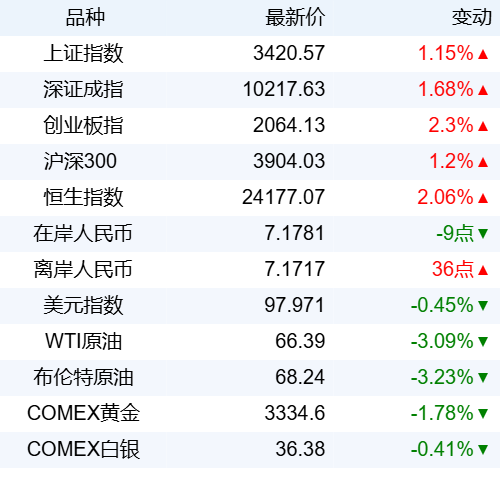
Group 1 - The People's Bank of China and five other departments issued 19 measures to enhance financial support for boosting and expanding consumption, focusing on six key areas including enhancing consumer capacity and optimizing the consumption environment [1] - Guangdong province is prioritizing foreign trade enterprises to help them manage inventory, explore markets, and reduce costs through coordinated policies and resources [1][3] - The Ministry of Human Resources and Social Security clarified that personal pension investment income is subject to a 3% individual income tax upon withdrawal, without distinction between principal and investment income [3] Group 2 - The Ministry of Commerce announced the organization of a 2025 campaign to promote new energy vehicle consumption in rural areas, emphasizing the construction of parking lots, charging stations, and after-sales service points [2] - A draft amendment to the Anti-Unfair Competition Law was submitted for review, aiming to address data rights violations and malicious trading practices [2] - The food safety law amendment was presented for the first time, focusing on enhancing regulation of liquid food transport and registering infant formula liquid milk [2] Group 3 - The Iranian military denied launching missiles at Israel, countering claims made by Israeli officials regarding violations of a ceasefire agreement [5] - The European Central Bank's official indicated potential for further policy easing if current inflation expectations remain moderate [5] - Canada and the European Union signed a defense and security agreement to enhance cooperation in defense industrial collaboration and crisis management [5] Group 4 - The latest market data shows positive movements in major indices, with the Shanghai Composite Index rising by 1.15% and the Shenzhen Component Index increasing by 1.68% [4] - The onshore RMB depreciated slightly by 9 points, while the offshore RMB appreciated by 36 points [4] - WTI and Brent crude oil prices decreased by 3.09% and 3.23%, respectively, indicating a downward trend in oil markets [4]