智元人形机器人灵犀X2青春版

Search documents
机器人租赁行业能否跑出下一个“滴滴”?
3 6 Ke· 2026-03-11 09:19
Core Insights - The rapid rise and subsequent decline of the robot rental market post-Spring Festival highlights the volatility of demand driven by novelty and seasonal events [1][2][15] - The emergence of multiple rental platforms and aggressive pricing strategies has transformed robots from luxury items to accessible consumer goods, significantly increasing market participation [11][12][14] Group 1: Market Dynamics - The robot rental market experienced a surge during the Spring Festival, with orders increasing nearly 70% compared to previous periods, driven by festive events [4] - The average daily rental price for robots has drastically decreased, with some models now available for as low as 78 yuan, compared to previous highs of 15,000 yuan [6][11] - The influx of new rental companies, with over 1,500 established in 2025 alone, has led to a supply-demand mismatch, resulting in price drops and increased competition [26][29] Group 2: Consumer Behavior - A significant portion of rental orders (30%) during the Spring Festival came from first-time users, indicating a growing interest in robotic experiences among the general public [4] - The novelty effect of robots has diminished, leading to consumer fatigue as many performances and interactions appear repetitive and lack differentiation [30][32] Group 3: Future Outlook - The robot rental market is projected to grow from 1 billion yuan in 2025 to at least 10 billion yuan by 2026, driven by capital investment and the need for innovative applications beyond entertainment [14][15] - To sustain growth, the industry must evolve from providing novelty entertainment to offering practical applications in various sectors, such as manufacturing and healthcare [33][34] - Establishing a robust risk management framework and enhancing service quality will be crucial for long-term success in the competitive landscape [35][40]


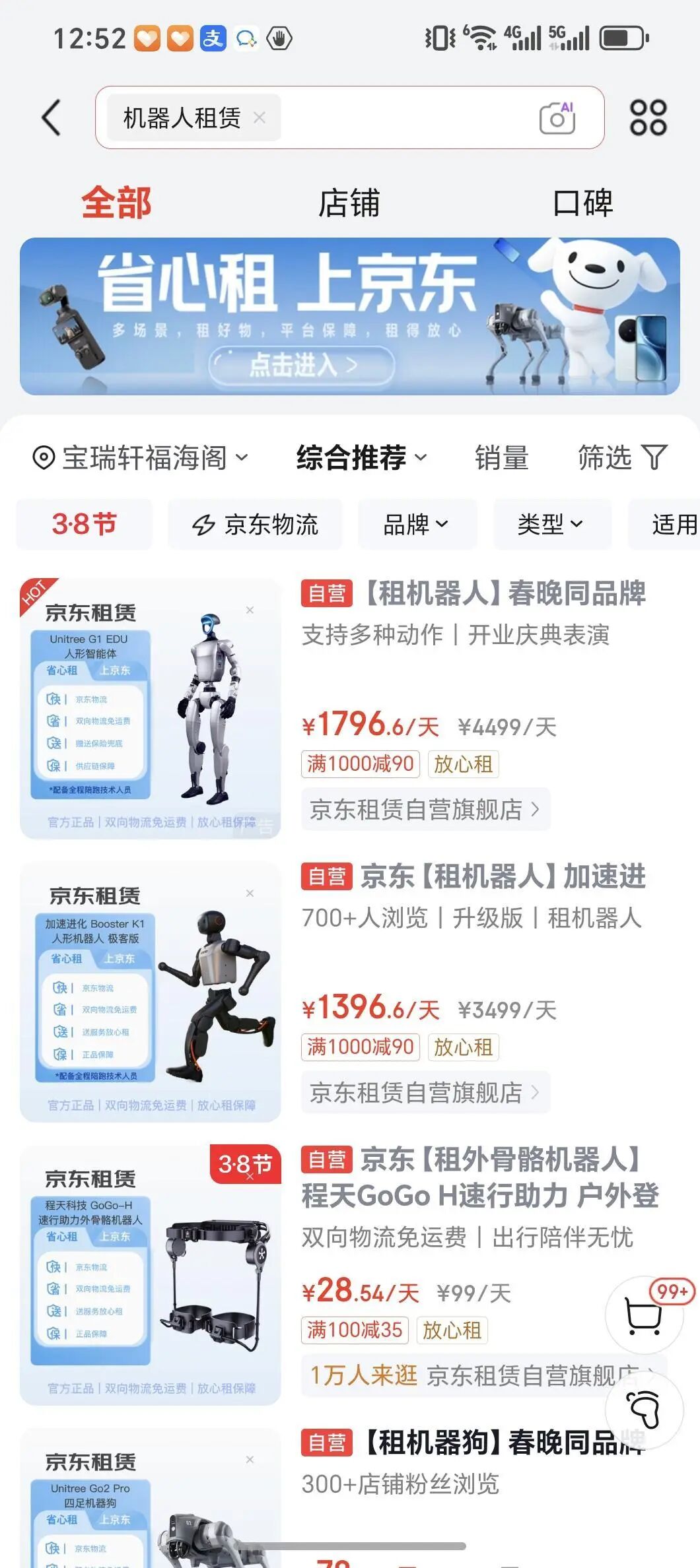
春节新晋“年味担当”,机器人租赁,还能火多久?
3 6 Ke· 2026-02-21 01:57
Core Insights - The rise of robot rentals during the Spring Festival has transformed them from a niche market to a mainstream service, with robots becoming integral to various celebrations and events [3][4][6] - The demand for robot rentals surged during the Spring Festival, with platforms reporting significant increases in orders and gross merchandise volume (GMV) [1][4][9] - The market is experiencing a shift from high demand to oversupply, leading to a decrease in rental prices and increased competition among rental companies [4][6][10] Group 1: Market Dynamics - The 2026 Spring Festival saw the highest participation of robots in performances, contributing to their popularity and increased rental demand [1][3] - The rental market for robots has expanded significantly, with over 1,500 new rental companies established in 2025, marking a 48.1% increase from 2024 [4][9] - The average rental price for robots has dropped significantly, with some prices halving compared to previous years, indicating a shift towards a more competitive market [4][6] Group 2: Platform Developments - Major platforms like "Qingtian Rent" and "Wanjiyi Rent" have entered the robot rental market, offering competitive pricing and a variety of rental options [6][9] - The introduction of promotional campaigns, such as "999 yuan nationwide robot experience plan," has attracted new users and increased market penetration [9][10] - The platforms are focusing on user experience and accessibility, aiming to make robot rentals as convenient as renting a shared charging device [6][9] Group 3: Future Outlook - The robot rental market is projected to exceed 10 billion yuan in 2025 and reach at least 100 billion yuan in 2026, driven by increased production and market demand [9][10] - As the market matures, companies will need to address challenges such as content differentiation, service standardization, and cost optimization to remain competitive [15][16] - The industry is transitioning from a short-term trend to a long-term service ecosystem, emphasizing innovation and comprehensive upgrades in operations and services [16][17]