
智能烹饪设备

Search documents
告别校外供餐!北京所有中小学明年底将实现校内食堂供餐
Xin Lang Cai Jing· 2026-01-14 13:25
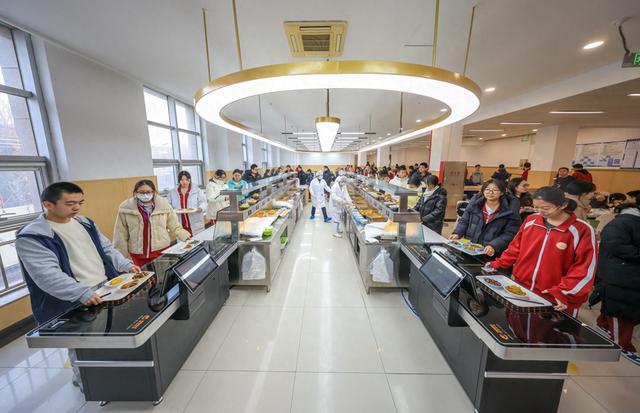
Core Insights - Beijing's school meal reform has shown significant progress, with over 1,300 school canteens upgraded and 366 new smart canteens operational, leading to a noticeable increase in satisfaction among students and parents [2][11] Group 1: Smart Canteen Implementation - The introduction of AI-driven cooking robots in the smart canteen at Pinggu Middle School enhances cooking efficiency and consistency, with 400 standardized recipes recorded [4][7] - The smart canteen features two parallel "smart dining lines" and a "smart monitoring platform" that ensures food safety through real-time tracking and monitoring [9] Group 2: Overall Reform Progress - Since the start of the special rectification work in the fall of 2025, satisfaction with school meals has risen to over 85% among students and parents [11] - The initiative aims to completely transition to in-school meal provision by the end of 2027, moving away from external catering services [13] Group 3: Future Plans and Innovations - Beijing plans to adopt a tailored approach for each school, including standardized canteens and a "central kitchen + micro-kitchen" model to address space constraints in urban areas [13] - All food ingredients will be integrated into a unified procurement platform to ensure transparency and traceability [13] Group 4: Educational Impact - The school meal reform is positioned as a core component of providing quality education and promoting the overall health and development of students [15]

第 112 届糖酒会:繁荣表象下的行业阵痛与破局求索
Xin Lang Zheng Quan· 2025-03-25 10:49
Core Insights - The 112th National Sugar and Wine Fair in Chengdu showcased a record exhibition area of 325,000 square meters and over 6,600 participating companies, yet the atmosphere was notably cold compared to previous years [1] - The price for prime exhibition spaces has halved from 1.5 million yuan in 2024 to 800,000 yuan, and foot traffic at key hotels has decreased by 30% year-on-year, with major brands like Wuliangye and Luzhou Laojiao canceling their hotel exhibits [1] Summary by Sections White Wine Industry: From "Volume and Price Rise" to "Value Reconstruction" - High channel inventory and pressure on pricing systems have emerged, with inventory levels around three months due to weak sales during the 2024 Mid-Autumn Festival and National Day peak seasons [2] - Distributors have shifted their focus from "grabbing new products" to "clearing inventory," indicating a need for actual sales data rather than relying solely on policy-driven inventory management [2] - Leading companies like Wuliangye and Yanghe are adopting a "decentralization" strategy, directly reaching consumers through digital membership systems, while smaller brands face challenges and may exit the market, increasing industry concentration [2] Technology and Health: The "Double-Edged Sword" of Industry Transformation - Despite the challenges in the white wine sector, new AI and health food sections at the fair attracted significant interest, indicating potential growth areas for the industry [3] - AI technology is being leveraged to enhance production efficiency, with collaborations between tech firms and food leaders showcasing innovations like AI inspection robots and smart cooking devices [4] - The trend towards health-oriented products is evident, with low GI foods and sugar-free beverages gaining attention, although issues with industry standards and transparency remain a concern [5] Channel Transformation: From "Selling Products" to "Selling Services" - Companies like Jialong Foods are implementing strategies such as "data middle platform + new product insurance pool + channel academy," with 77% of distributors having over ten years of partnership [6] - Guizhou Dukang is accelerating channel penetration with plans to cover over 1,000 experience centers, while Luzhou Laojiao is enhancing user engagement through digital systems, resulting in a 15% increase in repurchase rates for core products [6] Conclusion: Seeking Certainty Amidst Change - The contrasting dynamics at the fair reflect the broader challenges within the Chinese food and beverage industry, with the white wine sector's adjustments highlighting the fragility of traditional models [7] - The focus for the industry moving forward should be on consumer demand, channel transformation, standard establishment, and technological inclusivity to navigate the new cycle effectively [7]