
AI巡检机器人

Search documents
把城市变成“实验室”:宝安如何为全国打样“场景经济”?
Nan Fang Du Shi Bao· 2025-11-30 13:50
Group 1 - The article discusses the importance of "scene" cultivation and openness as a new driver for high-quality development in industries and cities, highlighted by recent policies from the central and local governments [1][2] - The Bao'an District in Shenzhen is actively transforming the concept of scene cultivation into actionable plans, aiming to create over 100 innovative application scenes and release more than 1,000 new technologies, products, and solutions [1][2] - The "Linghang Scene · Yuejin Future" event showcased over 500 scene opportunities, with significant participation from more than 760 enterprises, indicating a strong push for scene innovation and application [2][4] Group 2 - The event emphasized breaking traditional models of招商 (investment promotion) by revealing "demand-side" needs, with 288 government-led scenes and 220 enterprise application scenes released, turning Bao'an into a "super scene laboratory" [4][6] - Bao'an's rich industrial base, with nearly 560,000 enterprises across all manufacturing categories, provides a solid foundation for testing and implementing new technologies [4][6] - The scene opportunity list includes diverse applications in public services, such as mental health support for children and elderly care, showcasing a new logic of openness that addresses real governance pain points [6][9] Group 3 - The event featured over 150 companies showcasing their scene products, including advanced manufacturing technologies and consumer-oriented innovations, demonstrating a strong market response to the scene opportunities presented [7][12] - Government roles as "scene providers" were highlighted, with various smart devices displayed to enhance urban governance and public services, indicating a commitment to integrating new technologies [9][12] - Successful case studies, such as the implementation of low-altitude logistics networks and AI applications in public administration, illustrate the practical validation of scene opportunities in Bao'an [12][13] Group 4 - Bao'an aims to shift from "Bao'an manufacturing" to "Bao'an scenes," focusing on enhancing collaboration among local enterprises and improving government service capabilities [13][14] - The district plans to regularly update its scene list and clarify responsibilities to ensure effective matching of demand and supply, thus facilitating the transformation of urban resources into industrial momentum [13][14] - The article concludes with a call for Bao'an to become a preferred testing ground for new technologies by providing rich application scenes and a supportive ecosystem for innovation [14][15]

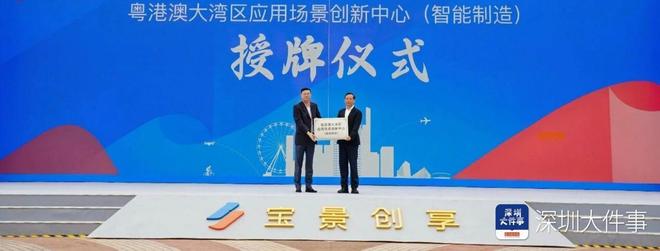
道通科技(688208):智能诊断和能源高增,AI巡检前景广阔
Haitong Securities International· 2025-09-29 08:02
Investment Rating - The report maintains an "Outperform" rating for the company, projecting a target price of RMB 49.92, which represents a 25% upside from the current price [4][11]. Core Insights - The company has demonstrated strong growth across all business lines, with significant contributions from its AI strategy and software business, which has shown a revenue increase of 30.1% year-on-year [12][13]. - The repair smart terminals segment is stable, with a notable boom in the TPMS business, which grew by 56.8% year-on-year due to a global replacement cycle [14]. - The energy smart hub (charging poles) has entered a harvest period, with revenue growth of 40.5% year-on-year, supported by a strong order book from major clients [15]. - The AI inspection robots are positioned for launch, indicating vast market potential across various sectors [16]. Financial Summary - The company’s total revenue is projected to grow from RMB 3,251 million in 2023 to RMB 8,465 million by 2027, reflecting a compound annual growth rate (CAGR) of approximately 23.1% [3]. - Net profit attributable to shareholders is expected to increase significantly from RMB 179 million in 2023 to RMB 1,623 million in 2027, with a CAGR of around 26.9% [3]. - The earnings per share (EPS) is forecasted to rise from RMB 0.27 in 2023 to RMB 2.42 in 2027, indicating strong profitability growth [3]. Business Segments - The AI and software business has become a key growth driver, achieving a gross profit margin (GPM) exceeding 99% [13]. - The charging business has shown robust performance, with a successful order from LAZ Parking, North America's largest commercial parking operator, contributing to a solid foundation for long-term growth [15]. - The company’s AI inspection business is expected to expand rapidly, with applications in various fields such as power grids and transportation [16].

京东方首批AI工厂已落地 未来3年投入采购资金5000亿元
Zhong Guo Jing Ying Bao· 2025-09-14 03:14
Group 1 - The core strategy of BOE is the "Screen IoT" development system and sustainable development strategy, with a planned investment of 500 billion yuan in R&D and 5000 billion yuan in procurement over the next three years [2][6] - In the first half of 2025, BOE reported a revenue of 101.278 billion yuan, an increase of 8.45% year-on-year, and a net profit attributable to shareholders of 3.247 billion yuan, up 42.15% year-on-year [2][6] Group 2 - BOE is leveraging AI technology to enhance production efficiency and management models, establishing itself as a benchmark for "AI+" applications in the industry [3][4] - The company has launched its first AI factories, focusing on six application areas: production planning, material supply, manufacturing, quality management, energy optimization, and environmental safety [3][4] Group 3 - At the IPC conference, BOE showcased over 200 cutting-edge display technologies and collaborated with more than 20 ecosystem partners to present new products [5] - The company has established six strategic pillars for sustainable development, including open innovation, environmental sustainability, and win-win ecology [5] Group 4 - BOE maintains an operating cash flow of approximately 50 to 60 billion yuan annually, with capital expenditures and depreciation expected to peak in 2025 [6] - Since 2015, BOE has implemented cash dividends for ten consecutive years, with a total amount of nearly 22 billion yuan, and plans to distribute at least 35% of net profit as cash dividends annually [6][7]

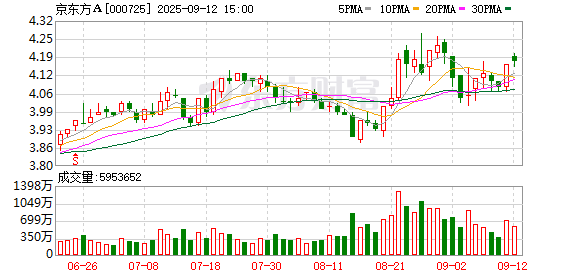
【高端访谈】AI赋能显示 打造“AI+”应用标杆典范——专访京东方董事长陈炎顺
Xin Hua Cai Jing· 2025-09-14 02:47
Core Viewpoint - BOE (京东方) is leveraging AI technology to drive innovation and transformation across its operations, aiming to establish itself as a leader in the "screen and IoT" strategy while enhancing high-quality development in various industries [1][2][4]. Group 1: AI Development and Investment - BOE plans to allocate 0.5% of its revenue annually towards AI research and development, with a total investment of 500 billion yuan over the next three years [2][3]. - The company has established a robotics team focused on developing and manufacturing robots for factory scenarios [2]. Group 2: AI Factory and Applications - The newly launched AI factory by BOE integrates advanced AI technologies across six key operational areas, enhancing overall production efficiency [3]. - BOE's "Blue Whale Display Model" is designed for the display industry, featuring high precision and strong reasoning capabilities, providing intelligent solutions across manufacturing, product services, and enterprise operations [3]. Group 3: "N Curve" Theory and Strategic Focus - The "N Curve" theory has been redefined to emphasize the combination of human intelligence and AI capabilities as the driving force for new growth opportunities [4][5]. - BOE is focusing on four innovative directions: glass-based products, perovskite photovoltaic devices, large-scale integrated intelligent manufacturing, and supply chain enhancement [7]. Group 4: Business Performance and Innovation - BOE has achieved significant milestones in its traditional display business, including the mass production of the 6th generation LTPS/LTPO LCD production line and advancements in OLED and other technologies [6]. - The company’s innovative business segment has consistently surpassed 50 billion yuan in revenue, indicating robust growth [6].
【高端访谈】AI赋能显示,打造“AI+”应用标杆典范——专访京东方董事长陈炎顺
Xin Hua Cai Jing· 2025-09-14 02:45
Core Viewpoint - BOE (京东方) is leveraging AI technology to transform its operations and drive high-quality development across various industries, establishing itself as a leader in the "screen and IoT" strategy [1][4]. Group 1: AI Development and Investment - BOE plans to allocate 0.5% of its revenue annually towards AI research and development, with a total investment of 500 billion yuan over the next three years [4][6]. - The company has established a robotics team focused on developing and manufacturing robots for factory settings [4]. Group 2: AI Factory and Applications - The newly launched AI factory utilizes advanced AI to enhance production planning, material supply, manufacturing, quality management, energy optimization, and environmental safety [6]. - BOE's AI applications include an AI defect management system and an AI yield management system, which have significantly improved efficiency and accuracy in production [9][10]. Group 3: Innovation and Growth Strategy - The "N Curve" theory proposed by BOE emphasizes the integration of AI technology to drive deep transformations across the entire industry chain [7][10]. - The company is focusing on four innovative directions: glass-based innovations, perovskite photovoltaic devices, large-scale integrated intelligent manufacturing, and supply chain upgrades [11]. Group 4: Market Position and Future Outlook - BOE's innovative business has achieved a revenue scale exceeding 50 billion yuan, maintaining a rapid growth momentum [10]. - The company aims to respond to new technologies and consumer trends while actively promoting its "screen and IoT" core strategy to enhance technological innovation and application development [11].

汽车博物馆连续三天“AI嘉年华”
Bei Jing Ri Bao Ke Hu Duan· 2025-08-19 12:00
Core Insights - The "AI Innovation Application" conference was held in Beijing, showcasing the establishment of the Zhongguancun Fengtai Park AI+ Industrial Park and the Huaxia Happiness Innovation Center [1][7] - The AI Carnival features various AI applications, including AI elderly care robots, AI inspection robots, and AI drawing robots, allowing attendees to experience the charm of artificial intelligence [3][5] Industry Development - The Fengtai District's AI industry is rapidly growing, with over 150 AI companies projected to generate more than 17 billion yuan in revenue by 2024, covering various sectors such as industrial manufacturing, transportation, healthcare, and research [7] - The Zhongguancun Fengtai Park AI+ Industrial Park aims to create an AI innovation ecosystem that integrates technology research and development, scenario validation, and industrial incubation [7] Support Initiatives - The Fengtai Technology Park has launched the "Feng" Sharing Plan, which includes ten innovative measures to support the AI industry, focusing on funding, talent acquisition, computing infrastructure, technology research, and application scenarios [7] - The park will provide 10,000 square meters of incubation space and an additional 10,000 square meters for an AI international community, along with special funds for talent development [7] Market Outlook - A report predicts that China's AI market will exceed 1.2 trillion yuan by 2025, identifying six high-value scenarios including AI in transportation, manufacturing, healthcare, security, and finance, as well as two high-potential scenarios in low-altitude economy and robotics [8]
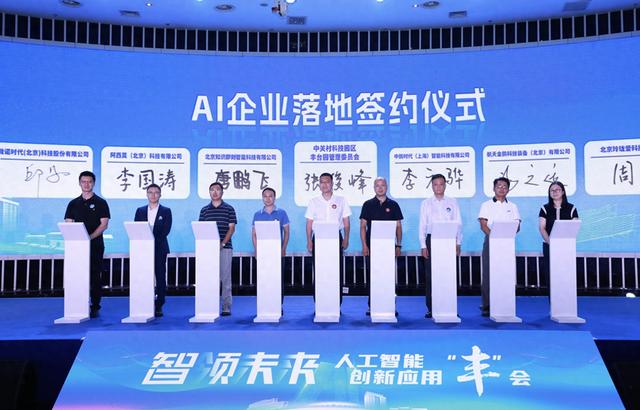
浙江衢州:新农人绘制智慧化“共富”农业蓝图
Zhong Guo Qing Nian Bao· 2025-05-27 22:13
Group 1: Agricultural Innovation in Quzhou - Quzhou City focuses on developing three major industries: "double pomelo," tea, and oil tea, along with "3+X" agricultural特色主导产业 [1] - The city encourages agricultural leading enterprises to implement a common prosperity partner plan, attracting young talents and innovative teams to rural entrepreneurship [1] - The introduction of AI inspection robots in smart agriculture enhances efficiency by monitoring fruit maturity and potential pest issues [3][4] Group 2: Smart Agriculture Development - The first smart agricultural base was established in 2017, focusing on berry fruits like citrus and kiwi to streamline management and enhance market competitiveness [2] - A second base was built in 2021, featuring fully digitalized and intelligent agricultural practices, including environmental sensors and plant cameras [2][3] - The use of advanced technologies such as intelligent environmental control and integrated irrigation systems aims to improve production efficiency and fruit quality [3] Group 3: Tea Industry Advancements - The tea garden in Kaifa County integrates ecological methods with digital technology, utilizing solar pest control devices and environmental monitoring systems [6][7] - The tea garden has expanded its influence by training local farmers and establishing cooperatives, impacting over 2,000 acres and benefiting more than 1,400 households [9][10] - The establishment of a tea art training school has trained over 30,000 individuals, aiding in employment opportunities [11] Group 4: Bamboo Craftsmanship and E-commerce - The "One Box of Hometown" workshop in Longyou County focuses on bamboo products, reviving traditional craftsmanship while leveraging e-commerce for sales [12][13] - The workshop employs skilled artisans and recruits young individuals to learn bamboo weaving, fostering innovation in product design [13][14] - Collaborative projects with universities aim to pass on traditional skills to the younger generation, enhancing community engagement and economic development [18]
第 112 届糖酒会:繁荣表象下的行业阵痛与破局求索
Xin Lang Zheng Quan· 2025-03-25 10:49
Core Insights - The 112th National Sugar and Wine Fair in Chengdu showcased a record exhibition area of 325,000 square meters and over 6,600 participating companies, yet the atmosphere was notably cold compared to previous years [1] - The price for prime exhibition spaces has halved from 1.5 million yuan in 2024 to 800,000 yuan, and foot traffic at key hotels has decreased by 30% year-on-year, with major brands like Wuliangye and Luzhou Laojiao canceling their hotel exhibits [1] Summary by Sections White Wine Industry: From "Volume and Price Rise" to "Value Reconstruction" - High channel inventory and pressure on pricing systems have emerged, with inventory levels around three months due to weak sales during the 2024 Mid-Autumn Festival and National Day peak seasons [2] - Distributors have shifted their focus from "grabbing new products" to "clearing inventory," indicating a need for actual sales data rather than relying solely on policy-driven inventory management [2] - Leading companies like Wuliangye and Yanghe are adopting a "decentralization" strategy, directly reaching consumers through digital membership systems, while smaller brands face challenges and may exit the market, increasing industry concentration [2] Technology and Health: The "Double-Edged Sword" of Industry Transformation - Despite the challenges in the white wine sector, new AI and health food sections at the fair attracted significant interest, indicating potential growth areas for the industry [3] - AI technology is being leveraged to enhance production efficiency, with collaborations between tech firms and food leaders showcasing innovations like AI inspection robots and smart cooking devices [4] - The trend towards health-oriented products is evident, with low GI foods and sugar-free beverages gaining attention, although issues with industry standards and transparency remain a concern [5] Channel Transformation: From "Selling Products" to "Selling Services" - Companies like Jialong Foods are implementing strategies such as "data middle platform + new product insurance pool + channel academy," with 77% of distributors having over ten years of partnership [6] - Guizhou Dukang is accelerating channel penetration with plans to cover over 1,000 experience centers, while Luzhou Laojiao is enhancing user engagement through digital systems, resulting in a 15% increase in repurchase rates for core products [6] Conclusion: Seeking Certainty Amidst Change - The contrasting dynamics at the fair reflect the broader challenges within the Chinese food and beverage industry, with the white wine sector's adjustments highlighting the fragility of traditional models [7] - The focus for the industry moving forward should be on consumer demand, channel transformation, standard establishment, and technological inclusivity to navigate the new cycle effectively [7]