智能驾驶指数

Search documents
【联合发布】2026年2月乘用车智能化指数为34.3
乘联分会· 2026-03-31 08:21
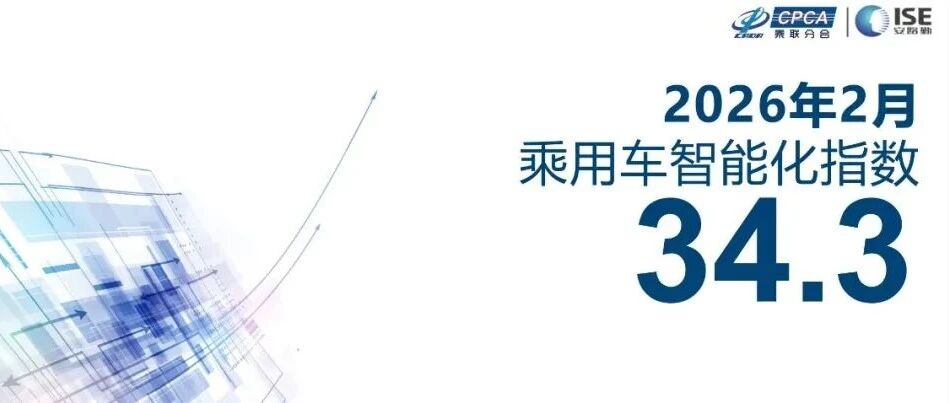
Core Insights - The article discusses the Passenger Car Intelligence Index, which monitors the development of intelligence in the domestic passenger car market and predicts future trends based on historical data [3][4]. Summary by Sections Overall Index - As of February 2026, the Passenger Car Intelligence Index stands at 34.3, reflecting a month-on-month increase of 2.1 units, despite a significant decline in overall retail sales [13]. Sub-Indices - The Smart Cockpit Index is at 36.1, showing a month-on-month increase of 2 units but a year-on-year decrease of 1.6 units [7]. - The Smart Driving Index is at 37.2, with a month-on-month increase of 2.2 units and a year-on-year decrease of 0.6 units [10]. - The External Intelligence Index is at 21.6, reflecting a month-on-month increase of 2.1 units and a year-on-year increase of 4.0 units [11]. Market Performance - In February 2026, the national retail sales of passenger cars reached 1.034 million units, a year-on-year decline of 25.4% and a month-on-month decline of 33.1%. The new energy vehicle market saw retail sales of 464,000 units, with a year-on-year decline of 32.0% and a month-on-month decline of 22.1% [13]. Future Outlook - Despite the overall decline in sales, the penetration rate of new energy vehicles has increased, contributing to a rebound in the intelligence index. The market is expected to stabilize and improve in March 2026 due to the resumption of effective working days, spring promotions, and the upcoming auto show [13]. Index Calculation Methodology - The Passenger Car Intelligence Index is composed of one primary index and three secondary indices, which reflect the market performance of models meeting specific intelligence criteria. The calculation method involves weighted contributions from the Smart Cockpit Index, Smart Driving Index, and External Intelligence Index [14]. Weighting of Indices - The Smart Cockpit has a weight of 47.5%, emphasizing its immediate impact on user experience. The Smart Driving Index has a weight of 37.5%, indicating its long-term transformative potential. The External Intelligence Index carries a weight of 15.0%, representing its emerging role in the industry [18][19][20].

【联合发布】2026年1月乘用车智能化指数为32.2
乘联分会· 2026-02-28 08:49
Core Viewpoint - The article discusses the Passenger Vehicle Intelligence Index, which monitors the development of intelligence in the domestic passenger vehicle market and predicts future trends based on historical data [4][5]. Summary by Sections Overall Index - As of January 2026, the Passenger Vehicle Intelligence Index is at 32.2, showing a significant month-on-month decline of 6.5 units, with all three core sub-indices experiencing notable year-on-year decreases [14]. Sub-indices - The Intelligent Cockpit Index stands at 34.1, down 6.9 units month-on-month but up 2.7 units year-on-year [8]. - The Intelligent Driving Index is at 35.0, reflecting a month-on-month decrease of 6.5 units and a year-on-year increase of 2.7 units [11]. - The External Intelligence Index is recorded at 19.5, with a month-on-month decline of 4.9 units and a year-on-year increase of 6.1 units [12]. Market Performance - In January 2026, the national retail sales of passenger vehicles reached 1.544 million units, representing a year-on-year decline of 13.9% and a month-on-month decline of 31.7%. The retail sales of new energy vehicles were 596,000 units, down 20.0% year-on-year and 55.4% month-on-month [14]. Influencing Factors - The decline in sales is attributed to multiple factors, including the expiration of purchase tax incentives, preemptive demand at the end of the year, and a gap in local subsidies. The impact is particularly pronounced in new energy vehicles, which are more sensitive to policy changes [14]. Future Outlook - The fluctuations in the intelligence index and vehicle sales are viewed as short-term adjustments rather than indicative of a long-term weakening trend in the industry. The article emphasizes the need for continuous monitoring and adjustment of the intelligence index to better reflect market dynamics [14].

【联合发布】2025年12月乘用车智能化指数为38.7
乘联分会· 2026-01-29 08:51
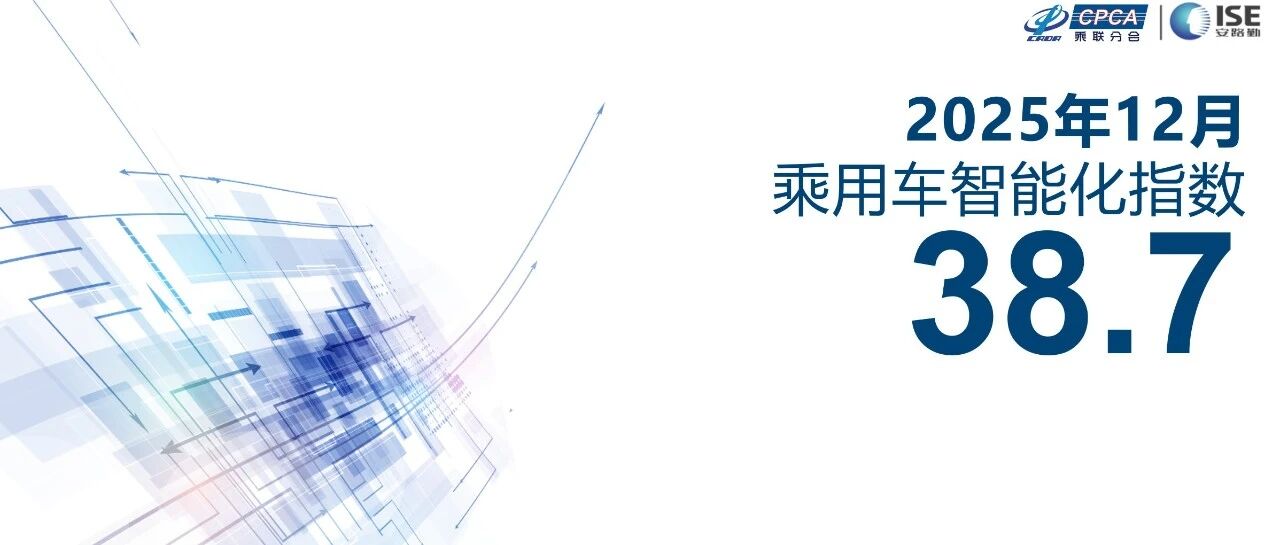
Core Viewpoint - The article discusses the development of the passenger vehicle intelligence index in China, highlighting the growth trends and performance of various sub-indices related to vehicle intelligence [4][13]. Summary by Sections Passenger Vehicle Intelligence Index Overview - The passenger vehicle intelligence index is designed to monitor the development of intelligence in the domestic passenger vehicle market and predict future trends based on historical data [4]. - As of December 2025, the overall intelligence index reached 38.7, marking a new high for the year, with significant contributions from the sub-indices [13]. Sub-Indices Performance - The smart cockpit index stood at 41.0, reflecting a month-on-month increase of 1.0 units, achieving a new peak for the year [8][13]. - The smart driving index reached 41.5, with a month-on-month growth of 0.3 units, indicating a steady growth trend [10][13]. - The external smart index was recorded at 24.4, showing a substantial month-on-month increase of 2.9 units, highlighting a continuous upward trend [13]. Market Sales Data - In December 2025, the national retail sales of passenger vehicles totaled 2.261 million units, representing a year-on-year decline of 14.0% but a month-on-month increase of 1.6% [13]. - The retail sales of new energy vehicles reached 1.337 million units, showing a year-on-year growth of 2.6% and a month-on-month increase of 1.2% [13]. Index Calculation Methodology - The passenger vehicle intelligence index is calculated using a weighted formula that incorporates the smart cockpit index, smart driving index, and external smart index [15]. - Each sub-index reflects the market performance of vehicles meeting specific intelligence criteria, with the smart cockpit and smart driving being the most influential areas [18][19]. Future Development Goals - The article indicates that as the intelligence of vehicles continues to evolve, the standards for measuring these indices will be adjusted to better reflect market dynamics [13].
【联合发布】2025年9月乘用车智能化指数为36.1
乘联分会· 2025-10-31 08:39
Core Viewpoint - The article discusses the development of the passenger car market's intelligence index in China, highlighting the growth trends and future expectations for smart vehicles, driven by policy support and market demand [4][13]. Summary by Sections Smart Car Intelligence Index - The passenger car intelligence index for September 2025 is reported at 36.1, marking a month-on-month increase of 0.4 units, reaching a historical high [13]. - The index consists of three sub-indices: smart cockpit index (38.5), smart driving index (40.1), and external smart index (18.5) [8][10]. Market Performance - In September 2025, the retail sales of passenger cars reached 2.243 million units, showing a year-on-year growth of 6.4% and a month-on-month increase of 11.2% [13]. - The retail sales of new energy vehicles amounted to 1.299 million units, with a year-on-year increase of 15.7% and a month-on-month increase of 16.5% [13]. Factors Influencing Growth - The increase in the intelligence index is attributed to multiple factors, including policy incentives (such as trade-in programs and subsidies), market demand during the traditional peak season, and the launch of new models [13]. - The article anticipates that the intelligence index will continue to rise in the fourth quarter of 2025 due to the fading off-season, ongoing policy support, and accelerated technological iterations [13]. Index Calculation and Structure - The intelligence index is calculated using a weighted formula that incorporates the smart cockpit index, smart driving index, and external smart index [14]. - The smart cockpit index is weighted at 47.5%, the smart driving index at 37.5%, and the external smart index at 15.0%, reflecting their respective impacts on the industry [17][18][19]. Definitions and Evaluation Criteria - Smart cockpit evaluation focuses on hardware configuration, software ecosystem, user interaction, safety, comfort, and intelligence levels [16]. - Smart driving evaluation emphasizes hardware configuration, functionality, safety, comfort, and intelligence levels [16]. - External smart evaluation centers on vehicle interaction with external entities, enhancing safety and user experience [16].

【联合发布】2025年8月乘用车智能化指数为35.7
乘联分会· 2025-09-30 09:36
Core Insights - The article discusses the Passenger Car Intelligence Index, which monitors the development of smart features in domestic passenger vehicles and predicts future trends based on historical data [4][12]. Group 1: Passenger Car Intelligence Index Overview - As of August 2025, the Passenger Car Intelligence Index stands at 35.7, with a month-on-month increase of 1.5 units, marking a historical high [12]. - The index comprises three sub-indices: Smart Cockpit Index (38.0), Smart Driving Index (39.9), and External Intelligence Index (18.3) [4][8][10]. - The Smart Driving Index reached a new high for the year, reflecting a month-on-month growth of 1.5 units [10]. Group 2: Market Performance and Trends - In August 2025, retail sales of passenger cars reached 2.018 million units, showing a year-on-year growth of 5.9% and a month-on-month increase of 9.5% [12]. - The retail sales of new energy vehicles amounted to 1.115 million units, with a year-on-year increase of 8.8% and a month-on-month rise of 13.0% [12]. - The increase in the intelligence index is attributed to several factors, including government policies, new model launches, and rising consumer demand [12]. Group 3: Future Expectations - The article anticipates a steady increase in the Passenger Car Intelligence Index from September to December 2025, driven by the end of the market off-season, ongoing policy support, and accelerated technological iterations [12]. - The index will be adjusted based on the characteristics of each sub-index to better reflect market dynamics [12]. Group 4: Index Composition and Calculation - The Passenger Car Intelligence Index is calculated using a weighted formula that includes the Smart Cockpit Index, Smart Driving Index, and External Intelligence Index [14]. - Each sub-index reflects the market performance of vehicles meeting specific smart criteria, with the Smart Cockpit and Smart Driving being the primary focus areas due to their direct impact on user experience [17][18]. Group 5: Weighting Factors - The Smart Cockpit has a weight of 47.5%, emphasizing its immediate influence on user experience [18]. - The Smart Driving holds a weight of 37.5%, indicating its long-term transformative potential for the automotive industry [18]. - The External Intelligence Index is weighted at 15.0%, representing its emerging role in enhancing vehicle interaction with the environment [19].
【联合发布】2025年7月乘用车智能化指数为34.2
乘联分会· 2025-08-28 09:00
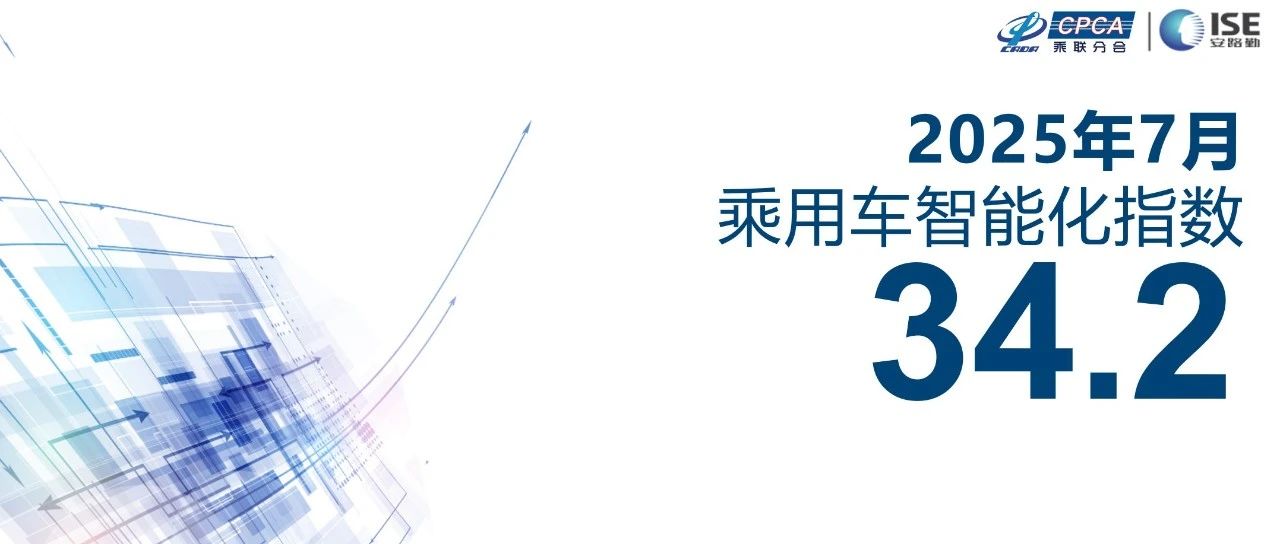
Core Viewpoint - The article discusses the recent trends in the Chinese passenger car market's intelligence index, highlighting a decline in the overall intelligence index and its components, while also indicating potential recovery due to policy changes and market dynamics [3][12]. Summary by Sections Overall Intelligence Index - The passenger car intelligence index for July 2025 is reported at 34.2, marking a decrease of 1.4 units from the previous month, ending a continuous growth trend observed from April to June [12]. - The decline is attributed to seasonal sales fluctuations and a significant drop in Tesla's domestic sales, which fell by 34% in July [12]. Component Indices - The smart cockpit index stands at 36.5, experiencing a month-on-month decrease of 1.7 units, halting its previous growth trend [7]. - The smart driving index is recorded at 38.4, with a slight decline of 1.3 units, indicating a minor retreat from its earlier upward trajectory [9]. - The external smart index remains lower at 16.5, reflecting the emerging nature of this area [3]. Market Performance - In July 2025, the retail sales of passenger cars reached 1.844 million units, showing a year-on-year increase of 7.3% but a month-on-month decline of 11.6% [12]. - The retail sales of new energy vehicles amounted to 987,000 units, with a year-on-year growth of 12.0% but a month-on-month decrease of 11.2% [12]. Future Outlook - Despite the current downturn, the article suggests that the intelligence index may recover in August due to the resumption of national subsidy policies, which could provide structural benefits to the market [12]. - The article emphasizes the importance of continuously updating the intelligence index to better reflect market dynamics and set mid-term development goals [12].