智能座舱

Search documents
德赛西威(002920):智驾业务快速增长,发力无人车+机器人
Bank of China Securities· 2026-03-31 12:27
Investment Rating - The investment rating for the company is "Buy" with a previous rating of "Buy" as well [1] Core Views - The company reported a revenue of RMB 32.56 billion for 2025, representing a year-on-year growth of 17.9%. The net profit attributable to shareholders was RMB 2.45 billion, up 22.4% year-on-year. The core business performance is strong, and the company is expanding into the autonomous vehicle and robotics sectors, which are expected to contribute to new revenue growth [4][7] - The company maintains a "Buy" rating despite a slight downward adjustment in profit forecasts for 2026-2027 due to a decline in gross margin for its smart driving business and potential slower growth rates in the coming years [4][6] Financial Summary - Revenue projections for 2026-2028 are RMB 38.88 billion, RMB 45.41 billion, and RMB 51.09 billion, respectively, with net profits expected to be RMB 2.96 billion, RMB 3.57 billion, and RMB 4.02 billion [6][10] - The company’s earnings per share (EPS) are projected to be RMB 4.96, RMB 5.97, and RMB 6.73 for 2026, 2027, and 2028, respectively, with a price-to-earnings (P/E) ratio of 21.0, 17.4, and 15.4 [6][10] - The company achieved a significant increase in operating cash flow, reaching RMB 28.8 billion in 2025, a 93.1% increase year-on-year [7] Business Performance - The smart cockpit and smart driving segments generated revenues of RMB 205.9 billion and RMB 97.0 billion in 2025, with growth rates of 12.9% and 32.6%, respectively. The gross margins for these segments were 18.83% and 16.36%, showing a decline compared to the previous year [7] - The company is focusing on the autonomous vehicle and robotics sectors, with plans to launch products in 2026. The autonomous vehicle brand "Chuanxing Zhiyuan" and the AI Cube for robotics are key initiatives [4][7]
【联合发布】2026年2月乘用车智能化指数为34.3
乘联分会· 2026-03-31 08:21
Core Insights - The article discusses the Passenger Car Intelligence Index, which monitors the development of intelligence in the domestic passenger car market and predicts future trends based on historical data [3][4]. Summary by Sections Overall Index - As of February 2026, the Passenger Car Intelligence Index stands at 34.3, reflecting a month-on-month increase of 2.1 units, despite a significant decline in overall retail sales [13]. Sub-Indices - The Smart Cockpit Index is at 36.1, showing a month-on-month increase of 2 units but a year-on-year decrease of 1.6 units [7]. - The Smart Driving Index is at 37.2, with a month-on-month increase of 2.2 units and a year-on-year decrease of 0.6 units [10]. - The External Intelligence Index is at 21.6, reflecting a month-on-month increase of 2.1 units and a year-on-year increase of 4.0 units [11]. Market Performance - In February 2026, the national retail sales of passenger cars reached 1.034 million units, a year-on-year decline of 25.4% and a month-on-month decline of 33.1%. The new energy vehicle market saw retail sales of 464,000 units, with a year-on-year decline of 32.0% and a month-on-month decline of 22.1% [13]. Future Outlook - Despite the overall decline in sales, the penetration rate of new energy vehicles has increased, contributing to a rebound in the intelligence index. The market is expected to stabilize and improve in March 2026 due to the resumption of effective working days, spring promotions, and the upcoming auto show [13]. Index Calculation Methodology - The Passenger Car Intelligence Index is composed of one primary index and three secondary indices, which reflect the market performance of models meeting specific intelligence criteria. The calculation method involves weighted contributions from the Smart Cockpit Index, Smart Driving Index, and External Intelligence Index [14]. Weighting of Indices - The Smart Cockpit has a weight of 47.5%, emphasizing its immediate impact on user experience. The Smart Driving Index has a weight of 37.5%, indicating its long-term transformative potential. The External Intelligence Index carries a weight of 15.0%, representing its emerging role in the industry [18][19][20].


比亚迪电子(00285):2025年业绩点评报告:25年净利润同比下降,关注AI液冷、电源量产交付进展
EBSCN· 2026-03-30 14:39
Investment Rating - The report maintains a "Buy" rating for BYD Electronics, indicating a positive outlook for the company's future performance [3]. Core Insights - In 2025, BYD Electronics achieved revenue of 179.48 billion RMB, a slight increase of 1.22% year-on-year. However, gross profit decreased by 12.56% to 10.76 billion RMB, resulting in a gross margin of 6.0%, down 0.9 percentage points due to reduced capacity utilization from changes in product structure and shipment volume for North American clients [1]. - Net profit for 2025 was 3.52 billion RMB, reflecting a year-on-year decline of 17.61% [1]. - The smart terminal component business saw a revenue decline to 29.33 billion RMB, influenced by changes in product structure and demand from North American clients, while assembly business revenue increased slightly to 122.18 billion RMB [2]. - The new energy vehicle (NEV) business experienced significant growth, with revenue reaching 27.03 billion RMB, a year-on-year increase of 27.69%, driven by rising shipments of smart driving systems and other products [2]. - The AI computing infrastructure business reported a robust growth of 31.7%, with revenue of 943 million RMB, as the company focuses on liquid cooling and power supply products [3]. Financial Forecasts and Valuation - The report projects a net profit of 3.84 billion RMB for 2026, down 27% from previous estimates, and 4.66 billion RMB for 2027, down 25% [3]. - The estimated net profit for 2028 is projected at 5.76 billion RMB [3]. - The company's market capitalization corresponds to a price-to-earnings (P/E) ratio of 15x for 2026, 12x for 2027, and 10x for 2028 [3]. - Revenue forecasts for the upcoming years are as follows: 2026E at 185.57 billion RMB, 2027E at 197.54 billion RMB, and 2028E at 206.63 billion RMB, with growth rates of 3.4%, 6.5%, and 4.6% respectively [4].
继峰股份丨2025年盈利能力显著提升 座椅全球化加速【国联民生汽车 崔琰团队】
汽车琰究· 2026-03-30 01:21
Core Viewpoint - The company has demonstrated significant improvement in profitability for 2025, with a revenue of 22.78 billion yuan and a net profit of 450 million yuan, marking a turnaround from losses in previous years [3][4]. Revenue Analysis - In 2025, the company's revenue growth was modest at 2.4%, primarily due to the sale of its U.S. TMD company; excluding this, revenue growth would have been 8.2% [5]. - The seating business generated 5.619 billion yuan in revenue, reflecting a substantial year-on-year increase of 80.68% [5]. - New business segments, including smart air outlets and vehicle refrigerators, contributed significantly with revenues of 395 million yuan and 214 million yuan, respectively [5]. Profitability Insights - The net profit margin for 2025 was 2.0%, an increase of 4.5 percentage points year-on-year, with Q4 showing a margin of 3.0% [5]. - The company implemented comprehensive cost reduction and efficiency improvement measures, leading to a significant increase in profitability, particularly in the seating segment, which achieved a net profit of 101 million yuan [5]. Expense Management - The company saw a decrease in sales, management, and financial expense ratios, with the sales expense ratio at 1.4%, management at 7.5%, R&D at 3.0%, and financial at 1.4% [5]. Market Potential - As of December 31, 2025, the company had 27 projects for passenger car seats, with a total order value of 109.6 to 114.3 billion yuan, indicating a potential annual revenue of 18.3 to 19.1 billion yuan if all projects are produced in the same year [6]. - The company aims for its seating division to achieve a revenue target of 10 billion yuan and a net profit target of 500 million yuan by 2026, reflecting confidence in rapid growth and profitability [6]. Strategic Integration - Following the acquisition of Grammer in Q4 2019, the company has focused on comprehensive integration and cost efficiency, with ongoing reforms expected to enhance profitability [7]. - The company is expanding its product offerings in the smart cabin sector, including passenger car seats, vehicle refrigerators, and mobile control systems, with the vehicle refrigerator segment achieving a revenue of 214 million yuan, up 77.35% year-on-year [7]. Future Projections - Revenue projections for 2026 to 2028 are estimated at 27.95 billion yuan, 33.35 billion yuan, and 39.15 billion yuan, respectively, with corresponding net profits of 867 million yuan, 1.255 billion yuan, and 1.604 billion yuan [8][9]. - The expected earnings per share (EPS) for the same period are 0.68 yuan, 0.99 yuan, and 1.26 yuan, with price-to-earnings (PE) ratios of 18, 12, and 9 times, respectively [9].


中国智能座舱解决方案供应商「四维智联」递表港交所,滴滴与腾讯是股东
Xin Lang Cai Jing· 2026-03-29 10:28
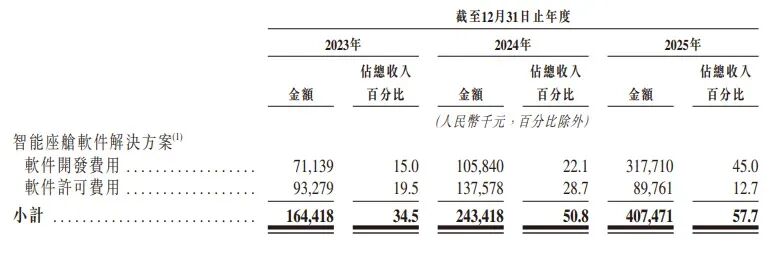
Core Viewpoint - The company, Siwei Zhihui, is seeking to go public on the Hong Kong Stock Exchange, focusing on its position as a leading provider of intelligent cockpit solutions in China, despite facing financial losses in recent years [1][4]. Company Overview - Siwei Zhihui submitted its prospectus for a second time on March 26, 2026, with CITIC Securities as the sole sponsor [1]. - The company reported revenues of RMB 479 million in 2024 and RMB 706 million in 2025, with net losses of RMB 378 million and RMB 514 million respectively [1][5]. - The gross profit margins were 29.16% in 2024 and 24.41% in 2025 [5]. Product Offerings - The company provides a comprehensive range of intelligent cockpit software solutions, including panoramic imaging, navigation, AI agents, and entertainment systems, allowing customers to customize features according to their vehicle designs [2]. - The AI agent utilizes multimodal large model technology to understand user intent and provide service suggestions, while the intelligent scene engine integrates vehicle functions dynamically [2]. Market Position - As of the last feasible date, approximately 20% of China's 250 vehicle manufacturers adopted the company's intelligent cockpit solutions [2]. - In 2025, the company ranked first in service volume for integrated cockpit solutions in China, with a market share of 33.3% [13][14]. Financial Performance - The company's estimated revenues for 2023, 2024, and 2025 are RMB 477 million, RMB 479 million, and RMB 706 million respectively, with a year-on-year growth of 47.54% in 2025 [5]. - The net losses for the same years were RMB 265 million, RMB 378 million, and RMB 514 million, with a year-on-year increase of 36.04% in 2025 [5]. Industry Overview - The global and Chinese passenger vehicle markets are experiencing stable growth, with global sales projected to rise from 62.9 million units in 2021 to 77.0 million units by 2025, and China's sales expected to grow from 20.9 million to 30.1 million units in the same period [7]. - The penetration rate of cockpit domain control systems in China is expected to increase significantly, from 24.0% in 2021 to 61.0% in 2025, and projected to reach approximately 96.0% by 2030 [9]. Competitive Landscape - The company is compared with peers such as Desay SV and Joyson Electronics, with its recent financial performance showing a net loss of RMB 514 million against Desay SV's profit of RMB 2.473 billion [15]. - The company has undergone multiple rounds of financing, raising over RMB 10.82 billion, with a post-money valuation of approximately RMB 4.07 billion following its latest round in August 2024 [20].

继峰股份(603997):系列点评二十四:2025年盈利能力显著提升,座椅全球化加速
Guolian Minsheng Securities· 2026-03-29 09:48
Investment Rating - The report maintains a "Buy" rating for the company [3] Core Views - The company's profitability is expected to significantly improve by 2025, driven by accelerated globalization of its seating business [9] - The revenue for 2025 is projected to be 22.78 billion yuan, with a year-on-year growth of 2.4%, while the net profit attributable to shareholders is forecasted to be 454 million yuan, marking a turnaround from losses [9] - The company has a strong order backlog, with potential revenue from current projects estimated to reach 183-191 billion yuan, significantly exceeding the projected seating business revenue for 2025 [9] Financial Forecasts - Revenue projections for 2025-2028 are as follows: - 2025: 22.78 billion yuan - 2026: 27.95 billion yuan (growth rate: 22.7%) - 2027: 33.35 billion yuan (growth rate: 19.3%) - 2028: 39.15 billion yuan (growth rate: 17.4%) [3][10] - Net profit attributable to shareholders is expected to grow substantially: - 2025: 454 million yuan (growth rate: 180.0%) - 2026: 867 million yuan (growth rate: 91.2%) - 2027: 1.26 billion yuan (growth rate: 44.7%) - 2028: 1.60 billion yuan (growth rate: 27.8%) [3][10] - Earnings per share (EPS) is projected to increase from 0.36 yuan in 2025 to 1.26 yuan in 2028 [3][10] Business Development - The company has made significant strides in its seating business, with a reported revenue of 5.619 billion yuan in 2025, reflecting a year-on-year increase of 80.68% [9] - New business segments, including smart air vents and car refrigerators, have shown notable growth, contributing 395 million yuan and 214 million yuan in revenue, respectively [9] - The company aims to achieve a revenue target of 10 billion yuan for its seating division in 2026, indicating confidence in rapid growth and profitability [9]
比亚迪2025年成绩单:营收首破8000亿,净利润却下滑19%,600亿理财背后有何深意?
Xin Lang Cai Jing· 2026-03-29 06:16
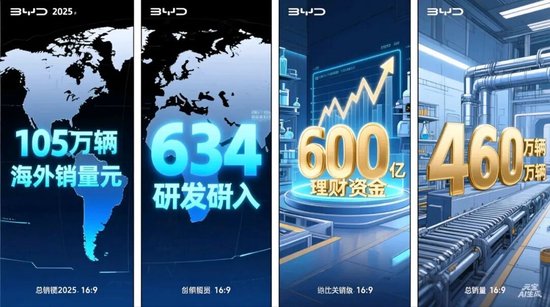
Core Insights - BYD's revenue for 2025 exceeded 800 billion yuan for the first time, reaching 803.96 billion yuan, a year-on-year increase of 3.46%, while net profit decreased by 18.97% to 32.62 billion yuan, indicating a clear trend of "increased revenue but decreased profit" [2][15] - The company plans to use up to 60 billion yuan of idle funds for entrusted wealth management, an amount close to its net profit for the past two years, raising questions about its financial strategy [2][15] Performance Overview - Revenue growth rate of 3.46% in 2025 is the lowest in six years, compared to 29.02% in 2024 and 22.59% during the pandemic in 2020 [3][16] - Net profit has declined for three consecutive quarters, with a 38.2% drop in Q4, falling below market expectations, marking a return to "increased revenue but decreased profit" since 2021 [3][16] - Operating cash flow decreased by 55.69% to 59.136 billion yuan, down from 133.454 billion yuan in 2024 [3][16] Business Breakdown - Automotive business revenue increased by 5.06% to approximately 648.646 billion yuan, now accounting for 80.68% of total revenue, but the gross margin fell by 1.82 percentage points to 20.49% [4][17] - Mobile phone components and assembly revenue decreased by 2.74% to approximately 155.237 billion yuan, now making up 19.31% of total revenue [4][17] - Domestic revenue (including Hong Kong, Macau, and Taiwan) fell by 11.17% to 493.223 billion yuan, while overseas revenue grew by 40.05% to 310.741 billion yuan [4][17] Sales Performance - Global sales reached a record high of 4.6024 million units, a year-on-year increase of 7.73%, placing BYD among the top five global automotive groups and maintaining its position as the world's leading electric vehicle seller [5][18] - Sales of pure electric vehicles reached 2.2567 million units, a 27.86% increase, surpassing Tesla's 1.636 million units [6][18] - Overseas sales exceeded 1 million units, growing by 145%, with operations in 119 countries and regions [6][18] R&D Investment - R&D expenditure reached approximately 63.4 billion yuan, a 17% increase, accounting for about 7.9% of revenue, nearly double the net profit for the year [7][19] - Significant technological advancements include the second-generation blade battery and fast-charging technology, achieving a record charging speed [7][19] Wealth Management Strategy - Cash reserves reached a historical high of 167.8 billion yuan by the end of 2025 [8][20] - The decision to invest up to 60 billion yuan in wealth management has sparked market discussions, marking a shift from a growth-oriented to a mature company model [8][20] Industry Context - The competitive landscape in the electric vehicle industry is intensifying, with ongoing price wars compressing profit margins [9][21] - Changes in policy, such as the reduction of the new energy vehicle purchase tax starting January 1, 2026, will test the market competitiveness of automotive companies [9][21] Future Outlook - BYD is accelerating its global expansion, with new factories and increased production capacity [10][22] - The high-end strategy is showing results, with significant sales growth in premium brands [10][22] - The integration of artificial intelligence in smart driving and connected vehicles is becoming a key focus for future development [10][22]

傅里叶(03625):IPO申购指南:建议谨慎申购
Guoyuan Securities2· 2026-03-23 11:22
Investment Rating - The report suggests a cautious subscription for the company’s IPO [2]. Core Insights - The company is a Chinese supplier of audio amplifier chips and haptic feedback chips, focusing on low-power audio chips, medium to high-power audio chips, and haptic feedback chips without a wafer business model [2]. - According to Frost & Sullivan, the company ranks fourth globally and third in China for audio amplifier chip suppliers, and fifth in China for haptic feedback chip suppliers [2]. - The global audio amplifier chip market is projected to grow from RMB 5.3 billion in 2020 to RMB 8.9 billion in 2024, with a CAGR of 13.6%. By 2029, it is expected to reach RMB 20.4 billion, with a CAGR of 18.1% [2]. - The Chinese haptic feedback chip market is expected to grow from RMB 6.9 billion in 2020 to RMB 9.8 billion in 2024, with a CAGR of 9.0%. It is projected to reach RMB 11.4 billion by 2025, growing at a CAGR of 17.0%, and RMB 21.4 billion by 2029 [2]. Financial Summary - The company's revenues for 2022, 2023, and 2024 are RMB 130.3 million, RMB 150.3 million, and RMB 355.2 million, respectively. The losses for the same years are RMB 65.9 million, RMB 94.1 million, and RMB 56.8 million [3]. - The IPO price midpoint is set at HKD 45 per share, corresponding to a PS of 12.5 times for 2024, which is in the middle range of the industry [3].
德赛西威(002920):量价齐升!“双冠王”:350亿新订单,难挡大股东减持冲动
市值风云· 2026-03-20 11:12
Investment Rating - The report does not explicitly state an investment rating for the company Core Insights - The core focus of the report is on the revenue growth acceleration potential of the company [1] - The company, Desay SV, has achieved significant progress, ranking 58th among the top 100 global automotive parts suppliers in 2025, an increase of 16 places year-on-year [4][5] Summary by Sections Business Performance - In 2025, Desay SV achieved total revenue of 32.557 billion, a year-on-year increase of 17.9% [9] - The net profit attributable to shareholders reached 2.454 billion, growing by 22.4% year-on-year [12] - The smart cockpit segment generated revenue of 20.585 billion, with a year-on-year growth of 12.9%, accounting for approximately 63.2% of total revenue [13] - The smart driving segment achieved revenue of 9.7 billion, a year-on-year increase of 32.6%, with its revenue share rising to 29.8% [15] - The total annualized sales of new project orders exceeded 35 billion, a year-on-year growth of about 30% [17] Market Position and Trends - Desay SV holds the top market share in the domestic smart cockpit and smart driving markets, with shares of 21.7% and 26.7% respectively in 2024 [8] - The penetration rates for smart driving and smart cockpit are expected to rise to 64% and 82% respectively by 2025, indicating significant growth potential [21] - The market size for smart driving and smart cockpit is projected to grow to 213 billion and 300 billion respectively by 2029, with corresponding CAGR of 20.2% and 18.4% [22] Product Development and Innovation - The average unit price for smart driving products increased from 313 to 904 per unit from 2021 to 2024, while the average unit price for smart cockpit products rose from 656 to 960 per unit [27] - The introduction of the fifth-generation smart cockpit platform based on a new AI chip is expected to enhance product value [29] - The company plans to list on the Hong Kong stock exchange in 2026 to enhance its international brand influence [30] Shareholder Activity - The second-largest shareholder, Huizhou Innovation Investment Co., Ltd., reduced its stake by 4.8% in 2025, cashing out approximately 2.8 billion [33] - The largest shareholder, Guangdong Desay Group Co., Ltd., has also announced plans to reduce its stake by 1.2% in early 2026 [36]
量价齐升!“双冠王”德赛西威:350亿新订单,难挡大股东减持冲动
市值风云· 2026-03-20 10:16
Core Viewpoint - The core focus is on whether revenue growth can accelerate, which is a key concern for the industry and the company [1] Group 1: Policy and Market Position - In December 2025, the Ministry of Industry and Information Technology officially announced the first batch of L3 conditional autonomous driving vehicle permits in China, marking a significant step for the intelligent connected vehicle industry [4] - Following policy developments, leading company Desay SV (002920.SZ) reported its 2025 annual results, ranking 58th among the world's top automotive parts suppliers, an increase of 16 places year-on-year [5] Group 2: Business Performance - Desay SV achieved total revenue of 32.557 billion yuan in 2025, a year-on-year increase of 17.9% [9] - The net profit attributable to shareholders reached 2.454 billion yuan, up 22.4% year-on-year [11] - The intelligent cockpit segment generated revenue of 20.585 billion yuan, growing 12.9% year-on-year, accounting for approximately 63.2% of total revenue [13] - The intelligent driving segment achieved revenue of 9.7 billion yuan, a year-on-year increase of 32.6%, raising its revenue share to 29.8% [14] Group 3: Market Trends and Projections - By 2024, the domestic market for intelligent driving and intelligent cockpits is projected to reach 85 billion yuan and 129 billion yuan, respectively, with expected growth to 213 billion yuan and 300 billion yuan by 2029, corresponding to CAGRs of 20.2% and 18.4% [19] - The penetration rates for intelligent driving and intelligent cockpits are expected to rise to 64% and 82% by 2025, with further increases to 97% and 94% by 2029 [17] Group 4: Pricing and Value Growth - From 2021 to the first three quarters of 2024, the average selling price (ASP) of intelligent driving products increased from 313 yuan/unit to 904 yuan/unit, while the ASP for intelligent cockpits rose from 656 yuan/unit to 960 yuan/unit [25] - The continuous increase in unit value for both intelligent driving and intelligent cockpit products is expected to drive future growth, especially for the intelligent cockpit segment, which is nearing an 80% penetration rate [25] Group 5: Shareholder Activity - In 2025, the second-largest shareholder, Huizhou Innovation Investment Co., Ltd., reduced its holdings by 26.71 million shares, amounting to 4.8% of the total share capital, raising 2.8 billion yuan [28] - As of the end of 2025, Huizhou Innovation's shareholding dropped to 20.2% [29] - The major shareholder, Guangdong Desay Group, plans to reduce its holdings by up to 710,630 shares, representing 1.2% of the total share capital [31]