暑期托管服务

Search documents
护健康成长 过安心假期
Ren Min Ri Bao· 2025-08-10 05:56
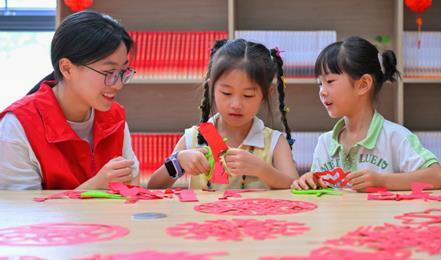
Core Viewpoint - The article discusses the implementation and effectiveness of summer care programs across various regions in China, highlighting the collaboration between schools, communities, and local governments to address the challenges faced by working parents during the summer break [6][9][10]. Group 1: Implementation of Summer Care Programs - The Ministry of Education issued a notice in July to enhance summer care services, aiming to alleviate the difficulties parents face in finding care for their children during the summer [6][10]. - Various schools and communities have initiated summer care programs, with many being fully booked shortly after announcements are made [9][10]. - In Hubei province, over 3,800 summer care programs have been launched, an increase of over 300 compared to the previous year, focusing on children from dual-income families and economically disadvantaged backgrounds [9][10]. Group 2: Activities and Services Offered - Summer care programs are designed to provide not only supervision but also a range of activities including physical exercise, reading, and creative projects [10][12]. - Schools are encouraged to utilize their facilities such as libraries and sports venues to offer diverse activities that promote children's overall development [10][12]. - Community centers are also providing summer care services, allowing parents to work while ensuring their children are engaged in safe and enriching environments [9][12]. Group 3: Challenges and Solutions - Organizing effective summer care programs presents challenges such as staffing, space limitations, and the need for diverse activities tailored to different age groups [13][14]. - Many programs are relying on volunteers, including university students, to help manage activities and provide mentorship to children [14][15]. - Local governments and educational institutions are encouraged to collaborate and leverage community resources to enhance the quality and reach of summer care services [15].

多地推出暑期托管服务,记者赴一线探访——护健康成长 过安心假期
Ren Min Ri Bao· 2025-08-10 02:56
Group 1 - The core viewpoint of the articles highlights the increasing demand for summer childcare services, driven by the challenges faced by working parents during school holidays [1][3][4] - The Ministry of Education has issued guidelines to enhance summer childcare services, encouraging local education departments and schools to collaborate with community organizations to provide effective solutions for the "childcare difficulty" during summer [1][4][11] - Various community and school-based summer programs have been established, with many quickly filling up due to high demand, indicating a strong interest from parents [3][4][8] Group 2 - Parents express a preference for community-based childcare options due to financial constraints and the need for reliable supervision while they work [4][10] - Schools are utilizing their facilities to offer diverse activities, including sports, reading, and homework assistance, to ensure children's holistic development during the summer [5][6][7] - The involvement of volunteers and social organizations is being encouraged to enhance the quality and variety of summer programs, addressing staffing and resource challenges faced by schools [9][10][11] Group 3 - Local governments are actively exploring partnerships with various sectors to expand summer childcare offerings, aiming to create a comprehensive service system that meets diverse needs [11] - The introduction of specialized programs, such as cultural and technological summer camps, is being implemented to enrich children's summer experiences [10][11] - The overall goal is to improve the quality of summer childcare services by integrating community resources and encouraging broader participation from various stakeholders [11]
暑期托管,如何托得安管得好
Ren Min Ri Bao· 2025-08-05 22:42
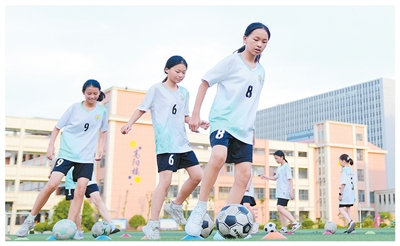
Core Viewpoint - The article discusses the challenges and solutions related to summer childcare, highlighting various initiatives across different regions to provide supervision and activities for children during the summer break, addressing the needs of working parents and ensuring the proper functioning of public facilities. Group 1: School-Based Childcare - Qingdao has implemented a summer school-based childcare program from July 7 to August 29, involving 137 schools and 1,012 teachers, with approximately 13,000 students benefiting from the service [2][5] - The program focuses on supervision and offers activities such as reading, arts, and physical education, while prohibiting online classes or academic testing [3] - The service fee is capped at 24 yuan per day per child, with exemptions for families in financial difficulty [6] Group 2: Community-Based Childcare - In Chongqing, a community-based public childcare initiative has been launched, benefiting over 3,000 children, particularly targeting orphans and children from low-income families [9][10] - The program includes a dual curriculum system with mandatory and elective courses, supported by university student volunteers [11] - Funding for the program comes from local government and community resources, with the majority of services provided free of charge [10] Group 3: Library and Public Facility Management - In Hengyang, the local library has seen an influx of children during summer, leading to management challenges, prompting the implementation of stricter rules and better facility management [16] - The library has improved its environment by creating designated areas for different age groups and enhancing noise control measures [16] - A volunteer service project has been initiated to support left-behind children and children of new employment groups, establishing centralized childcare points in industrial areas [17]
“定制化”服务应对高温 “社区网格+志愿服务”多措施保障老人安全度夏
Yang Shi Wang· 2025-08-04 10:20
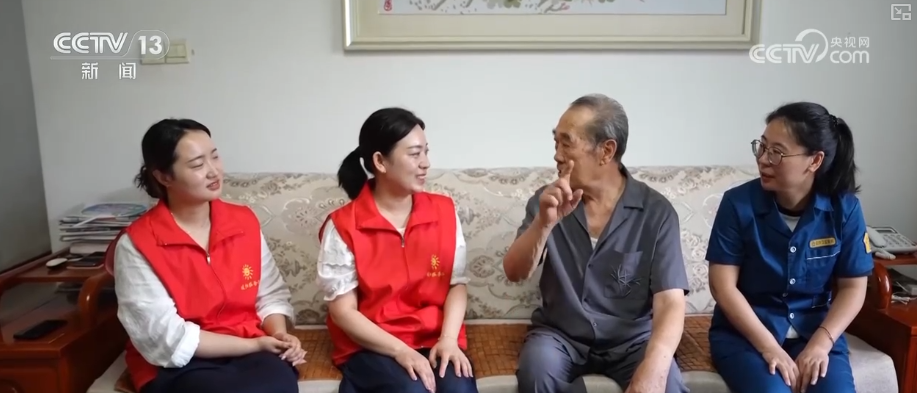
Group 1 - The article highlights the initiatives taken in Hebi, Henan, to provide services for elderly individuals, particularly those who are elderly and live alone, during the ongoing high-temperature weather [1][5][11] - Volunteers in the Qibin District are delivering fresh vegetables and providing health check-ups for elderly residents, emphasizing the importance of monitoring their living conditions and health status [5][11] - The community is utilizing a "community grid + volunteer service" model to offer various services such as errand running, home health checks, meal delivery, and home repairs for the elderly population [8][11] Group 2 - Community service centers and other venues have been opened as cooling spots for residents to escape the heat, with activities such as heat prevention lectures being conducted [15] - The cooling points are operational from 8 AM to 9 PM, providing air conditioning and additional services like summer childcare and recreational activities for residents [19]
仁寿县:官方“花样带娃” “托”起缤纷暑假
Zhong Guo Jing Ji Wang· 2025-07-14 09:48
Group 1 - The core initiative is the "Xiangyanghua Kai • Qingmiao Public Welfare Classroom" summer care program aimed at addressing the childcare challenges faced by working families in Ren Shou County [3][6] - The program runs from July 7 to August 1, offering a variety of courses for children aged 6 to 12, including red education, art, and sports, focusing on comprehensive development across moral, intellectual, physical, aesthetic, and labor education [3][6] - Over 200 university student volunteers are recruited to provide support and enhance children's learning experiences, while also benefiting from personal growth through teamwork and communication skills [5][6] Group 2 - Various departments in Ren Shou County have launched distinctive summer care services, providing enriching activities that ease the concerns of dual-income families [6][7] - The "Su Wa Happy Growth Camp" offers a combination of homework assistance and interest-based courses, including safety education, and provides nutritious lunches to address midday care challenges for working parents [6][7] - The county's cultural center is conducting public art training classes, aiming to instill a love for traditional culture and arts among children, thereby contributing to community governance and social service integration [7]