暗场纳米图形晶圆缺陷检测设备

Search documents
中科飞测(688361):中科飞测:研发维持高水平投入,定增落地助力未来产能扩张
Changjiang Securities· 2025-11-16 23:30
Investment Rating - The investment rating for the company is "Buy" and is maintained [6]. Core Insights - The company reported a revenue of 500 million yuan in Q3 2025, representing a year-on-year increase of 43.30%. However, the net profit attributable to the parent company was 4 million yuan, a decrease of 77.33% year-on-year. The non-recurring net profit was -30 million yuan, down 188.66% year-on-year, with a gross margin of 48.69%, a decrease of 0.95 percentage points year-on-year [2][4]. - For the first three quarters of 2025, the company achieved a total revenue of 1.202 billion yuan, an increase of 47.92% year-on-year. The net profit attributable to the parent company was -15 million yuan, an increase of 71.67% year-on-year, while the non-recurring net profit was -140 million yuan, a decrease of 11.61% year-on-year. The gross margin was 51.97%, an increase of 4.28 percentage points year-on-year [2][4]. Summary by Sections Financial Performance - In Q3 2025, the company achieved a revenue of 500 million yuan, with a year-on-year growth of 43.30%. The net profit attributable to the parent company was 4 million yuan, down 77.33% year-on-year. The non-recurring net profit was -30 million yuan, a decrease of 188.66% year-on-year, and the gross margin was 48.69%, down 0.95 percentage points year-on-year [2][4]. - For the first three quarters of 2025, the company reported a revenue of 1.202 billion yuan, a year-on-year increase of 47.92%. The net profit attributable to the parent company was -15 million yuan, an increase of 71.67% year-on-year, while the non-recurring net profit was -140 million yuan, down 11.61% year-on-year. The gross margin was 51.97%, up 4.28 percentage points year-on-year [2][4]. Product Development and Market Position - The company is experiencing rapid growth in the shipment and order quantity of its mature and new products, particularly in the field of semiconductor equipment. The company has successfully validated its products with major domestic clients, leading to positive feedback and anticipated revenue growth [11]. - The successful completion of a private placement in October 2025 raised approximately 2.5 billion yuan, which will be used for high-end semiconductor quality control equipment R&D and production projects, as well as upgrading the headquarters and R&D center [11]. - The company's growth is driven by the ongoing domestic substitution and increasing demand for advanced process measurement equipment, particularly in light of strict U.S. export controls on semiconductor technology [11]. Future Outlook - The company expects to see continued improvement in profitability, with projected net profits attributable to the parent company of 129 million yuan, 418 million yuan, and 646 million yuan for 2025, 2026, and 2027, respectively. Corresponding price-to-earnings ratios are expected to be 341x, 105x, and 68x [11].

财说| 增收不增利,中科飞测的成长迷局
Xin Lang Cai Jing· 2025-08-21 00:09
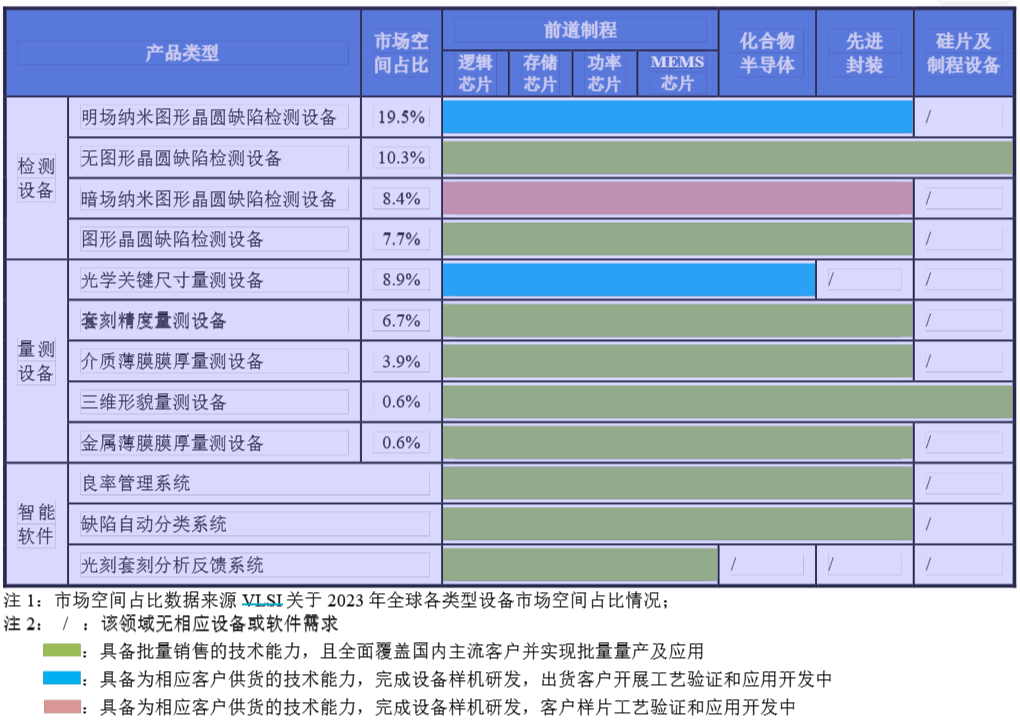
Core Viewpoint - In the first half of 2025, the semiconductor testing equipment company Zhongke Feimeng (688361.SH) reported significant revenue growth but continued to incur losses, highlighting a prominent issue of increasing revenue without corresponding profit [1][17]. Financial Performance - The company's revenue reached 702 million yuan, a year-on-year increase of 51.39%, but it still recorded a net loss attributable to shareholders of 18.35 million yuan, with a further loss of 110 million yuan after excluding non-recurring gains and losses, nearly unchanged from the previous year's loss of 115 million yuan [1][17]. - Following the release of the semi-annual report, Zhongke Feimeng's stock price fell by 2.32%, indicating market dissatisfaction with the company's performance [1]. R&D Investment - Zhongke Feimeng's R&D expenses amounted to 285 million yuan, a 37.79% increase compared to the same period last year, with the R&D expense ratio decreasing from 44.66% to 40.65% [2]. - The number of R&D personnel increased from 465 to 577, and the average salary for R&D staff rose from 277,700 yuan to 312,800 yuan [2]. - Despite high R&D investments, the company has not achieved significant results in mass production capabilities for high-end semiconductor testing equipment [2][5]. Equipment Development Progress - The company showcased its equipment development progress in its 2023 annual report, indicating that key devices such as the bright field nano-pattern wafer defect detection equipment and dark field nano-pattern wafer defect detection equipment had not yet achieved mass production [3][5]. - As of the first half of 2025, the optical critical dimension measurement equipment had achieved mass production, while the more challenging bright field and dark field devices remained in the customer process verification stage [5][7]. Cash Flow and Inventory Issues - Zhongke Feimeng's operating cash flow deteriorated significantly, with an outflow of 442 million yuan, marking a historical high [10]. - The company's accounts receivable and inventory increased substantially compared to the same period last year, while contract liabilities slightly decreased [11][16]. - The inventory reached 2.27 billion yuan, up from 1.37 billion yuan the previous year, with a significant portion classified as goods issued but not yet accepted by customers [13][16]. Market Position and Competition - The company faces intense competition in the market for its bright field nano-pattern wafer defect detection equipment, with aggressive pricing strategies noted [9]. - Despite the challenges, Zhongke Feimeng has actively promoted its achievements in this area, claiming to have broken foreign monopolies, although the actual production and acceptance remain pending [6][7]. Future Outlook - The semiconductor equipment industry is characterized by high R&D investment pressures and long market validation cycles, which pose ongoing cash burn challenges for companies like Zhongke Feimeng [17]. - The company is expected to focus on converting high R&D investments into mass production capabilities and improving cash flow efficiency to overcome the current "revenue without profit" dilemma [17].