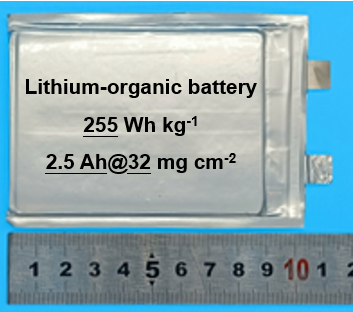
有机软包电池

Search documents
新型锂电池更加安全抗冻耐热
Ke Ji Ri Bao· 2026-02-24 00:19
Core Insights - A research team from Tianjin University and South China University of Technology has developed a new type of organic cathode material that addresses key bottlenecks in traditional organic lithium batteries, such as low energy capacity and practical usability [1][2] Group 1: Material Development - The new organic cathode material is based on n-type conductive polymer, which enhances the efficiency of electron and lithium ion transport [2] - The developed organic soft-pack battery has an energy density exceeding 250 watt-hours per kilogram, surpassing the widely used lithium iron phosphate batteries [2] Group 2: Performance and Safety - The new battery demonstrates excellent temperature adaptability, functioning normally in extreme temperatures ranging from -70°C to 80°C [2] - The soft-pack battery has passed rigorous puncture safety tests, maintaining its shape during charge and discharge processes, thus validating its safety [2] Group 3: Future Implications - This breakthrough in battery technology overcomes resource and environmental constraints, achieving high energy density comparable to commercial batteries while ensuring safety and wide temperature adaptability [2] - The flexible characteristics of the new material provide innovative energy storage solutions for future applications in flexible electronics and wearable devices [2]
新型有机正极材料,解决传统材料资源短缺成本高问题
Xuan Gu Bao· 2026-02-23 14:47
Core Viewpoint - A team from Tianjin University and South China University of Technology has developed an organic cathode material for lithium batteries that overcomes traditional limitations, achieving an energy density exceeding 250 watt-hours per kilogram, surpassing the widely used lithium iron phosphate batteries [1] Group 1: Technological Advancements - The newly developed organic battery exhibits excellent electronic conductivity, rapid lithium-ion transport capability, and high energy storage capacity [1] - The battery operates effectively in extreme temperatures ranging from -70℃ to 80℃, demonstrating good flexibility and safety [1] Group 2: Market Context - Current mainstream lithium battery cathode materials primarily use inorganic minerals like cobalt and nickel, which face issues such as resource scarcity, high costs, and lack of flexibility [1] - Organic electrode materials, such as quinone compounds, are seen as promising "green battery stars" due to their abundant sourcing, flexible molecular structure, and inherent flexibility, positioning China favorably in the next-generation battery technology competition [1] Group 3: Related Companies - Relevant A-share concept stocks include companies like Dongsheng Technology and Rongbai Technology [2]


-70°C-80°C都能用!超越磷酸铁锂!我国新型电池大突破
DT新材料· 2026-02-20 16:04
Core Viewpoint - A research team from Tianjin University and South China University of Technology has developed a new organic cathode material that overcomes the limitations of traditional organic lithium batteries, such as low energy capacity and practical usability issues [1][6]. Group 1: Research and Development - The new organic cathode material is based on a novel conductive polymer, which enhances the efficiency of electron and lithium ion transport, resulting in a battery with superior electronic conductivity, rapid lithium ion transfer, and high energy storage capacity [3]. - The developed organic soft-pack battery achieves an energy density exceeding 250 watt-hours per kilogram, surpassing the widely used lithium iron phosphate batteries [3]. - The battery demonstrates excellent temperature adaptability, functioning normally between -70°C and 80°C, while also exhibiting good flexibility and safety [3][5]. Group 2: Safety and Performance - Experimental results indicate that the battery's electrodes remain undamaged under bending, stretching, and external pressure, with no reduction in battery capacity [5]. - The soft-pack battery has successfully passed rigorous puncture safety tests, confirming its safety [5]. Group 3: Future Applications and Commercialization - The research outcomes lay a crucial material foundation for the future development of "green batteries," with flexible characteristics providing new energy storage solutions for flexible electronics and wearable devices [6]. - The team is accelerating the technology's transformation and industrialization process, aiming to establish a production line for organic soft-pack batteries and actively exploring commercial application prospects [7].


-70℃到80℃都能正常工作!有机锂电池取得重大突破
Huan Qiu Wang Zi Xun· 2026-02-19 10:07
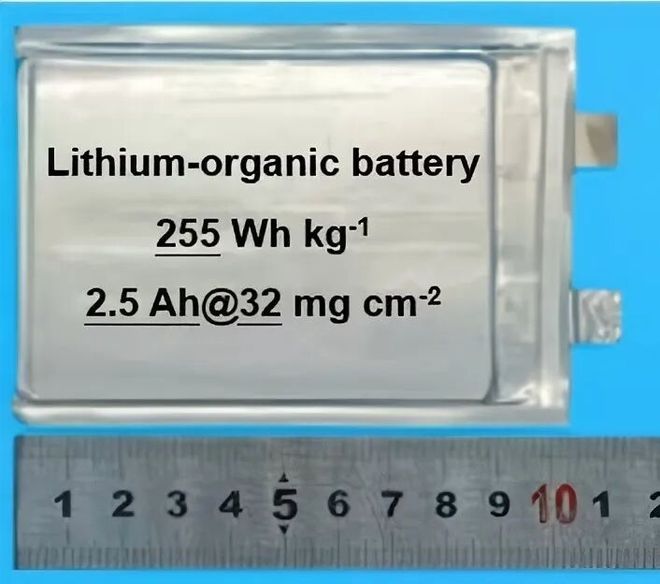
Core Insights - A new type of organic cathode material for lithium batteries has been developed, addressing key issues such as low energy capacity and practical usability of traditional organic lithium batteries [1][3] - The research results were published in the international journal "Nature" on February 19 [1] Group 1: Research and Development - The research team, led by Professor Xu Nuhua from Tianjin University and Professor Huang Fei from South China University of Technology, successfully created an organic cathode material with excellent electronic conductivity, rapid lithium ion transport capability, and high energy storage capacity [3] - The newly developed organic soft-pack battery has an energy density exceeding 250 watt-hours per kilogram [3] Group 2: Performance and Safety - The battery demonstrates exceptional temperature adaptability, functioning normally in extreme temperatures ranging from -70°C to 80°C [3] - It maintains good flexibility and safety, with the electrodes remaining intact and capacity unchanged even after bending, stretching, or external pressure [3] - The ampere-hour (Ah) level soft-pack battery has passed rigorous puncture safety tests, showing no deformation during charge and discharge processes, confirming its safety [3]
“能量心脏”,我国实现重大突破!
Xin Lang Cai Jing· 2026-02-19 07:37
Core Viewpoint - A new type of organic cathode material has been successfully developed by a research team from Tianjin University and South China University of Technology, overcoming the limitations of traditional organic lithium batteries, such as low energy capacity and practical application challenges [1][4]. Group 1: Research and Development - The research results were published in the international academic journal "Nature" on February 19 [1]. - The new organic cathode material is based on a novel conductive polymer, which enhances the efficiency of electron and lithium ion transport [4]. - The developed organic soft-pack battery has an energy density exceeding 250 watt-hours per kilogram, surpassing the widely used lithium iron phosphate batteries [4]. Group 2: Performance and Safety - The new battery exhibits excellent temperature adaptability, functioning normally between -70°C and 80°C, while also demonstrating good flexibility and safety [4]. - Experimental results show that the electrodes remain undamaged and maintain capacity under bending, stretching, and external pressure [5]. - The soft-pack battery has successfully passed rigorous puncture safety tests, confirming its safety [5]. Group 3: Future Applications and Commercialization - The research lays a crucial material foundation for the future development of "green batteries" and offers new energy storage solutions for flexible electronics and wearable devices [5]. - The team is accelerating the technology's transformation and industrialization process, aiming to establish a production line for organic soft-pack batteries and actively exploring commercial application prospects [5].