
本桑制药远红外穴位治疗贴

Search documents
“高大上”的海外品牌,实为造假?丨2025消费问题高发区
Xin Jing Bao· 2025-12-26 04:38
在跨境消费热潮与健康需求升级的双重驱动下,一批打着"国外研发""国际专利"等旗号的产品,凭 借"权威背书+高效功效"的宣传组合,成为消费者追捧的对象。 今年以来,在新京报《消费质量报告》多期专题和调查报道中,新京报记者发现,假"洋品牌"已成为一 个共性问题。部分看似"高大上"的洋品牌,不少是"国产贴牌+虚假包装"的产物。这些产品涉及减肥、 骨关节养护、妇科护理、食品保健等多个热门领域,不仅让消费者付出高额溢价,更暗藏健康风险与维 权难题。 多领域产品造假"洋背景" 今年8月,新京报记者对市面在售的24款驱蚊产品进行调查时发现,在某电商平台日本叮叮自营旗舰店 售卖的"日本叮叮安心防叮喷雾",并不是来自日本的产品,却因在名称中包含"日本"字样易让消费者认 为其属于进口产品。 记者调查发现,该产品外包装最下方,以小号字体提示:"日本叮叮"为著作权,无其他含义。企查查显 示,目前国内有17个"日本叮叮"相关商标处于注册申请中,另有49条申请状态为"商标无效"。其中,目 前申请人包括一家名为广东三丰生物科技有限公司的企业,与上述"日本叮叮安心防叮喷雾"的生产商广 东三丰实业发展有限公司拥有共同实际控制人李贞彬。一位长期 ...
“消瘤”调查报道追踪:多款产品下架,有产品宣传依然“露骨”
Bei Ke Cai Jing· 2025-11-04 06:41
Core Viewpoint - The article highlights the ongoing issue of false advertising in the sale of health products, particularly those claiming to treat uterine fibroids, and the inadequate regulatory response to these practices [1][20][22]. Group 1: Product Changes and Regulatory Response - Following the publication of a consumer quality report, several products claiming to treat uterine fibroids have been taken down or had their promotional content altered, yet many other products with misleading claims remain available [2][15]. - Specific products, such as the "Anpical Uterine Fibroids capsules," have had their claims modified to remove references to fibroids, while still being sold under different descriptions [3][8]. - The market regulation authorities have intensified efforts to combat false advertising, with significant penalties imposed on violators, including a total of 6,876.91 million yuan in fines since the start of the year [22]. Group 2: Expert Opinions and Recommendations - Experts emphasize the need for a robust credit punishment mechanism to deter businesses from engaging in false advertising, suggesting that violators should be included in a social credit system [1][20]. - There is a call for improved regulatory frameworks to better define and penalize false advertising, as well as for platforms to enhance their vetting processes for sellers [21][22]. - The article notes that consumer awareness and ability to identify false claims are crucial in combating misleading advertisements, with recommendations for consumers to retain evidence of promotional materials [20][21].

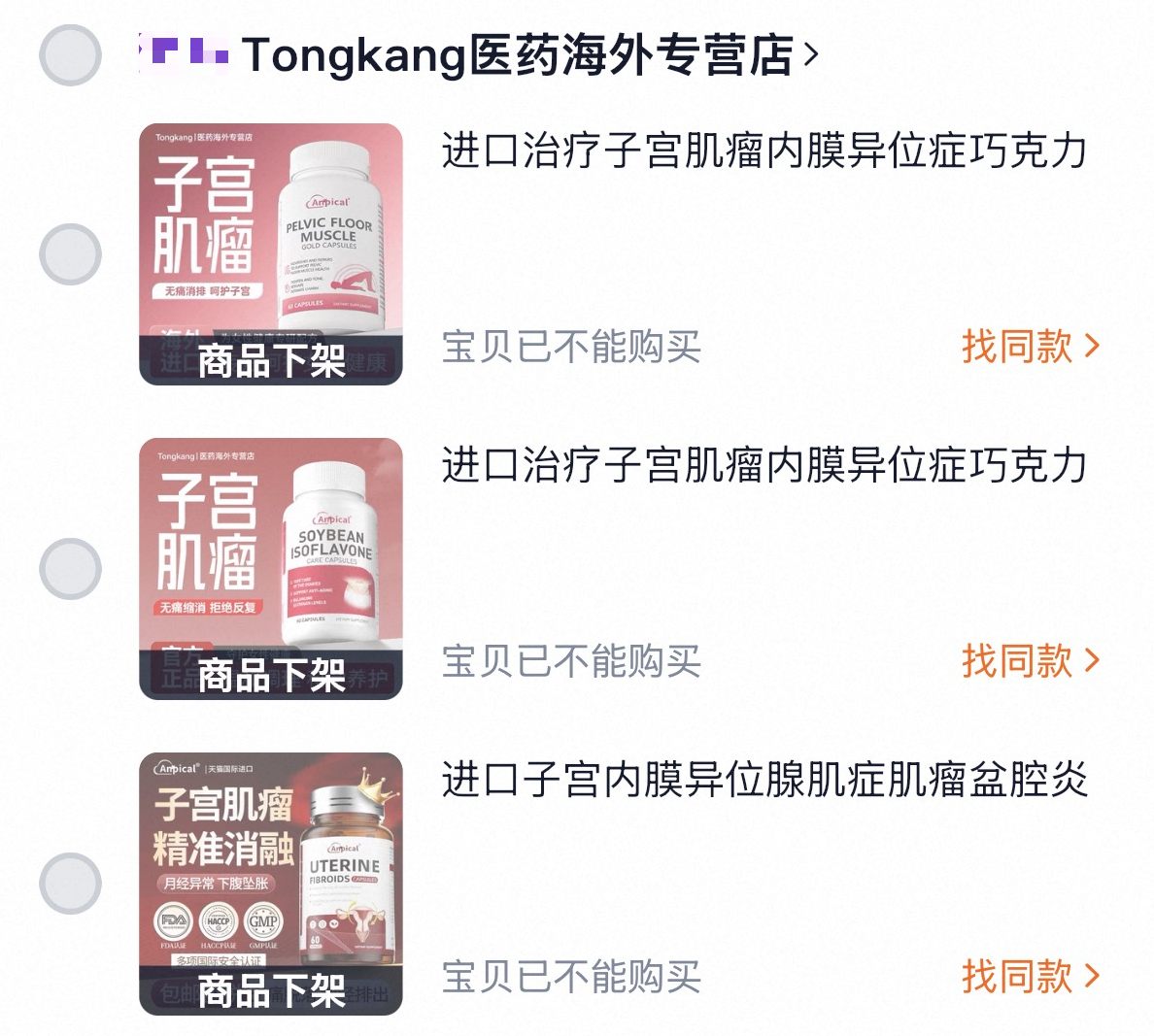
贴一贴、泡一泡,子宫肌瘤能消失?多款医疗器械贴剂涉违规宣传
Bei Ke Cai Jing· 2025-10-30 06:08
Core Viewpoint - The article highlights the rise of misleading products claiming to treat uterine fibroids, exploiting women's anxiety and fear of surgery, leading to potential health risks due to reliance on ineffective treatments [1][2][3]. Group 1: Misleading Products - A variety of products, including medical devices and herbal remedies, are marketed as capable of "eliminating" uterine fibroids, often using exaggerated claims and false advertising [1][25]. - Many of these products, particularly medical adhesive patches, falsely claim to contain traditional Chinese medicine ingredients, despite regulations prohibiting such claims for Class I medical devices [3][16][24]. - The marketing strategies often target the psychological fears of women regarding surgery, promoting the idea of "no surgery, no medication" as a selling point [1][24]. Group 2: Expert Opinions - Medical professionals emphasize that uterine fibroids are common and typically do not require immediate treatment unless they exceed 5 cm in size or cause symptoms [2][31]. - Experts assert that there is no scientific evidence supporting the claims that these products can shrink or eliminate fibroids, and reliance on them may delay necessary medical treatment [17][28][29]. - The use of herbal patches and foot baths is deemed ineffective for treating fibroids, with experts noting that while they may provide temporary relief from discomfort, they do not address the underlying condition [28][29]. Group 3: Regulatory Concerns - The article discusses the regulatory violations associated with these products, including misleading claims about their medical efficacy and improper labeling of medical device registration numbers [16][37]. - Some products have been found to have inconsistent or unverifiable medical device registration numbers, raising concerns about their legitimacy [37][40]. - The use of terms like "imported" or "Japanese technology" in marketing is identified as a tactic to mislead consumers about the product's origins and effectiveness [32][36].
