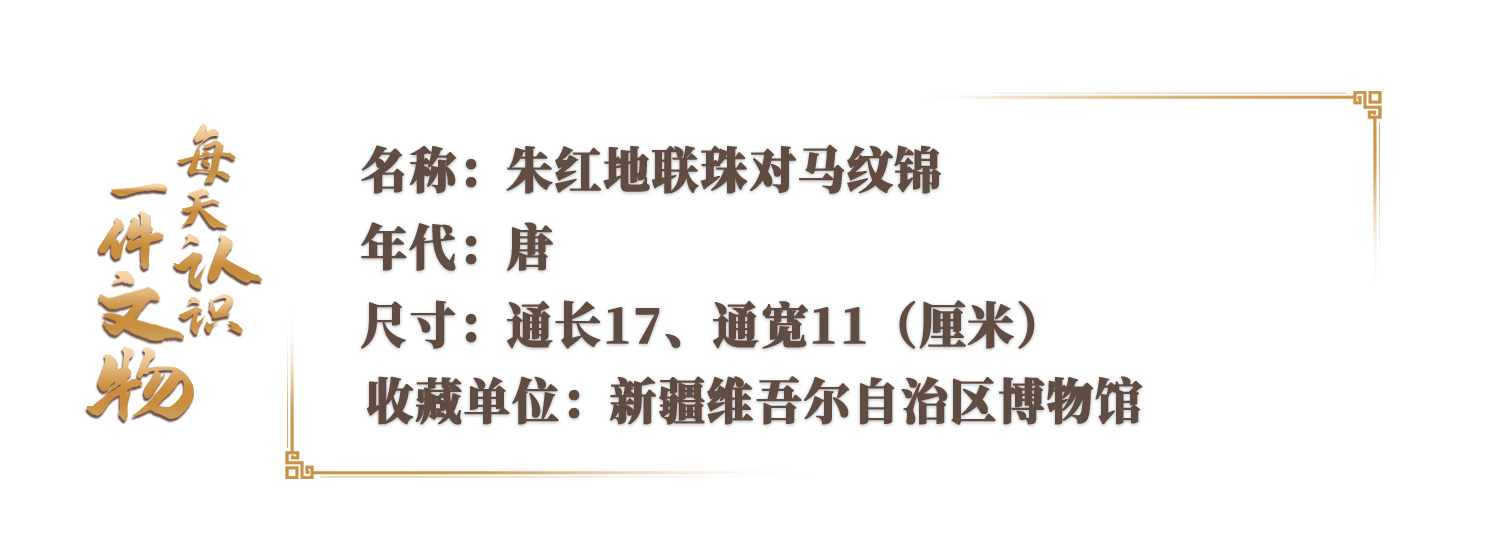
朱红地联珠对马纹锦

Search documents
文博日历丨新年伊始,祝你“翼”马当先!
Yang Shi Xin Wen· 2025-12-31 22:39
Core Viewpoint - The article highlights the significance of the "winged horse" motif in Chinese textile art, particularly in the context of the new year, symbolizing vitality and cultural heritage [2][25]. Group 1: Winged Horse Motif - The "winged horse" motif, depicted in textiles, is characterized by dynamic and vibrant designs, showcasing a horse with wings that appears ready to take flight [9][11]. - This motif is enclosed within a series of interlocking bead patterns, known as the "Linyang Gong style" from the Tang Dynasty, enhancing its visual appeal [11][18]. - The textile featuring the winged horse was discovered in the Astana region of Turpan, Xinjiang, and similar designs have been found along the Silk Road, indicating a widespread cultural exchange [18][20]. Group 2: Cultural Influences - Various theories exist regarding the origins of the "winged horse" image, with some attributing it to the Greek mythological creature Pegasus, while others suggest influences from the dual-horse deity worship in West and Central Asia [20][22]. - The design is seen as a blend of Western and Chinese elements, reflecting a synthesis of cultural influences rather than a mere imitation of foreign motifs [22][24]. - The "winged horse" motif serves as a testament to the cultural and technological exchanges between the East and West throughout history [25]. Group 3: Significance of Horse Culture - China's rich equine culture is deeply embedded in its history, with numerous idioms, literary references, and artifacts celebrating the horse [25][28]. - The article emphasizes the importance of horse-themed artifacts, such as the bronze gilded dragon horse, which symbolizes health and vitality for the new year [25][28]. - The "Six Steeds of Zhao Ling," housed in the Xi'an Beilin Museum, represents the high regard for horses in Tang Dynasty culture, embodying the spirit of ambition and vigor [28][29].

文博日历丨《长安的荔枝》中的文博彩蛋,你发现了吗?
Yang Shi Xin Wen· 2025-06-15 01:43
Group 1 - The drama "Lychee in Chang'an" is currently airing and showcases detailed costumes, makeup, and props that reflect the Tang Dynasty culture [1] - The character Shiqi Niang has a striking hairstyle reminiscent of the murals from the Mogao Caves and Tang Dynasty figurines [1] - The show features various hairstyles and clothing styles that are historically accurate, such as the double hanging bun for young girls [5] Group 2 - The male character He Youguang's outfit includes subtle patterns that align with the fashion trends of the Tang Dynasty [7] - The costumes in the show are closely aligned with historical artifacts, such as the deer-patterned brocade from the China Silk Museum [9] - The show has been noted for its high fidelity to historical designs, with 99% accuracy in the replication of patterns [12] Group 3 - Accessories like bags used by characters are also reflective of historical designs, linking modern fashion with Tang Dynasty practicality [14][16] - The drinking vessels featured in the show, such as the Tang Dynasty "suction cup," highlight the creativity of ancient Chinese pottery [20] - The performance elements, including dance and music, are depicted with attention to historical accuracy, enhancing the cultural experience [22][24] Group 4 - The narrative of "Lychee in Chang'an" serves as a slice of the grand history of the Tang Dynasty, enriching viewers' understanding of traditional Chinese culture [26]