机场运行保障服务

Search documents
2026春运|超84.5万人!三亚机场顺利完成2026年春节假期保障工作
Zhong Guo Min Hang Wang· 2026-02-24 05:20
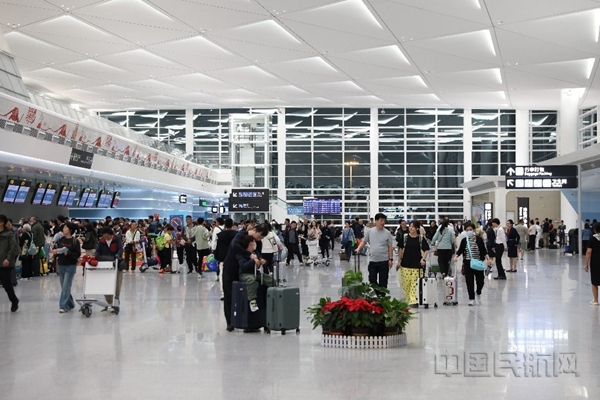
Core Insights - The 2026 Spring Festival holiday saw Sanya Phoenix International Airport complete 4,080 flight takeoffs and landings, transporting over 845,000 passengers, marking a successful operational period during the holiday [1][3]. Operational Performance - The 2026 Spring Festival is the first holiday since the full operation of Hainan Free Trade Port and the opening of the T3 terminal at Sanya Airport, presenting a new test for the airport's operational capabilities [3]. - To manage the peak return passenger flow, Sanya Airport optimized capacity by increasing flight frequency on popular routes and deploying wide-body aircraft, maximizing passenger return demand [3]. - The airport implemented a refined management model for parking positions, achieving an average of 453 flights per day, with an average on-time departure rate of 86.79% and an overall flight release normal rate of 92.52% during the holiday [3][4]. Service Enhancements - Sanya Airport optimized the entire passenger service chain, including check-in, security, and boarding processes, providing timely updates on ticket availability, travel tips, and flight dynamics to assist passengers in planning their journeys [4]. - The airport introduced cultural activities such as traditional lion dances and DIY spring couplets, enhancing the travel experience with festive elements and distributing gifts to travelers [4][6]. Future Focus - Sanya Airport aims to continue enhancing safety and service quality, with plans for more efficient operational capabilities and diverse service models to improve passenger satisfaction and contribute to the high-quality development of Hainan Free Trade Port [6].

风雪为令,向寒而行!满洲里机场-30℃保障旅客春运出行平安顺畅
Zhong Guo Min Hang Wang· 2026-02-06 13:45
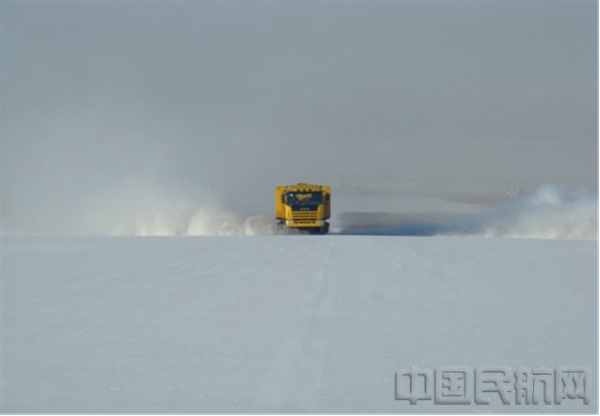
Core Viewpoint - The article highlights the efforts of the Manzhouli Airport's operation support team in ensuring safe and efficient flight operations during extreme winter weather conditions, including heavy snowfall and sub-zero temperatures [1][4]. Group 1: Winter Weather Challenges - Manzhouli Airport is facing severe challenges due to extreme cold weather, with temperatures dropping below minus thirty degrees Celsius [1]. - Continuous snowfall has necessitated the implementation of strict snow removal protocols to ensure flight safety and operational efficiency [4]. Group 2: Snow Removal Operations - The airport's operation support team activated a snow removal plan upon receiving weather alerts, involving meticulous coordination of personnel, equipment checks, and runway assessments [4][5]. - The runway, measuring 2800 meters, employs a combination of large machinery and manual labor for snow removal, utilizing specialized vehicles like snowplows and blowers to clear snow effectively [5]. - Key navigational aids such as runway edge lights and markers are prioritized in snow removal efforts to prevent safety hazards [5]. Group 3: Operational Preparedness - The operation support team has drawn on past experiences to proactively plan and implement snow removal strategies ahead of the spring travel season [5][6]. - Continuous monitoring of snowfall intensity and runway conditions is conducted to ensure rapid restoration of normal airport operations [5][6]. - The team is committed to enhancing winter operational capabilities through refined processes and skill development, ensuring smooth travel for passengers [6].
湖北机场集团全力备战寒潮冰雪天气保障旅客安全顺畅出行
Zhong Guo Min Hang Wang· 2026-01-18 11:36
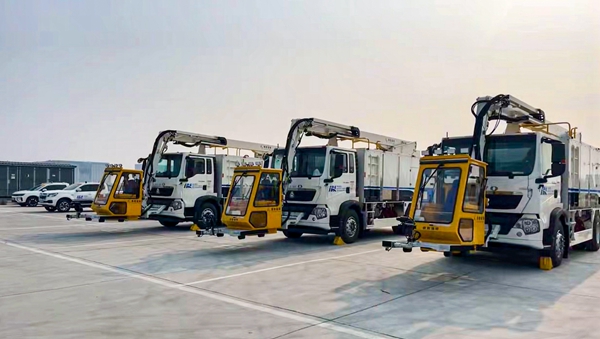
Core Viewpoint - The Hubei Airport Group is actively preparing for the strongest cold wave of the winter, focusing on operational safety and passenger service during extreme weather conditions [1][10]. Group 1: Operational Coordination - The airport group emphasizes the core goal of flight normalcy by enhancing operational coordination and dynamic scheduling [3]. - Flight plans are optimized in advance, with a focus on ensuring the first departing flight takes off within 10 minutes after the runway opens [3]. - A rolling consultation mechanism is in place to track weather changes in real-time, allowing for flexible adjustments to ground support operations [3]. Group 2: Snow and Ice Removal Capabilities - The airport group has significantly enhanced its snow and ice removal capabilities across various airports [4][6]. - Wuhan Tianhe Airport has increased its de-icing vehicles to 20, capable of handling different snow conditions, while also equipping the flight area with essential snow removal equipment [6]. - Other airports, including Ezhou Huahu Airport and those in Enshi, Xiangyang, and Jingzhou, have completed necessary equipment inspections and emergency team preparations [6]. Group 3: Passenger Service Enhancement - The airport group prioritizes passenger-centered services, enhancing the warmth of service during extreme weather [7][10]. - Measures include improved on-site guidance, support for ticket changes, and provision of hot food and beverages for vulnerable passengers [10]. - The group is also strengthening safety measures, including foreign object debris (FOD) control and emergency response preparations, to prevent negative public sentiment due to service shortcomings [10].
民航东北地区管理局赴西宁机场专项交叉检查 以精准督查筑牢高原机场安全防线
Zhong Guo Min Hang Wang· 2025-12-01 04:03
Core Viewpoint - The Civil Aviation Administration of China (CAAC) emphasizes safety management at high-altitude airports, with a recent three-day inspection at Xining Caojiabao International Airport focusing on enhancing operational safety and management responsibilities in challenging environments [1][2]. Group 1: Inspection Overview - The inspection team adhered to a comprehensive check system, including on-site verification, data tracing, discussions, and simulation tests, to ensure thorough evaluation of safety protocols [2]. - Experts with over ten years of experience in civil aviation safety regulation conducted the inspection, focusing on five core areas: runway incursion prevention, foreign object debris (FOD) management, bird strike prevention, emergency rescue capabilities, and compliance with CAAC's 2025 directives [2][3]. Group 2: Key Findings - The inspection covered 23 critical operational points, including runways, taxiways, terminals, and emergency command centers, assessing safety management records and personnel qualifications [3]. - The team praised Xining Airport's innovative measures in bird strike prevention and winter operations, highlighting a safety management approach that includes a comprehensive risk prevention network and strict adherence to operational standards [4]. Group 3: Recommendations and Future Actions - The inspection team recommended establishing a specialized training system for high-altitude airports and optimizing equipment maintenance management to ensure traceable and verifiable problem rectification [5]. - The Qinghai Airport Company committed to implementing a zero-tolerance policy for issues and developing specific corrective measures, while also planning to enhance safety management systems by incorporating advanced practices from Northeast region airports [5].
新疆机场集团运管委启动秋冬换季督导监察
Zhong Guo Min Hang Wang· 2025-11-03 07:36
Core Viewpoint - The Xinjiang Airport Group is implementing a comprehensive inspection for the 2025 autumn-winter transition across 27 transportation airports to enhance operational capabilities under complex weather conditions, ensuring safe and orderly flight operations during the seasonal change [1][2]. Group 1: Personnel Management - The inspection focuses on four core areas: personnel, equipment, environment, and management, establishing a comprehensive and multi-dimensional inspection system [1]. - Emphasis is placed on personnel training, including seasonal mobilization, warning education, and pre-job training for new employees, particularly at newly established airports like Yecheng Midai Airport and Balikun Dahe Airport [1]. Group 2: Equipment and Facilities - The Xinjiang Airport Group is conducting on-site checks at key hubs such as Urumqi Tianshan International Airport and Kashgar Laining International Airport to ensure optimal maintenance of bird control facilities, navigation station waterproofing, and the upkeep of new energy vehicles and power supply lines [2]. Group 3: Operational Environment - The group is preparing for complex weather conditions such as low visibility, rain, snow, and ice, urging airports to complete snow and ice removal material reserves, emergency plan evaluations, and practical drills [2]. - High-altitude airports in northern Xinjiang have completed three rounds of de-icing and snow removal drills by September 30, enhancing their capabilities to handle extreme weather [2]. Group 4: Management Practices - Airports are optimizing winter ground operation procedures based on ramp control programs and enhancing coordination and supervision roles of ramp managers [2]. - Urumqi Tianshan International Airport is focusing on debugging new terminal facilities and systems to ensure smooth operational transitions with air traffic control and fuel supply units [2]. Group 5: Overall Impact - This seasonal inspection serves as a comprehensive health check for winter preparations across all airports in Xinjiang and is a significant initiative by the Xinjiang Airport Group to enhance safety governance capabilities [2]. - The group plans to systematically summarize the inspection results and develop replicable and promotable best practices for winter aviation safety [2].
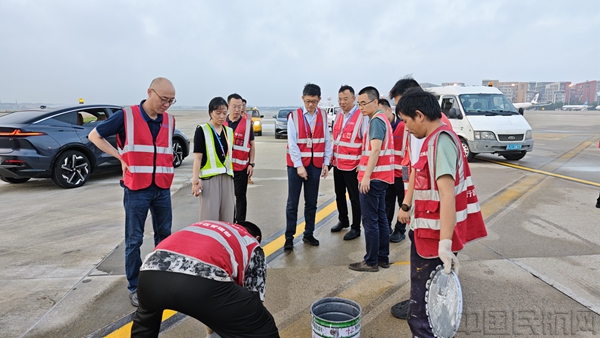
133天攻坚!虹桥机场不停航施工交出“安全+无感”双答卷
Zhong Guo Min Hang Wang· 2025-08-01 04:39
Core Points - The comprehensive renovation project at Shanghai Hongqiao International Airport's D taxiway has been successfully completed after 133 days, enhancing the airport's operational capacity [1][2] - The project involved structural reinforcement of the taxiway, upgrading the drainage system, and updating navigation facilities, allowing for the daily handling of nearly 800 flights [1] - The project faced multiple challenges, including the risk of runway incursions, adjacent construction and operational areas, and adverse weather conditions during peak summer operations [2] Project Management and Safety - A "three-party linkage" collaborative mechanism was established among airport departments, control command, and construction units to ensure safety and operational continuity during the renovation [2] - The Shanghai regulatory bureau provided high-standard guidance and oversight throughout the project, focusing on safety risk prevention and the implementation of construction management plans [3] - During the construction period, the on-time departure rate for flights at Hongqiao Airport was maintained at 88.86%, indicating effective management and minimal disruption to operations [3] Future Developments - The Shanghai regulatory bureau plans to use this renovation as a model for future projects, aiming to enhance the taxiway's lifecycle management and establish an intelligent monitoring platform for real-time data collection [3] - The goal is to continuously improve operational reliability and service quality, ultimately providing a safer, more convenient, efficient, and comfortable travel experience for passengers [3]