
杜比影院

Search documents
看电影中间位置最好?选座攻略来了!
Xin Lang Cai Jing· 2026-02-21 10:04
Core Viewpoint - The article discusses the differences between various types of cinema halls and provides guidance on selecting the best viewing seats for an optimal movie-watching experience [1][3]. Group 1: Choosing the Best Viewing Position - To achieve the best audio-visual experience, viewers should consider factors such as movie type, hall specifications, screen size, angle of the seating, and personal preferences when selecting seats [1]. - For 2D movies, ideal seating should maintain a visual angle of at least 36° from the sides of the screen and a viewing angle not exceeding 35° from the horizontal line to avoid neck discomfort [1]. - Seats that are too close to the screen or too far from it, as well as those with poor angle alignment, can negatively impact the viewing experience [1]. Group 2: Summary of Different Hall Specifications - For small halls with 8-14 rows, the best seats are in rows 5 and 6, centrally located [2]. - In medium halls with 15-20 rows, the recommended seats are in rows 7 and 8, also centrally located [2]. - For large halls or IMAX theaters with 21-25 rows, the optimal seats are in rows 9 and 10, centrally located [2]. - For 3D movies, it is advisable to sit at a position that is halfway between the screen and the projection window due to the reduced brightness caused by 3D glasses [2]. Group 3: Differences Between Cinema Halls - The quality of movie projection is determined by the projection and sound systems, which vary significantly between traditional and high-specification halls [3][4]. - Traditional digital projection typically uses standard screens and lower brightness xenon lamps, achieving 2K resolution and 24 frames per second [4]. - High-specification halls, such as IMAX and CINITY, utilize larger screens (over 21.3 meters wide) and high-brightness laser sources, achieving up to 4K resolution and frame rates of up to 120 frames per second [4]. Group 4: Audio Systems - Traditional halls use 2D surround sound, while high-specification halls like Dolby Atmos offer 3D immersive sound for enhanced auditory experiences [4]. - For 3D movies, laser halls are recommended due to their ability to maintain better brightness levels [4]. - The combination of motion seats and environmental effects in 4D theaters can provide a richer experience but may also lead to discomfort for first-time viewers [4]. Group 5: Mainstream High-End Cinema Halls - The most popular high-end cinema halls currently include IMAX and Dolby Cinema [5]. - IMAX features a larger screen and specialized filming techniques, allowing viewers to see 26%-40% more of the image compared to standard screens [6]. - Dolby Cinema combines high-fidelity visuals with immersive sound, and it is important to look for the "DOLBY CINEMA" label to ensure the full experience [6].
看电影中间位置最好?99.9%的人都选错了……
Xin Lang Cai Jing· 2026-02-21 04:54
Core Viewpoint - The article discusses the differences between various cinema formats and how to choose the best viewing position for an optimal movie experience, particularly during the Spring Festival holiday season. Group 1: Choosing the Best Viewing Position - For 2D movies, the ideal viewing angle should be at least 36° from the sides of the screen, and the angle of elevation should not exceed 35° to avoid neck strain [1] - Recommended seating positions vary by theater size: - For small theaters (8-14 rows), the best seats are in rows 5 and 6, centered [2] - For medium theaters (15-20 rows), rows 7 and 8 are preferred [2] - For large theaters (21-25 rows or IMAX), rows 9 and 10 are optimal [2] - For 3D movies, viewers should sit at a position that is halfway between the screen and the projection window due to a 40% reduction in brightness from 3D glasses [2] Group 2: Differences Between Cinema Formats - The quality of movie projection is determined by both the projection system and the audio system, with traditional theaters using lower quality screens and projectors compared to high-end formats [3] - High-end theaters like IMAX and CINITY use larger screens (over 21.3 meters) and high-brightness laser projectors, achieving up to 4K resolution and frame rates of 120 frames per second [3] - Audio systems in traditional theaters typically use 2D surround sound, while high-end formats like Dolby Atmos provide a 3D sound experience [3] Group 3: Overview of Main Cinema Formats - IMAX features a significantly larger screen and specialized IMAX cameras, allowing viewers to see 26%-40% more of the image compared to standard screens [4] - Dolby Cinema combines high-quality visuals with immersive sound, requiring the "DOLBYCINEMA" label for authenticity, while standard "Dolby" theaters may only use surround sound [5] - CGS China Giant Screen is a domestic alternative to IMAX, but may have inconsistent quality and maintenance issues [5]
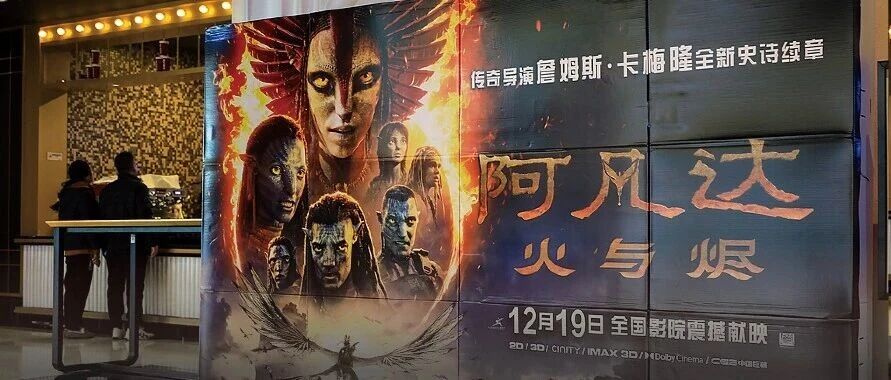
当《阿凡达3》不再成为爆款
吴晓波频道· 2025-12-22 00:29
Core Viewpoint - "Avatar 3" serves as a pressure test for blockbuster films and Chinese cinemas, questioning whether a top-tier special effects film can withstand the rational scrutiny of a mature market [2][11]. Group 1: Box Office Performance - "Avatar 3" grossed 400 million in its first three days, with a projected total of 1.1 billion, significantly lower than the 1.7 billion achieved by its predecessors [6]. - The film's opening weekend saw box office performance in third and fourth-tier cities nearly matching that of first-tier cities, indicating a shift in audience engagement across different market levels [31]. Group 2: Technological Advancements - The impact of "Avatar" on the Chinese film market has been twofold: technological upgrades and cinema expansion [14]. - The number of 3D screens in China has surged to 85,000 by 2024, with nearly 800 IMAX screens, showcasing a significant shift towards advanced cinema technology [21]. - IMAX screens alone generated 2.56 billion in box office revenue in 2023, accounting for 4.7% of the national box office [25]. Group 3: Market Dynamics - The "Avatar" phenomenon has catalyzed a nationwide cinema construction movement, termed "Avatar going rural," aimed at increasing cinema accessibility in smaller cities [33][36]. - The film industry has seen a shift from quantity to quality, with a focus on operating competitive cinemas rather than merely expanding the number of screens [45]. - The audience has become more discerning, with a significant portion of viewers (42%) aged 18-30 showing a preference for domestic films, reflecting a changing landscape in viewer preferences [48]. Group 4: Future Outlook - The ultimate box office performance of "Avatar 3" will reflect the audience's response to Cameron's commitment to cinema, serving as a mirror to the complexities of a mature market [55][56]. - The industry is evolving, with cinemas seeking to transform from mere screening venues to comprehensive experience hubs, integrating various entertainment options beyond traditional film viewing [54].

在影院看“F1”是什么体验
Xin Lang Cai Jing· 2025-07-14 11:18
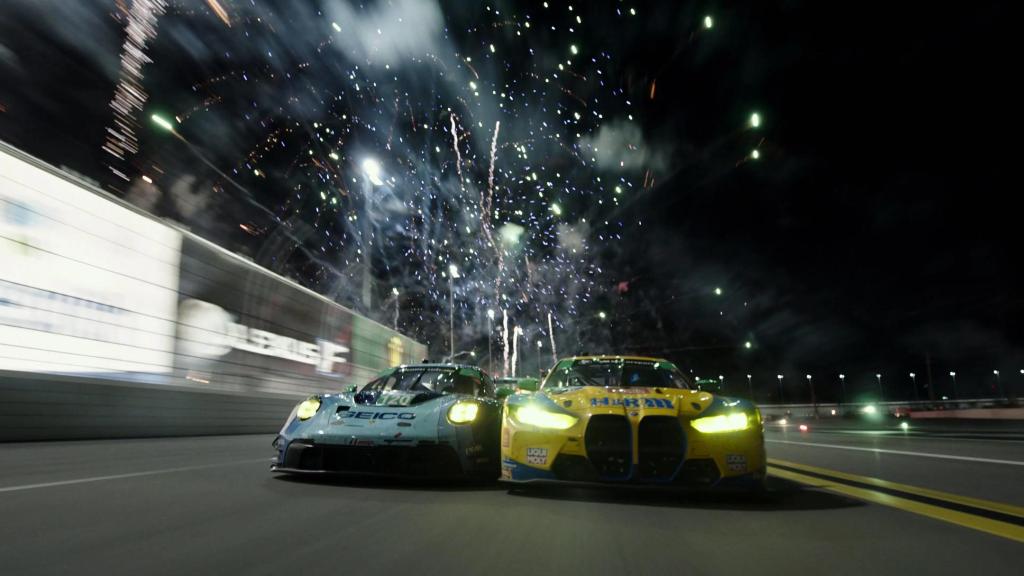
Core Viewpoint - The release of "F1: Drive to Survive" highlights the importance of advanced cinema technology for an immersive viewing experience, particularly with the introduction of Dolby Vision and Dolby Atmos in theaters [3][5]. Group 1: Cinema Technology - Dolby Laboratories and Emperor Cinemas have launched China's first Dolby Vision + Dolby Atmos theater at the Emperor Cinemas flagship store in Beijing [3][5]. - Dolby Vision offers a contrast ratio of 1,000,000:1, significantly enhancing visual experience compared to traditional cinemas [5]. - Dolby Atmos allows sound objects to be placed and moved in a three-dimensional space, creating a more immersive audio experience for viewers [5][10]. Group 2: Audience Experience - The immersive experience of "F1: Drive to Survive" is significantly enhanced in theaters equipped with Dolby technology, making it less impactful when viewed outside of a cinema [3][4]. - The design of the new Dolby Vision + Dolby Atmos theaters is defined by the cinema itself, featuring custom-designed seating and optimized viewing angles [10]. Group 3: Industry Impact - The introduction of Dolby Vision and Dolby Atmos is expected to set new standards for cinematic experiences, particularly for high-profile film premieres in China [5][6]. - Over 720 films globally are confirmed or expected to utilize Dolby Vision and Dolby Atmos for their releases, indicating a growing trend in the industry [5].

看电影,巨幕厅该怎么选?(信息服务台)
Ren Min Ri Bao· 2025-05-16 22:12
Group 1 - The core viewpoint of the article highlights the significance and variety of giant screen theaters in China, which exceed 20 meters in width and number over 1,000 nationwide [1] - The article outlines the advanced film projection technologies represented by giant screen theaters, including ultra-large visual displays, high frame rates, high resolution, high dynamic range (HDR), and immersive sound [1] - Major giant screen systems in China include China Giant Screen, China Film CINITY, digital cinema LED giant screen systems, IMAX, and Dolby Cinema, each offering unique viewing experiences [1][2] Group 2 - For audiences seeking the latest projection technologies, digital cinema LED giant screen systems are ideal due to their high brightness, contrast, and image restoration capabilities [1] - For those prioritizing large screen size and brightness, China Film CINITY and IMAX theaters are recommended, with CINITY known for high frame rates and dynamic range, while IMAX is recognized for its large screens and dual projection technology [1] - Dolby Cinema is highlighted as a suitable choice for films that emphasize sound experience, utilizing Dolby Atmos sound system to create an immersive viewing environment [2][3]