林地

Search documents
从“甩包袱”到“做买卖”,银行不良资产处置画风生变
Bei Jing Shang Bao· 2025-11-12 14:27
Core Viewpoint - The transformation of banks from passively offloading non-performing assets to actively managing and monetizing them represents a significant shift in asset management logic, despite ongoing challenges in expertise, legal risks, and efficiency [1][5][9]. Group 1: Active Management of Non-Performing Assets - Banks are increasingly engaging in direct sales of non-performing assets, including real estate, land, and collectibles, through public bidding on platforms like Alibaba and JD [3][4]. - The shift to direct sales allows banks to better control asset valuation and recovery timelines, contrasting with the traditional method of selling to asset management companies [5][9]. Group 2: Challenges in Asset Valuation and Management - Banks face difficulties in accurately assessing the market value of non-financial assets and effectively reaching niche buyer groups, which tests their operational capabilities [1][8]. - The traditional approach of bundling loans and collateral for quick sales often results in undervaluation and overlooks the diversity of assets [6][8]. Group 3: Transition to Fine-Tuned Operations - The move towards "one asset, one strategy" aims to maximize value through tailored evaluation, pricing, marketing, and disposal plans for each non-performing asset [7][9]. - Despite the advantages of a more refined approach, banks still encounter challenges such as legal risks, valuation accuracy, and the need for specialized knowledge in non-financial asset management [8][10]. Group 4: Future Trends in Asset Disposal - The trend towards fine-tuned asset management is expected to become mainstream, driven by internal pressures and external regulatory encouragement for proactive asset management [9][10]. - Building a comprehensive operational system that covers the entire asset disposal chain is crucial for banks to enhance their asset management and value creation capabilities [10].


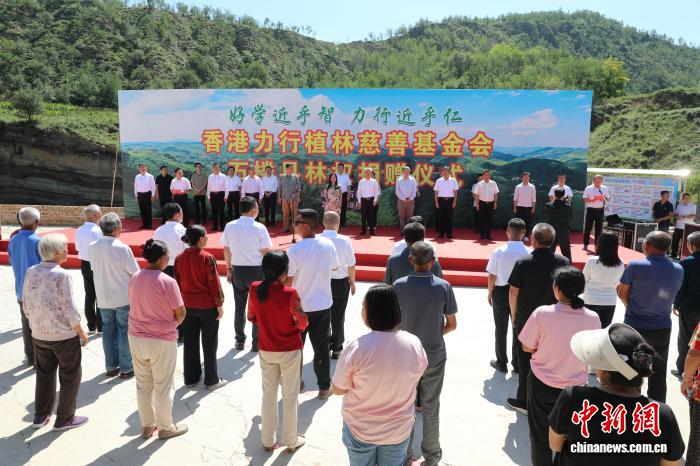
晋港20年生态缘:香港力行植林慈善基金会捐2600亩林地
Zhong Guo Xin Wen Wang· 2025-09-02 08:44
Core Points - The Hong Kong Li Xing Afforestation Charity Foundation donated 2,600 acres of forest land and nearly 600,000 saplings to Shilou County, marking a significant milestone in their 20-year ecological project aimed at promoting ecological poverty alleviation and rural revitalization in the Loess Plateau region [1][2][5] Group 1: Ecological Impact - Shilou County, located in a region with severe soil erosion, has seen the transformation of barren land into lush greenery through the foundation's "tree planting for water" initiative, which began in 2005 [2][6] - The foundation employs local villagers for tree planting, providing job opportunities and increasing their income, while also improving biodiversity and natural landscapes in the area [6][7] Group 2: Community Engagement - The foundation has been actively involved in various community support initiatives, including medical services, infrastructure development, and water supply projects, addressing numerous living challenges faced by villagers [5][6] - The donation ceremony highlighted the emotional connection and shared goals between Hong Kong and mainland residents, emphasizing the importance of collaboration in ecological efforts [5][8] Group 3: Future Aspirations - The foundation aims to establish the "Li Xing Afforestation Exhibition Hall" in Shilou County to educate future generations about ecological conservation and instill a sense of responsibility towards the environment [7][8] - Local officials expressed their commitment to maintaining the newly acquired forest land and leveraging it for scientific research and rural revitalization, further enhancing the ecological and economic benefits for the community [7][8]