
羊绒衫

Search documents
3吨黄金抵不了2.5亿元债务,马斯克拼不过比亚迪,魅族手机成弃子,现金流与AI是救命稻草吗?
Sou Hu Cai Jing· 2026-03-13 06:56
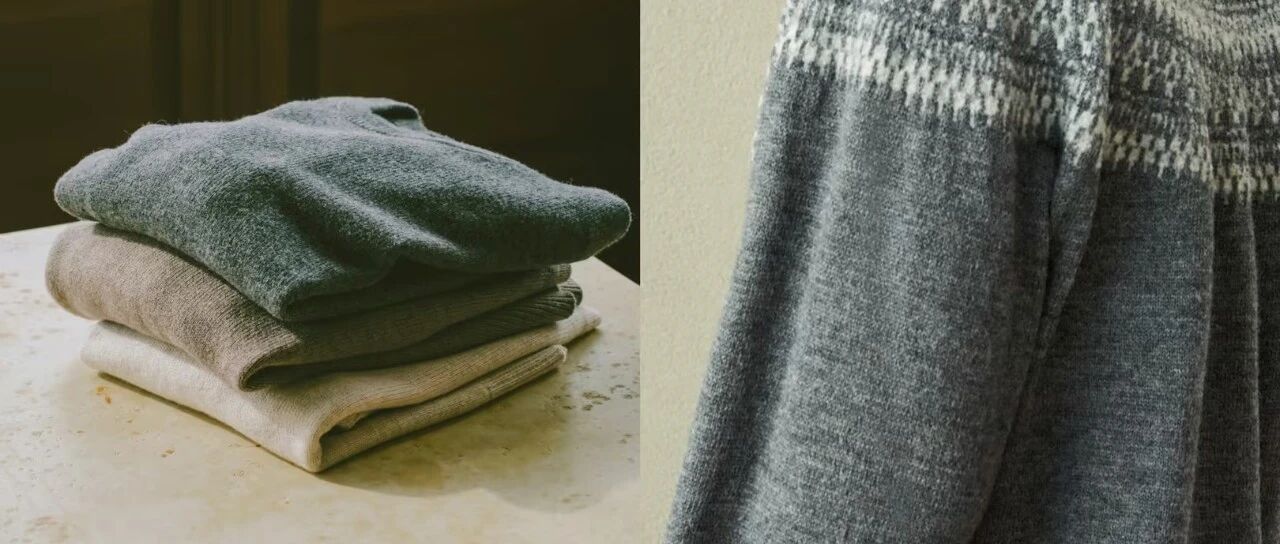
Group 1 - The article highlights the financial struggles of established companies, such as the 130-year-old jewelry store, Cuihua Jewelry, which is facing bankruptcy due to an inability to repay a loan of 250 million yuan, leading to account freezes by banks [1][4] - Tesla is shifting its business focus from car sales to providing transportation services, with plans to launch a self-driving taxi service called CyberCab, indicating a significant change in its operational strategy [1][6] - The article discusses the changing consumer perceptions of cashmere, which has transitioned from being viewed as outdated to becoming a sought-after luxury item among younger consumers, reflecting a shift in market demand [1][8] Group 2 - Meizu's smartphone business is reportedly on the verge of collapse, with the cancellation of its Meizu 22Air launch and significant layoffs, marking a potential end for another domestic smartphone brand [1][10] - The sales performance of Chery's new energy vehicle, Zhijie, has drastically declined, with a 90.6% drop in sales compared to the previous year, despite the overall growth of the company's sales [1][12] - The yacht industry is characterized by a stable profit model, with 20% gross margins being considered substantial, and the majority of profits coming from long-term services rather than initial sales [1][14]




衣染年味 美藏风骨
Xin Lang Cai Jing· 2026-02-23 21:43
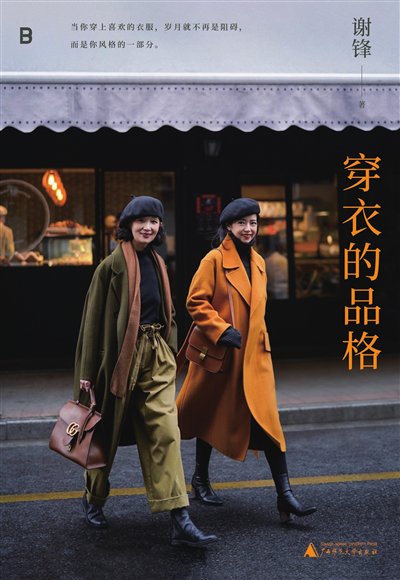
Core Perspective - The article emphasizes the importance of "wearing comfort" during the Spring Festival, highlighting that true fashion is not about luxury or blind trend-chasing, but about ease and self-expression [4][6][10] Group 1: Fashion Philosophy - The author, Xie Feng, believes that fashion can enhance confidence and self-expression, as illustrated in his book "The Quality of Dressing" [3][10] - The essence of dressing well is to find a balance between comfort and aesthetics, particularly during family gatherings [4][10] Group 2: Dressing Guidelines - The book introduces practical dressing rules such as the "331" layering method and the "631" color matching formula, which simplify complex dressing logic for festive occasions [5][6] - Emphasis is placed on choosing classic, high-quality fabrics over trendy items, as natural materials like cashmere and silk are highlighted for their comfort and aesthetic appeal [6][10] Group 3: Age Inclusivity in Fashion - The article challenges the notion that fashion is only for the young, showcasing examples of older individuals who express their style confidently [7] - It promotes the idea that dressing should reflect one's age and personality, encouraging mature individuals to embrace their unique style [7][10] Group 4: Regional Fashion Aesthetics - Different cities have distinct fashion aesthetics shaped by geography and culture, suggesting that individuals should dress according to their local environment and personal style [8][9] - The article notes that understanding local fashion trends can enhance personal style during festive occasions like the Spring Festival [8] Group 5: Cultural Significance - The book discusses the integration of traditional craftsmanship into modern fashion, emphasizing that clothing can serve as a medium for cultural expression [10] - It posits that the ultimate beauty of dressing lies in being true to oneself, resonating with the deeper meaning of the Spring Festival as a time for family and self-acceptance [10]
“无中生有”书写产业传奇——河北清河打造世界羊绒之都
Jing Ji Ri Bao· 2026-02-11 22:01
Core Viewpoint - The cashmere industry in Qinghe, Hebei Province, has transformed into a global hub for cashmere raw materials through technological innovation and market control, achieving significant growth and international recognition. Group 1: Market Control - Qinghe processes 8,000 tons of cashmere and over 50,000 tons of wool annually, accounting for 60% and 90% of the national total respectively [1] - Hebei Yuteng Cashmere Products Co., Ltd. has automated production lines that increase output by 16%, producing over 1,000 tons of cashmere annually, which represents 10% of global production [2] - New automatic sorting equipment at Hui Xing Cashmere Company has doubled production efficiency and reduced impurities by 20% [2] - The establishment of a 10,000-acre breeding area in Shaanxi has led to a 100% increase in cashmere yield compared to ordinary goats [2] Group 2: Industry Advancement - The Qinghe International Cashmere High-end Knitting Industrial Park features a shared factory model that enhances production efficiency by 46% and reduces costs by 15% [4] - The shared factory model allows multiple companies to utilize advanced knitting machines, significantly increasing order capacity from 100,000 to 800,000 pieces [3][4] - The establishment of the Xin Hua·Ci Xing Shi Tang Cashmere One-line Forming Research Institute aims to support small and medium enterprises with digital design services [4] Group 3: Global Platform Development - Qinghe cashmere has participated in Milan Fashion Week for three consecutive years, evolving from static displays to brand launches [6] - The region has four nationally recognized brands and 80 growing apparel brands, with efforts to enhance brand recognition and market value [7] - E-commerce has significantly boosted sales, with a total transaction volume of 16.199 billion yuan from January to October 2025, marking a 10.17% increase year-on-year [8] - The establishment of an e-commerce development service center aims to optimize supply chain systems and promote rural e-commerce [8] Group 4: Economic Growth - The total industry output value reached 34.45 billion yuan in 2024, reflecting a year-on-year growth of 25.2% [8] - Revenue from January to November 2025 was 47.81 billion yuan, with an 8.48% increase compared to the previous year [8] - Qinghe is formulating new development plans to accelerate the cashmere industry's entry into high-end and international markets [8]
如何用“一件羊绒衫”链接自然力量与美好生活?
新华网财经· 2026-01-30 03:28
Core Viewpoint - The article emphasizes the harmonious relationship between nature, consumers, and sustainable practices, particularly through MUJI's use of natural materials like cashmere and hemp, showcasing a commitment to environmental and social responsibility [2][5][20]. Group 1: Sustainable Materials and Practices - The cashmere produced by the white cashmere goats in Inner Mongolia is highlighted for its superior quality and low resource consumption, making it an ideal sustainable material for winter clothing [5][7]. - MUJI employs a systematic approach to link sustainable raw materials with aesthetically pleasing daily products, integrating environmentally friendly and animal-friendly principles throughout the production process [7][12]. - MUJI's commitment to sustainability extends beyond cashmere, incorporating local materials like hemp and recycled ocean-bound plastics into their product lines, thereby addressing environmental issues at their source [12][20]. Group 2: Social Responsibility and Community Impact - MUJI's sustainable practices also focus on social development, helping local herders increase their income while preserving the grasslands, thus achieving dual goals of environmental protection and economic stability [15][20]. - The development of products like the OBP hand-woven bags incorporates traditional craftsmanship, benefiting over 1,000 families by improving their working conditions and income [15][17]. - MUJI's initiatives in local communities, such as the mountain spring water series from Hunan's Shibadong Village, demonstrate their commitment to supporting local economies and enhancing livelihoods through investment and donations [15][19]. Group 3: Brand Philosophy and Market Strategy - MUJI's brand philosophy revolves around the idea that sustainable materials are not merely marketing tools but integral to their development strategy, promoting a lifestyle that respects nature and fosters coexistence [12][22]. - Since entering the Chinese market in 2005, MUJI has focused on practical and sustainable product design, emphasizing the importance of local materials and processes to meet consumer needs [22][23]. - The company aims to continue its long-term development in China, leveraging traditional wisdom to create a positive living experience for consumers while contributing to ecological civilization [23].
数十万网友涌入,李亚鹏带货登总榜第一,90分钟销售额破5000万元,热度远超与辉同行!他关闭打赏,鞠躬致谢,提醒大家“理性购物”
Mei Ri Jing Ji Xin Wen· 2026-01-23 15:52
Group 1 - The core focus of the news revolves around Li Yapeng's recent live streaming sales event, which garnered significant attention and participation, indicating a strong market presence [1][3][6] - On January 23, Li Yapeng's live stream achieved a peak viewership of over 100,000 and a total of 34.125 million views, showcasing his popularity as a live commerce host during the New Year sales period [3][6] - The live stream generated sales exceeding 50 million yuan within an hour and a half, highlighting the effectiveness of his promotional efforts [7] Group 2 - The landlord of the Yanran Angel Children's Hospital has been confirmed as Zhang Yi, the founder of the well-known medical beauty institution, Siyanli, although he has no current ties to the hospital [10] - Siyanli operates 163 high-end beauty service outlets and 19 medical beauty clinics across 48 major cities in China, indicating a robust business model in the beauty and healthcare sector [10] - Zhang Yi's past involvement with Siyanli and the recent acquisition of the company by Meili Tiantian Medical Health Industry Co., Ltd. for 1.25 billion yuan reflects ongoing changes in the medical beauty industry landscape [10] Group 3 - Xiang Huaqiang commented on Li Yapeng's management capabilities, suggesting that while he is a commendable individual, his operational skills are lacking [11][13] - The challenges faced by the Yanran Angel Foundation, including a rental crisis, are attributed to inadequate financial planning and over-reliance on celebrity influence, indicating potential areas for improvement in nonprofit management [13] - Xiang Huaqiang recommended that Li Yapeng transition from a management role to a spokesperson role, allowing a professional team to handle operations, which could enhance the foundation's effectiveness [13]
全国多地迎来大范围寒潮 京东秒送保暖相关服饰增长翻倍
Zhong Jin Zai Xian· 2026-01-20 09:25
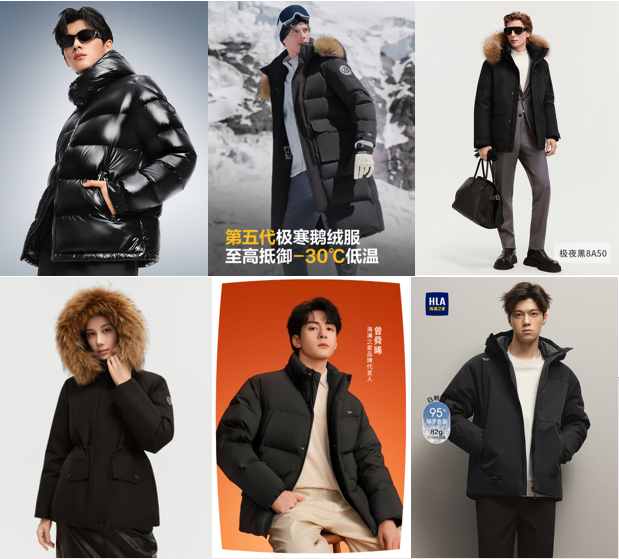
Group 1 - A significant cold wave hit the country, causing temperatures to drop nearly 20°C, leading to a surge in "instant warmth" consumption [1] - From January 17 to 18, JD reported a 100% increase in sales of warm clothing, with accessories like hats and scarves seeing over a 200% increase in sales [1] - The search volume for warm clothing categories such as cashmere sweaters and jackets increased by over 3.5 times during the cold snap [1] Group 2 - High-fill down jackets were the most popular items, with products like Bosideng's short down jacket featuring a fill weight of up to 247g and innovative "cloud-like warmth technology" [1] - The fifth-generation extreme cold down jacket from Bosideng has a fill weight of up to 275g and utilizes aerospace-grade heating materials, capable of withstanding temperatures as low as -30°C [1] - Other popular items include the Hai Lan Zhi Jia short down jacket, which boasts a 95% down content and 800+ fluffiness [1] Group 3 - Children's winter gear is also in high demand, with products like the Yaya Ice Shell series children's long down jacket featuring 90+ large down clusters and 680+ high fluffiness [3] - The Moody Tiger mid-length girls' down jacket uses 750FP high-end white goose down and includes heat-retaining fabric for enhanced warmth [3] - Converse's children's thickened hooded down jacket is designed for temperatures as low as -10°C, available in six vibrant colors [3] Group 4 - Accessories such as hats, scarves, and gloves are essential for maximizing warmth, with products like Johnstons of Elgin cashmere scarves and Canada Goose Arctic hats being highlighted for their quality and uniqueness [5] - Burberry's cashmere blend gloves combine style and warmth with a distinctive black and white design [5] Group 5 - As temperatures continue to drop, consumers are encouraged to use the JD app to quickly update their winter gear for optimal warmth [7]
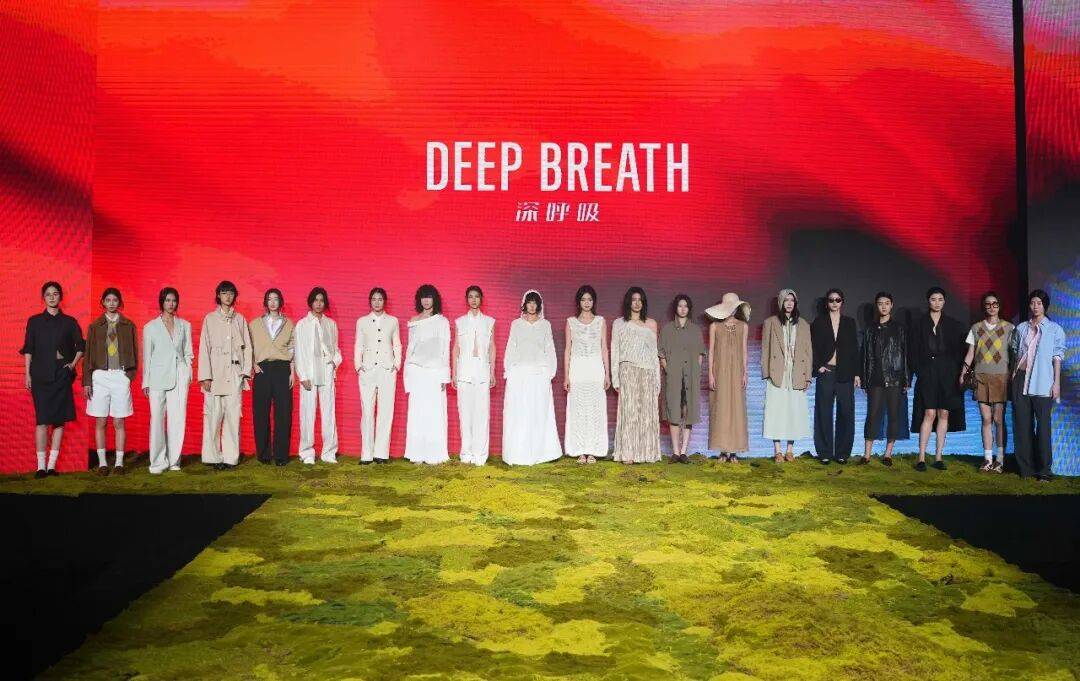
开店近500家,年销数十亿,拆解深呼吸女装的全渠道协同增长密码
Sou Hu Cai Jing· 2026-01-16 03:16
Core Insights - DEEP BREATH has opened nearly 500 stores and achieved annual sales in the billions, leveraging a comprehensive retail ecosystem [2][16] - The brand represents a shift in consumer behavior towards rational consumption, focusing on comfort, practicality, and value rather than emotional premium associated with brands [2][4] Product Strategy - DEEP BREATH continues to emphasize high-quality materials at affordable prices, aligning with trends in rational consumption and sustainable fashion [6] - The brand's core philosophy revolves around "comfortable dressing," aiming to provide urban women with practical wardrobe solutions [6] - The strategic focus on wool and cashmere has helped establish trust and recognition in the market, with competitive pricing of 100% cashmere sweaters at 380 RMB and 100% Australian merino wool sweaters at 200 RMB [7] Market Performance - DEEP BREATH has achieved significant market recognition, ranking first in sales and customer satisfaction for women's wool and cashmere sweaters [9] - The brand's sales performance during major shopping events, such as achieving nearly 1 billion RMB in GMV during the 2025 Double 11, reflects its strong market presence [18] Product Range Expansion - The brand targets urban women aged 25-45, focusing on practical and versatile clothing options, and has expanded its product range to include various categories such as outerwear, pants, and shirts [10] - DEEP BREATH emphasizes durability and versatility in its products, using high-quality materials and sustainable practices [12] Retail Strategy - DEEP BREATH has established a dual-channel sales system, integrating online and offline platforms to enhance customer experience and conversion rates [14][17] - The brand's offline stores are strategically located in high-traffic urban areas, designed to reflect the brand's philosophy and enhance customer engagement [15][16] Marketing and Brand Building - The brand focuses on long-term brand value through public engagement activities, collaborations with artists, and partnerships with fashion media to enhance visibility [20][23] - DEEP BREATH aims to build a stable brand recognition through consistent and multi-dimensional content output rather than short-term promotional bursts [25]
浙江省嘉兴市市场监督管理局发布2025年产品质量安全专项监督抽查结果(第一批)
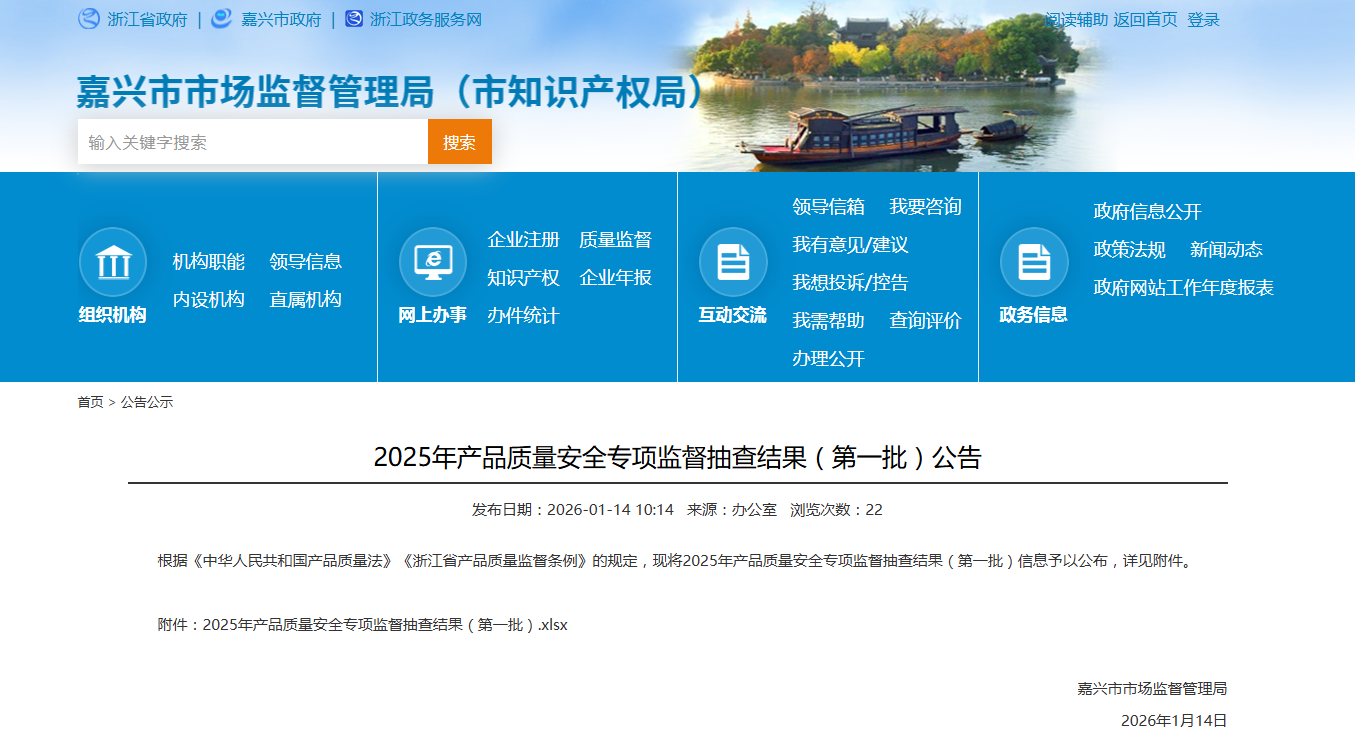
Zhong Guo Zhi Liang Xin Wen Wang· 2026-01-15 07:18
Core Viewpoint - The Zhejiang Jiaxing Market Supervision Administration has released the first batch of results from the 2025 product quality safety special supervision and inspection, highlighting compliance and quality issues in various products [3]. Group 1: Product Quality Inspection Results - The inspection results are based on the "Product Quality Law of the People's Republic of China" and the "Zhejiang Provincial Product Quality Supervision Regulations" [3]. - The announcement includes detailed information about the inspected products, including brand names, specifications, and sales channels [3]. Group 2: Specific Product Findings - Various brands of cashmere sweaters were inspected, with specific details on production dates, sales platforms, and compliance status [4][5][6]. - The inspection covered multiple companies, including those based in Jiaxing and Tongxiang, indicating a focus on local manufacturers [4][5][6]. Group 3: Sales Channels and Platforms - The products were primarily sold through online platforms such as Taobao and Tmall, reflecting the growing trend of e-commerce in the apparel sector [9][10]. - The inspection results also included links to the online stores of the inspected brands, facilitating consumer access to product information [9][10].
政府搭台 平台助力 企业参与 从线上到线下全面推动“广货行天下”
Guang Zhou Ri Bao· 2026-01-15 01:57
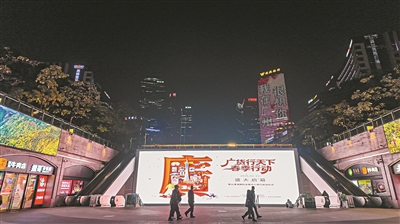
Core Viewpoint - The "Guangdong Goods Going Global" spring initiative aims to enhance the visibility and market influence of high-quality Guangdong products through a collaborative effort involving the government, platforms, and enterprises, thereby creating new wealth opportunities in the market [2][11]. Group 1: Initiative Overview - The initiative will host nearly 30 key events, supported by over 10 major commercial platforms and more than 6,000 participating enterprises [2]. - The campaign is a modern expression of Guangdong's long-standing commercial heritage, focusing on innovative supply to drive consumption and expand domestic demand [2]. Group 2: Industry Leadership - The home appliance sector is leading the initiative, leveraging Guangdong's dominant position in manufacturing, with 15 out of 31 national economic categories ranked first in scale [3][4]. - Guangdong's home appliance production includes significant outputs: 99.34 million air conditioners, 245.36 million refrigerators, 113.10 million washing machines, and 183.41 million color TVs, representing 27.02%, 34.54%, 8.55%, and 57.16% of national production, respectively [4]. Group 3: Technological Advancements - Guangdong's home appliance industry features a complete supply chain from chips to assembly, with over 10,000 manufacturing enterprises collaborating [6]. - The integration of AI algorithms into home appliances is transforming them into intelligent partners that understand user needs and provide proactive services [6][10]. Group 4: E-commerce and Marketing Strategies - The initiative includes innovative sales methods such as "one-click pick Guangdong goods," enhancing product visibility and consumer engagement [7]. - Major e-commerce platforms like JD.com and Pinduoduo have launched dedicated pages for "Guangdong Goods Going Global," offering various discounts and promotions [7][8]. Group 5: Global Recognition and Quality - Brands like "藏里羊" have gained international acclaim, showcasing Guangdong's strong supply chain capabilities and quality products [10]. - Guangdong produces 70% of the world's consumer drones, 40% of smartphones, and significant portions of industrial robots and integrated circuits, highlighting its manufacturing strength [10]. Group 6: Strategic Goals - The initiative aims to redefine "new Guangdong goods" by emphasizing quality, intelligence, and sustainability, thus actively creating and leading market demand [11].
杭州市消保委教您分清三种常见羊毛
Mei Ri Shang Bao· 2026-01-13 02:57
Core Insights - The Hangzhou Consumer Protection Committee has launched a new column "Anxin Purchase Research Institute" to educate consumers on selecting quality wool products, particularly sweaters, amidst a wide range of options available in the market [2][4] Group 1: Product Information - Traditional wool is the most common natural insulating fiber sourced from the outer coarse hair of sheep, offering moderate warmth and is prone to pilling and shrinking [3] - Merino wool, derived from Merino sheep, has a fiber diameter of 11-24 microns, combining warmth with softness, and is suitable for close-fitting garments and outdoor activities due to its high moisture absorption [3] - Cashmere, sourced from goats, is not wool but rather "goat cashmere," with fibers typically measuring 14-16 microns, providing superior warmth and comfort without irritation [3] Group 2: Purchasing Guidelines - Consumers are advised to check the composition of wool products, ensuring labels state "100% sheep wool" or "wool content ≥30%" while avoiding misleading terms like "lamb cashmere" or "sheep cashmere" [4] - The texture of wool products should be assessed; genuine wool should be soft and elastic, while cashmere should feel lightweight and smooth against the skin [4] - Depending on budget and needs, traditional wool is recommended for durability, Merino wool for its washability and comfort, and 100% cashmere for warmth and luxury [4]