柠条颗粒饲料

Search documents
探访宁夏盐池:五年“锁沙”变绿洲 生态答卷里的“治沙密码”
Zhong Guo Xin Wen Wang· 2025-12-12 08:29
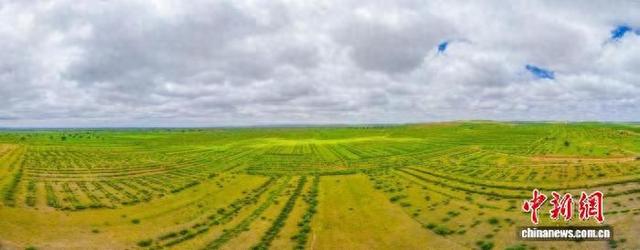
Group 1 - The core viewpoint of the articles highlights the successful implementation of innovative desertification control techniques in Ningxia's Yanchi County, transforming previously sandy areas into green oases through a multi-layered vegetation strategy [1][2][3] - Since the 14th Five-Year Plan, Yanchi County has developed a three-dimensional sand control technology system, which includes grass grids, sand crusts, and the sowing of drought-resistant plants, resulting in a threefold increase in efficiency compared to traditional methods [1] - Over 2 million acres of desertified land have been effectively managed, with a 12% increase in vegetation coverage compared to five years ago, and 1.5 million acres of degraded grasslands have been revitalized [1][3] Group 2 - The first international cooperation project for desertification prevention in China was launched in September, focusing on promoting Yanchi's sand control technology and integrating Israeli water-saving irrigation techniques [2] - The ecological improvements have led to the development of green industries, such as a cooperative that processes the branches of the local Caragana plant into high-protein feed, generating an annual output value exceeding 36 million yuan [2] - The project has engaged 230 households from eight surrounding villages in Caragana planting and harvesting, resulting in over 20 million yuan in dividends distributed to local farmers [3]

内蒙古鄂尔多斯灌木的“七十二变”
Zhong Guo Xin Wen Wang· 2025-08-05 07:56
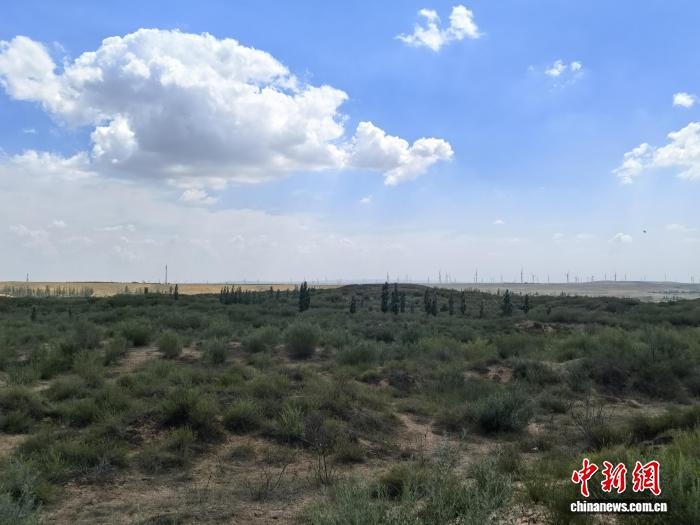
Group 1 - The article highlights the transformation of desert areas in Ordos, Inner Mongolia, through the integration of a full industrial chain involving "forage planting - feed processing - resource development - ecological restoration" [1][2] - The establishment of a modern feed processing plant has enabled the conversion of 70% of previously wasted branches from the Caragana plant into high-nutrition pellet feed, producing over 10,000 tons annually and generating an additional income of 100,000 yuan for local collective economies [1][2] - The use of Caragana pellet feed has significantly reduced feeding costs for livestock, with one farmer reporting savings of 1,000 yuan per cow, leading to substantial overall cost reductions for larger herds [2] Group 2 - The biomass pellet factory in Uxin Banner is producing clean fuel from various waste biomass materials, with a burning value comparable to coal, facilitating the supply to surrounding cities [2] - The value chain of shrub resources in the Kubuqi Desert is expanding, with products like willow branches being transformed into clean fuel and Caragana being processed into high-quality forage, addressing feed shortages in the livestock industry [2][3] - The local government has initiated a seedling cultivation project, with an area of 156,500 acres and a production of 997 million seedlings, effectively meeting the demand for key ecological projects and providing economic benefits to local farmers [3]

通讯:一棵柠条的绿色经济密码
Zhong Guo Xin Wen Wang· 2025-07-19 10:48
Core Insights - The article highlights the transformation of the local economy in Ordos, Inner Mongolia, through the cultivation of the drought-resistant shrub, Caragana, which serves both ecological and economic purposes [1][7]. Group 1: Economic Development - The "Million Mu Caragana Planting Action" initiated in 2019 aims to add 1 million acres of Caragana over five years, with 120,000 acres already established [2]. - The average annual income per household in Angsu Town has reached 30,000 yuan, demonstrating the economic benefits of Caragana cultivation [4]. - A cooperative in Xini Town has established a pellet feed processing plant, producing over 10,000 tons of high-nutrition feed annually, thus enhancing local collective economic income by 100,000 yuan each year [5][6]. Group 2: Ecological Impact - Caragana plays a crucial role in combating desertification and serves as a pioneer species for windbreaks and sand fixation in arid regions [7]. - The local government is promoting the cultivation of 120 million drought-resistant seedlings, with a target of 18.58 million seedlings by 2025 to support sustainable development [4]. - The article emphasizes the necessity of a multi-faceted utilization strategy for Caragana to prevent degradation and maintain its ecological functions [7].