棉花仓储热成像监控系统

Search documents
保险风险减量服务是如何发挥防灾减损作用的?
Jing Ji Guan Cha Wang· 2025-10-24 14:37
Core Insights - The article highlights the innovative risk reduction strategies implemented by the insurance company in collaboration with local farmers to mitigate hail damage in apple orchards, particularly in the Aksu region of China [2][5][6]. Group 1: Risk Reduction Strategies - The insurance company has initiated a hail net project in the Aksu region, with a total investment of 16.6 million yuan, aiming to build 500 acres of hail nets annually over five years [5]. - The cost-sharing model between the insurance company and farmers significantly reduces individual financial burdens while enhancing overall risk management [2][5]. - The implementation of hail nets has proven effective, with one farmer recovering over 4 million yuan in losses due to hail damage, while the project has collectively saved over 10 million yuan in economic losses [6][7]. Group 2: Technological Integration - The insurance company employs advanced technologies such as meteorological monitoring and satellite remote sensing to provide timely weather alerts and agricultural advice to farmers [3][9]. - In the cotton industry, similar risk reduction practices are being applied, with the insurance company investing 140 million yuan from 2021 to 2024 to support meteorological disaster prevention efforts [10]. Group 3: Comprehensive Risk Management - The insurance company has expanded its risk reduction services beyond agriculture to include the entire textile industry, addressing fire hazards during cotton processing and storage [10][11]. - A dedicated service team has been established to provide tailored risk assessments and prevention strategies for various industries, including chemical manufacturing [13][14]. - The shift from traditional insurance models to proactive risk management partnerships reflects a broader trend in the insurance industry towards comprehensive risk reduction services [14][15].


织密棉农防灾减损网
Jing Ji Ri Bao· 2025-10-12 21:57
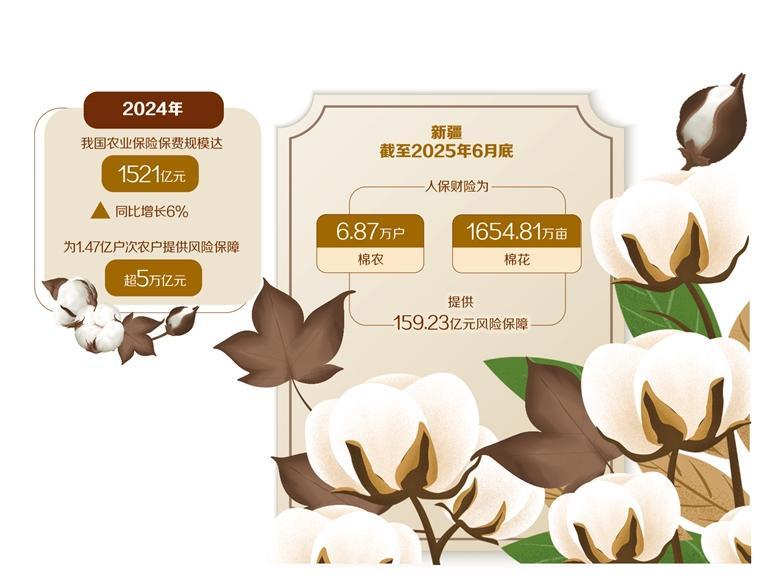
Core Insights - The insurance industry in Xinjiang is evolving from traditional compensation to proactive risk management, integrating technology and data-driven approaches to enhance agricultural insurance [2][8][10] Group 1: Technological Integration - The implementation of a "Heaven-Earth-Air" integrated monitoring system by the insurance company has improved the efficiency and accuracy of agricultural insurance processes through satellite remote sensing, drone mapping, and weather monitoring [3][4] - The use of drones for real-time monitoring of cotton fields has significantly increased the efficiency of insurance assessments, with a reported 80% improvement in inspection efficiency and a 60% reduction in costs [4][5] Group 2: Risk Management Innovations - The establishment of a comprehensive database covering 120 million acres of farmland aims to enhance risk management by linking crop types with real-time weather data, allowing for precise underwriting and dynamic early warning systems [4][9] - The insurance company has developed a risk reduction mechanism that includes pre-disaster prevention, mid-disaster intervention, and post-disaster claims, marking a shift from reactive to proactive risk management [6][8] Group 3: Financial and Operational Impact - The introduction of a cotton storage thermal imaging monitoring system has improved risk management in textile production, allowing for real-time monitoring and rapid response to potential fire hazards [5][6] - The average claim settlement rate for policy-based agricultural insurance in Xinjiang has increased to 95%, with claim processing times reduced to under five days, demonstrating the effectiveness of the new insurance model [9][10] Group 4: Industry Transformation - The insurance sector is increasingly viewed as a key player in agricultural risk management, moving beyond traditional roles to become integral in safety and risk reduction strategies for cotton production [7][10] - The collaboration between insurance companies and local agricultural entities has led to a more resilient agricultural ecosystem, with financial services embedded in social governance and disaster prevention efforts [8][9]