植美村

Search documents
9退30进!美妆IPO风向变了
Sou Hu Cai Jing· 2025-08-27 10:24
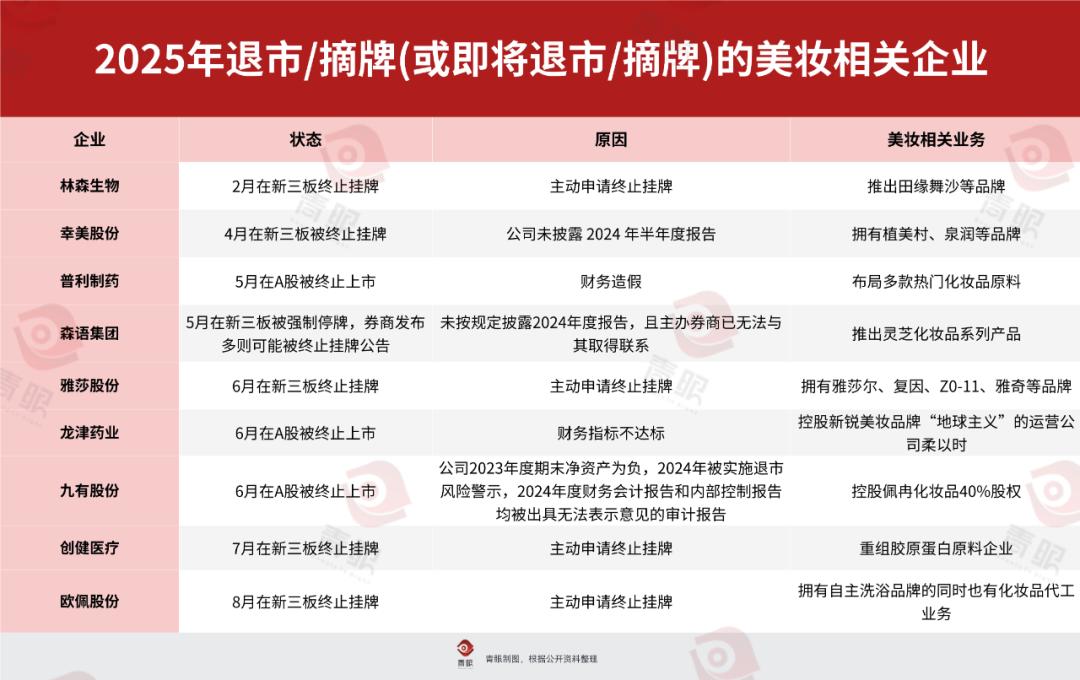
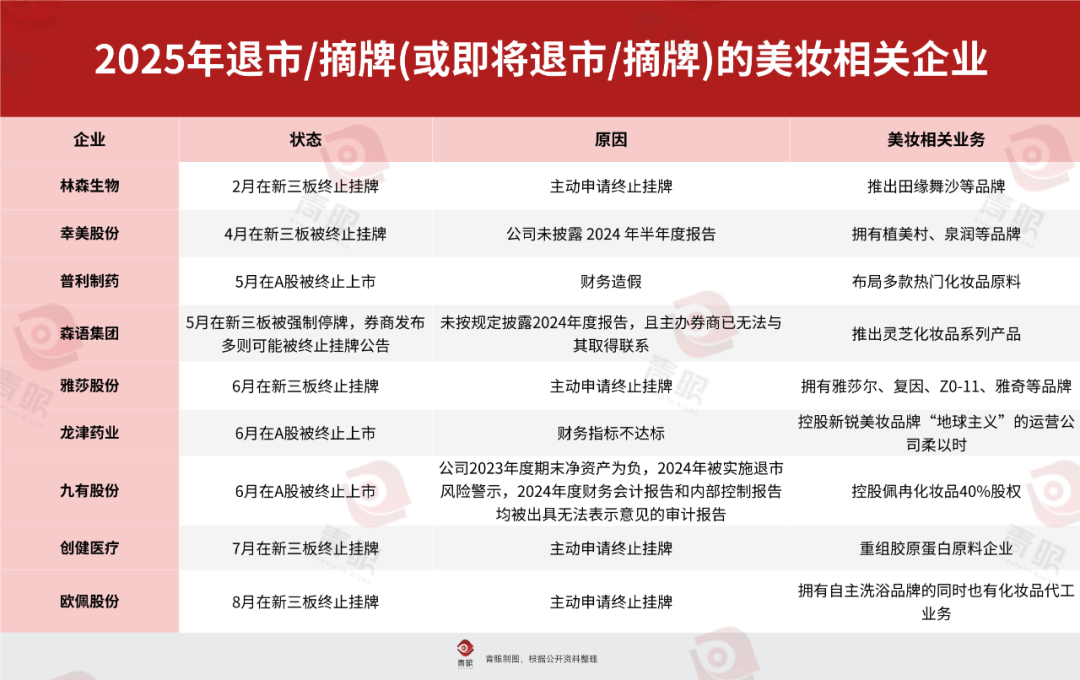
Core Viewpoint - The Chinese beauty industry is experiencing a significant capital wave, with a simultaneous rise in IPO enthusiasm and an increasing trend of delistings, indicating a "ice and fire" scenario in the capital market [1][10][15] Group 1: IPO Activity - As of August 26, 2023, Proya Cosmetics Co., Ltd. announced plans to issue H-shares and list on the Hong Kong Stock Exchange, marking the fourth beauty-related company to initiate an "A+H" dual listing this year [1] - Three beauty-related companies have successfully gone public this year, while at least 30 others are competing for capital market entry, covering various segments such as brands, raw materials, and operations [10][13] Group 2: Delisting Trends - Since 2025, at least nine beauty-related companies have faced delisting or termination risks, with five companies being forcibly removed from the market due to financial misconduct or information disclosure violations [2][4][5] - Companies like Puli Pharmaceutical and Jiu You Co. were forced to delist due to financial fraud, with Puli falsely inflating revenue by 1.029 billion yuan and profits by 669 million yuan over two years [4] - Other companies, such as Xingmei Co. and Senyu Group, faced delisting due to failure to disclose required financial reports, highlighting the increasing regulatory scrutiny in the capital market [5] Group 3: Strategic Withdrawals - Four companies, including Lin Sen Biological and Yasha Co., voluntarily chose to delist, citing reasons such as the high cost of maintaining a public listing and the need for greater operational flexibility [6][8] - The decision to withdraw from the market is often influenced by the perception that the costs and constraints of being listed outweigh the benefits, especially when valuations are low [8][9] Group 4: Market Dynamics - The beauty industry is undergoing a transformation, moving away from rapid growth driven by marketing and traffic to a focus on sustainable development and intrinsic value [15] - The capital market is conducting a "pressure test" and "value reassessment" of the industry, favoring companies with solid product capabilities, clear brand recognition, and sustainable profitability [14][15]


9退30进,美妆IPO风向变了
3 6 Ke· 2025-08-27 03:15
Core Viewpoint - The Chinese beauty industry is experiencing a dual phenomenon of heightened IPO enthusiasm alongside an increasing wave of delistings, indicating a significant transformation in the capital market dynamics [1][10][15]. Group 1: IPO Activity - As of August 26, 2023, Proya Cosmetics Co., Ltd. announced plans to issue H-shares and list on the Hong Kong Stock Exchange, marking the fourth beauty-related company to initiate an "A+H" dual listing this year [1]. - This year, three beauty-related companies have successfully gone public, while at least 30 others are competing for capital market entry, covering various segments such as brands, raw materials, and agency operations [1][10]. - The Hong Kong Stock Exchange has become a preferred listing destination for beauty companies, driven by policy support and improved listing mechanisms, with 13 companies planning to list there [13][14]. Group 2: Delisting Trends - Since 2025, at least nine beauty-related companies have faced delisting or termination of listing risks, with five companies being forcibly delisted due to financial misconduct or information disclosure violations [2][4][5]. - Companies like Puli Pharmaceutical and Jiuyou Co. were delisted from A-shares due to financial fraud, while others like Xingmei Co. and Senyu Group faced delisting for failing to disclose required reports [2][4][5]. - The delisting trend reflects a tightening regulatory environment, where companies lacking sustainable operations and transparent governance face increased scrutiny and potential removal from the market [5][15]. Group 3: Strategic Adjustments - Four companies, including Linsen Biological and Yasha Co., have voluntarily chosen to delist, citing reasons such as focusing on core business management and reducing operational costs [6][7]. - The decision to voluntarily delist is often influenced by high listing costs and low valuations, prompting companies to seek greater operational flexibility [7][9]. - Among the voluntarily delisted companies, only Opei Co. maintained stable revenue and profit growth, while others experienced declines in net profit [8][9]. Group 4: Market Dynamics - The beauty industry is undergoing a significant shift from rapid growth driven by marketing and traffic to a focus on sustainable, high-quality development [15]. - The current market environment emphasizes the importance of companies with solid internal value, clear brand recognition, and sustainable profitability to attract capital [15].