椰子味蛋糕

Search documents
广东抽检20批次食品不合格 4批次涉东莞含知名超市门店
Nan Fang Du Shi Bao· 2026-01-13 14:21
Core Viewpoint - The Guangdong Provincial Market Supervision Administration reported that 20 batches of food samples were found to be non-compliant in a recent food safety inspection, with issues including microbial contamination, pesticide residues, and excessive use of food additives [1][4]. Group 1: Inspection Results - A total of 1,193 food samples were tested across eight categories, with 1,173 passing and 20 failing the safety standards [1]. - The non-compliant samples were primarily related to microbial contamination, pesticide residues, heavy metal pollution, and excessive use of food additives [1]. Group 2: Specific Issues in Dongguan - Four batches of problematic products originated from Dongguan, including cakes with excessive microbial counts and fish containing banned drug residues [2]. - The specific products involved included a Swiss roll cake and a coconut-flavored cake, both failing due to high microbial counts, indicating potential contamination during production or storage [2]. Group 3: Company Responses - Companies involved have initiated product recalls and removals, with varying responses to the issues identified [4]. - Dongguan Jia Rong Supermarket has recalled the affected fish and is conducting a traceability investigation, while Dongguan City Dongcheng Fresh Vegetable Stall has ceased sales of the non-compliant olives [4]. - Dongguan City Shang Ke Jia Food Co., Ltd. has started a recall process but has raised concerns about the inspection process, which were dismissed by the regulatory authority [4].
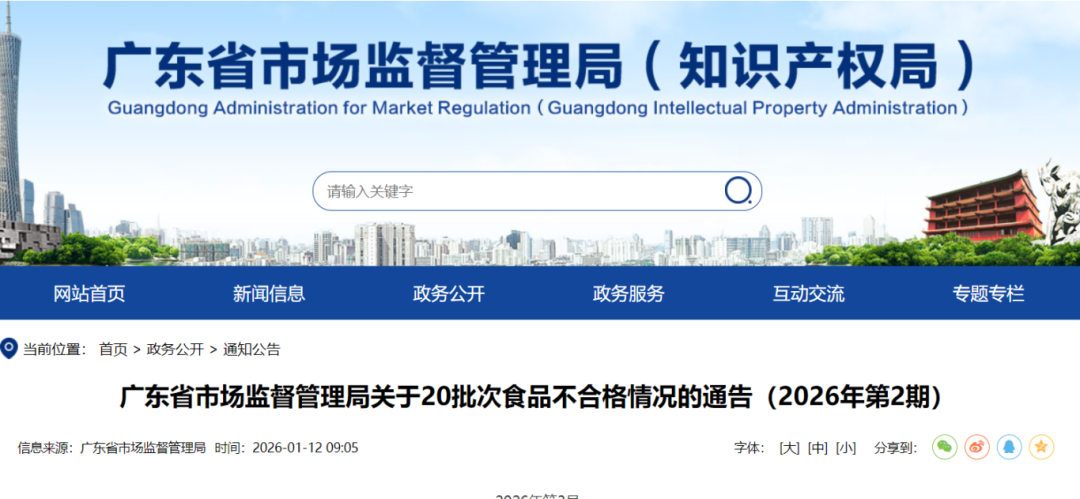
下架、召回!广东官方通告:20批次食品不合格!有白切鸡菌落超标
Nan Fang Du Shi Bao· 2026-01-12 14:05
Core Viewpoint - The Guangdong Provincial Market Supervision Administration conducted a food safety inspection, revealing that out of 1193 food samples tested, 20 were found to be non-compliant with safety standards, highlighting ongoing concerns regarding food safety in the region [1]. Group 1: Inspection Results - A total of 1193 food samples were tested across 8 categories, including grain products, condiments, beverages, and health foods [1]. - Out of the samples, 1173 were compliant, while 20 samples failed to meet safety standards, indicating a non-compliance rate of approximately 1.67% [1]. Group 2: Types of Non-Compliance - Microbial contamination was identified in several products, including bottled water and cakes, with specific instances of non-compliance due to the presence of harmful bacteria such as Pseudomonas aeruginosa [3][5]. - Residues of agricultural and veterinary drugs were detected in certain food items, such as long beans and fish, which did not meet safety standards [4][6]. - Heavy metal contamination was reported in products like seasoning powders and bean sprouts, with lead and mercury levels exceeding permissible limits [4]. - The use of food additives beyond the allowed limits was noted in products like snacks and dietary supplements, raising concerns about consumer safety [4][7]. Group 3: Regulatory Actions - The Guangdong Provincial Market Supervision Administration has mandated local regulatory bodies to investigate the non-compliant products and their suppliers, requiring corrective actions such as product recalls and risk control measures [7]. - Companies found to be selling non-compliant products will have their information recorded in food safety credit files, which will be publicly disclosed [7]. Group 4: Consumer Guidance - Consumers are advised to purchase food from reliable sources and to check for proper labeling, including production dates and safety certifications [8]. - The administration encourages public participation in food safety oversight and provides contact information for reporting non-compliant products [8].