椴树蜜

Search documents
新春走基层|列车大集 一路惊喜
Xin Lang Cai Jing· 2026-02-06 21:59
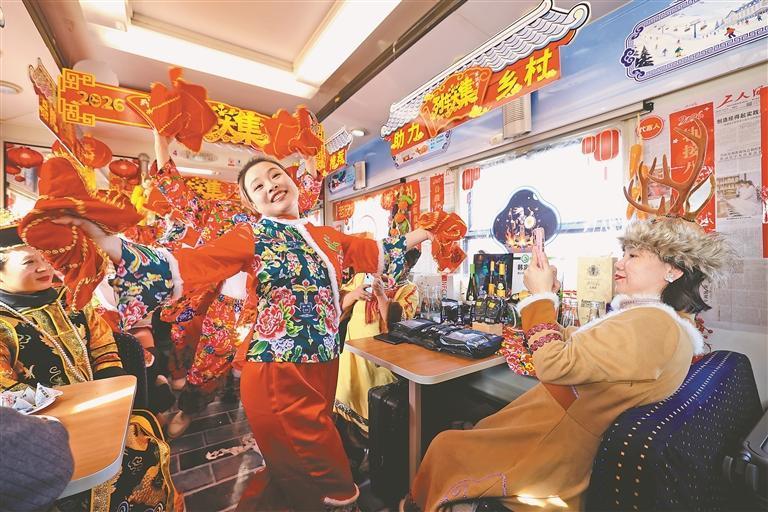
Core Viewpoint - The article highlights the success and evolution of the "Train Market" initiative by the Harbin Railway Bureau, which has transformed train journeys into a vibrant marketplace for local agricultural products and cultural experiences, enhancing community engagement and supporting rural revitalization [3][4][5]. Group 1: Train Market Development - The "Train Market" was initiated to facilitate the sale of local specialties and agricultural products, addressing the challenges faced by rural farmers in selling their goods [3][4]. - Over four years, the market has evolved from a simple setup with a few products to a comprehensive marketplace featuring a variety of goods, including agricultural products, cultural items, and interactive experiences [4]. - The initiative has transitioned from offline sales to a dual model that includes both offline experiences and online live streaming, broadening its reach and impact [4]. Group 2: Community Engagement and Impact - Local farmers and vendors, such as Li Wenhua, have reported positive experiences, noting that the market allows for better promotion and recognition of their products through direct interaction with consumers [5]. - Tourists, like Liu Yang, express delight in discovering local specialties during their travels, indicating that the initiative enhances the overall travel experience and promotes regional products [5]. - The train serves as a vital link between urban and rural areas, acting as a mobile window for rural revitalization and cultural exchange, with plans to further enrich the market's offerings in the future [5][6].

探秘满洲里中俄互贸免税区:一场边城与异域风情的奇妙碰撞
Sou Hu Cai Jing· 2025-05-01 08:27
Group 1 - The core concept of the news highlights Manzhouli as a unique cross-border trade hub between China and Russia, featuring a duty-free zone that offers a blend of shopping and cultural experiences [1][3]. - The duty-free zone has evolved from a small barter market established in 1992 to a comprehensive trade area, significantly upgraded in 2015 with an investment of 500 million yuan, transforming it into a "super complex" for shopping, tourism, and logistics [1][3]. - The duty-free zone is the only cross-border area in China operated entirely by a single company, enhancing the efficiency of its services [1]. Group 2 - The duty-free zone allows each person a daily exemption limit of 8,000 yuan, catering to shopping enthusiasts with competitive prices on high-end cosmetics and unique Russian brands [3][5]. - The shopping experience is enriched by a variety of Russian and Mongolian specialty products, including caviar and vodka, alongside unique souvenirs like chocolate dolls that resemble traditional Russian nesting dolls [5][7]. - The zone also features cultural experiences, such as Russian cuisine and artisan crafts, providing visitors with a deeper understanding of the local culture [5][7]. Group 3 - The operational philosophy of the duty-free zone emphasizes product traceability and authenticity, utilizing a customs system to prevent counterfeit goods [7]. - Local farmers are involved in the economy by selling traditional products, showcasing a model that combines cultural heritage with modern market access [7]. - The zone hosts cultural performances that blend elements from China, Russia, and Mongolia, enhancing the visitor experience and promoting cultural exchange [11].