水溶C

Search documents
从便利店到家庭吧台:元气森林气泡水何以成为Z世代调酒“第一选择”?
Zhong Guo Xin Wen Wang· 2026-02-13 02:37
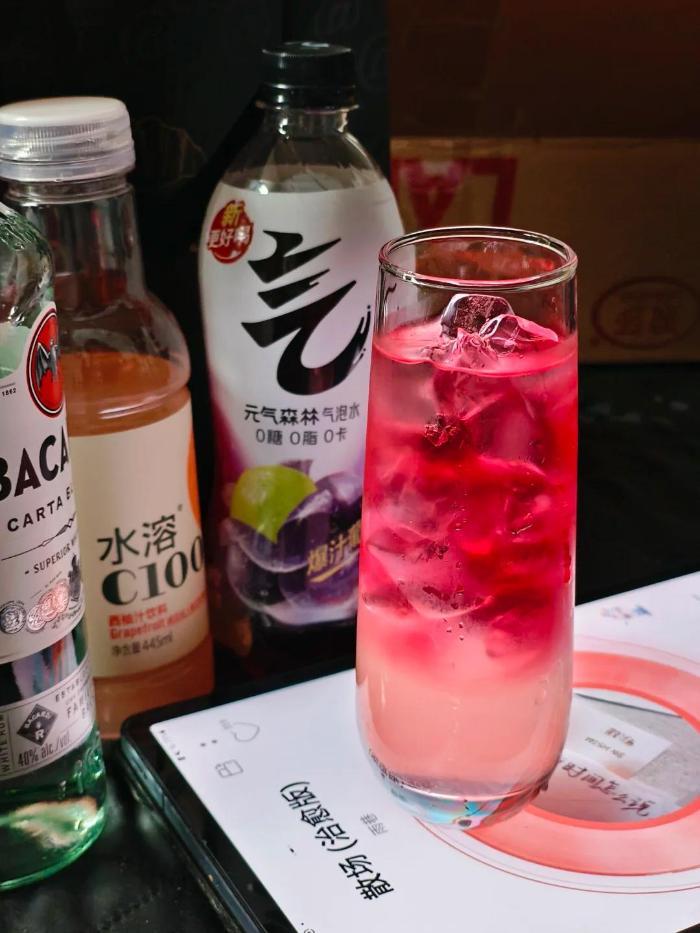
Core Insights - The "tipsy economy" is projected to reach a scale of 117.5 billion yuan by 2025, driven by a transformation in drinking habits among young consumers, emphasizing low-alcohol, personalized, and scenario-based drinking needs [1] - Over 60% of young people are willing to try homemade cocktails, with social media discussions on this topic increasing by 175% year-on-year, indicating a potential boom in the new cocktail market [1] Group 1: Market Trends - The young generation's enthusiasm for cocktail creation is being fueled by social media platforms, with topics like homemade drinks on Xiaohongshu reaching 12.2 billion views and cocktail challenges on Douyin garnering 1.19 billion views [3] - The rise of user-generated content (UGC) reflects a clear consumer trend, with "Yuanqi Forest" emerging as the preferred choice for new-style cocktails among young consumers [3][5] Group 2: Retail Dynamics - The online consumption trend is translating into offline retail strategies, with convenience stores becoming central to this transformation, actively bundling Yuanqi Forest with alcoholic products [5][7] - Nearly 30,000 convenience stores nationwide have set up cocktail combination sections, demonstrating the market's recognition of the "Yuanqi Forest + alcohol" model [7] Group 3: Product Characteristics - Yuanqi Forest's diverse flavor offerings, including white peach, grape, and orange, cater to various alcoholic pairings, enhancing the drinking experience by balancing the spiciness of alcohol [8] - The brand's early collaborations with major alcohol brands in 2023 have established a solid foundation for market acceptance and growth in cocktail culture [8] Group 4: Industry Implications - Yuanqi Forest's success in the cocktail scene illustrates the importance of breaking down category boundaries between beverages and alcohol, providing a new touchpoint for alcohol brands to reach younger consumers [9] - The emergence of the "tipsy economy" and the popularity of new-style cocktails highlight the young consumer demographic as the driving force behind market changes, emphasizing the need for brands to innovate and align with consumer demands [10]

22.8 元冰袋上架山姆,冰块生意有这么赚钱吗? | 声动早咖啡
声动活泼· 2025-07-08 08:39
Core Viewpoint - The article discusses the emerging market for edible ice in China, highlighting the entry of major brands like Nongfu Spring and the growing consumer demand for convenience and quality in ice products [1][3][4]. Group 1: Market Overview - The edible ice market in China is experiencing rapid growth, with ice cup sales increasing by over 300% for two consecutive years [2]. - In contrast to mature markets in Japan and South Korea, where ice products are popular year-round, China's market is still developing, having only seen significant growth since 2019 [2][4]. - Major players like Nongfu Spring are entering the market, which is expected to enhance overall market visibility and competition [2][4]. Group 2: Consumer Behavior - The primary consumers of ice cups are younger generations (post-95s and post-00s), who account for 70% of the market, favoring convenience and immediate use over traditional home freezing methods [4][6]. - The demand for ice products is driven by the popularity of DIY drinks, with 70% of convenience store ice cup buyers using them for homemade beverages [6]. Group 3: Product Characteristics - Consumers prioritize the quality of ice, particularly its melting rate, with commercial ice melting approximately 20% slower than regular home-made ice due to advanced production techniques [4][7]. - The packaging and cold chain logistics are critical to maintaining product quality, with significant costs associated with transporting ice compared to regular goods [7]. Group 4: Business Strategy - Nongfu Spring leverages its established logistics and distribution networks to efficiently market and sell ice products, enhancing its overall beverage sales [8]. - The company emphasizes the unique water source for its ice products, which helps in branding and consumer trust [8]. Group 5: Challenges Ahead - The edible ice market in China lacks mandatory national standards, relying instead on recommended industry standards, which raises safety concerns [9]. - The sustainability of the current trend in edible ice consumption is uncertain, with analysts questioning the long-term profitability of the product due to its standardized production process [9].