水蓄冷罐

Search documents
减碳智慧融入超级工程!厦门翔安国际机场完成精装修
Sou Hu Cai Jing· 2026-01-01 09:38
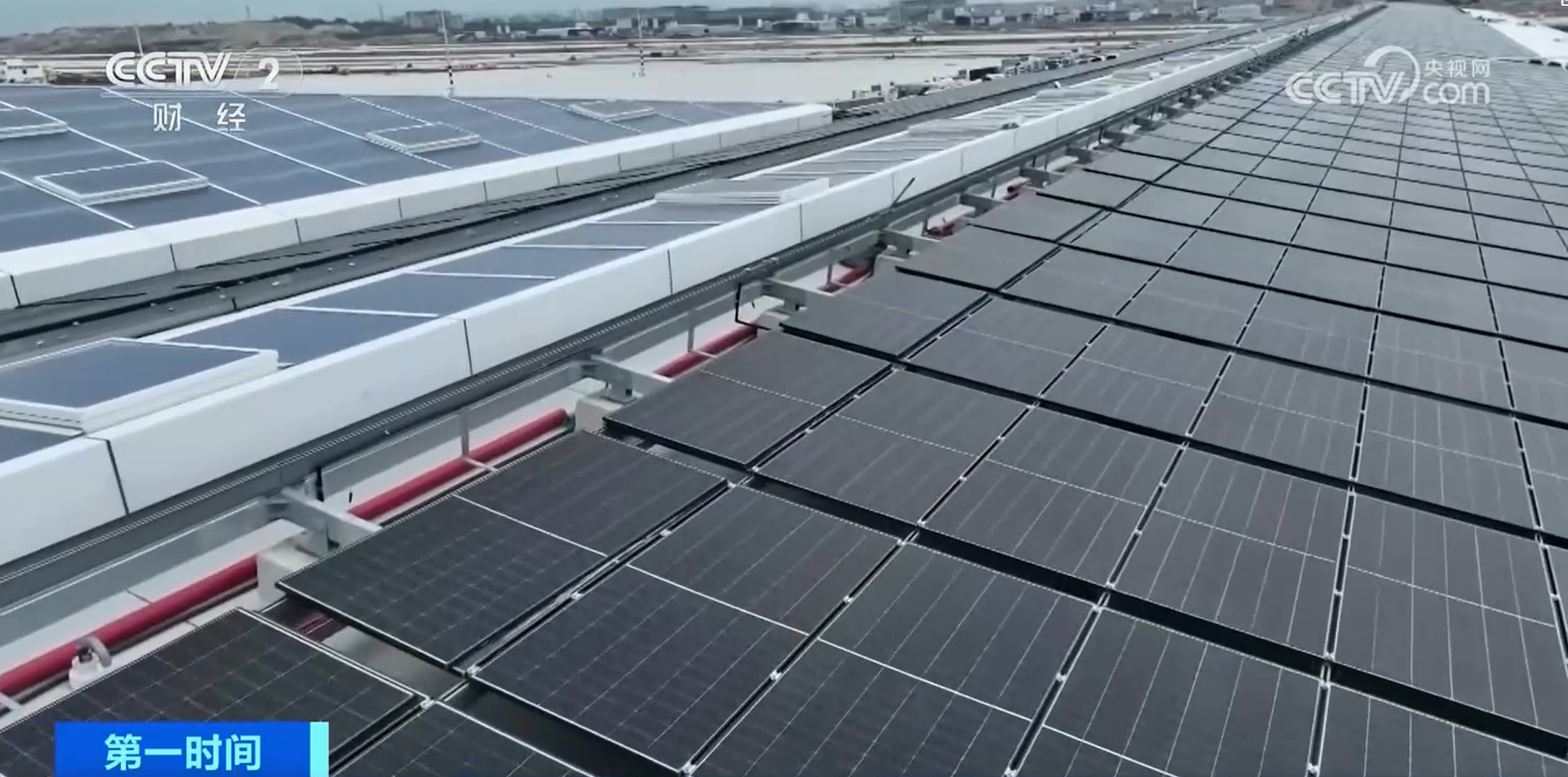
Core Viewpoint - Xiamen Xiang'an International Airport is set to be the largest newly constructed airport in China during the 14th Five-Year Plan period, with plans to commence operations by the end of 2026 [1] Group 1: Airport Features and Innovations - The airport's terminal decoration construction is expected to be completed by December 30, 2025, entering the flight acceptance phase [1] - The airport features a large photovoltaic roof system, the largest of its kind in China, with an area of approximately 56,000 square meters and a capacity of 11.5 megawatts [3] - The photovoltaic panels are designed with a matte texture to reduce glare, controlling sunlight reflectivity to below 2% to avoid interference with pilots' visibility [4] Group 2: Energy Efficiency and Carbon Reduction - The photovoltaic system is projected to generate approximately 13 million kilowatt-hours annually, meeting over 15% of the terminal's electricity needs and reducing carbon emissions by about 9,350 tons each year [6] - The airport employs a "time-shift" cooling system using water storage tanks to save energy, which can save around 4.5 million kilowatt-hours annually and reduce CO2 emissions by approximately 3,440 tons [8] - Through various green measures, including photovoltaic power generation and efficient equipment, the airport aims to achieve an annual carbon reduction of 230,000 tons upon operation, moving towards a long-term goal of a zero-carbon airport [10] Group 3: Capacity and Operations - Upon completion, the airport is expected to accommodate an annual passenger throughput of 45 million, a cargo throughput of 750,000 tons, and 380,000 aircraft takeoffs and landings [10]


给自己供电、“移峰填谷”式制冷 减碳智慧融入超级工程
Yang Shi Wang· 2026-01-01 06:09
Core Viewpoint - Xiamen Xiang'an International Airport is the largest new airport under construction in China during the 14th Five-Year Plan period, scheduled to commence operations by the end of 2026 [1] Group 1: Airport Features - The airport's terminal decoration and construction are expected to be completed by December 30, 2025, entering the flight acceptance phase [1] - The airport features a photovoltaic roof system with a total area of approximately 56,000 square meters, equivalent to nearly 8 standard football fields, and a capacity of 11.5 megawatts [3] - The photovoltaic panels are designed to generate an estimated annual electricity output of about 13 million kilowatt-hours, meeting over 15% of the terminal's electricity needs and reducing carbon emissions by approximately 9,350 tons annually [5] Group 2: Energy Efficiency Measures - The airport employs a "time-shift" cooling system using three large water storage tanks, which store cold energy at night and release it during the day, saving about 4.5 million kilowatt-hours of electricity and reducing carbon emissions by around 3,440 tons each year [7] - The comprehensive measures, including photovoltaic power generation, green building practices, efficient equipment, and landscape carbon sinks, are projected to achieve an annual carbon reduction of 230,000 tons once the airport is operational [7] Group 3: Operational Capacity - Upon completion, the airport is expected to accommodate an annual passenger throughput of 45 million, a cargo throughput of 750,000 tons, and 380,000 aircraft takeoffs and landings [7]