
零碳机场

Search documents
减碳智慧融入超级工程!厦门翔安国际机场完成精装修
Sou Hu Cai Jing· 2026-01-01 09:38
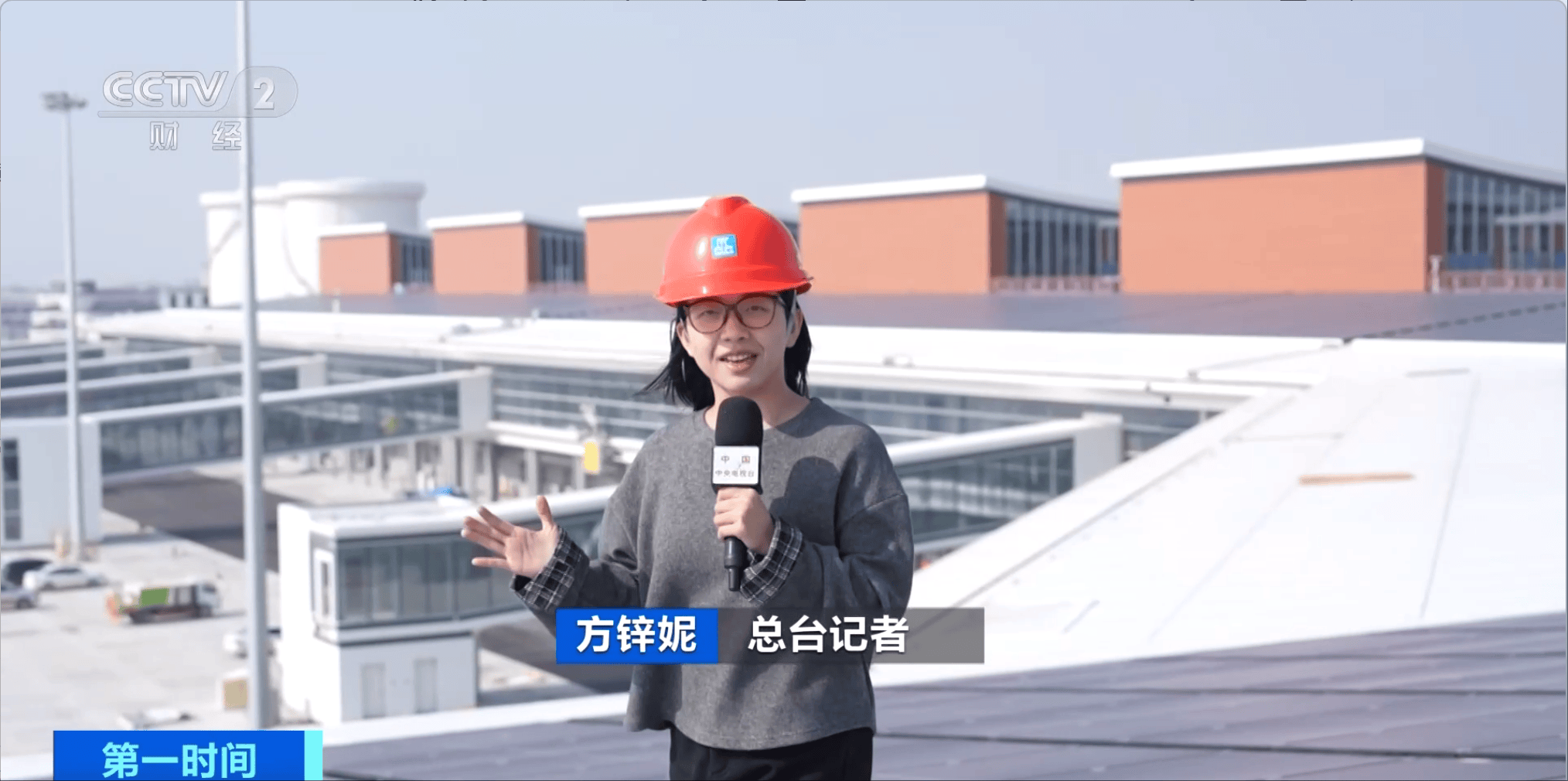
Core Viewpoint - Xiamen Xiang'an International Airport is set to be the largest newly constructed airport in China during the 14th Five-Year Plan period, with plans to commence operations by the end of 2026 [1] Group 1: Airport Features and Innovations - The airport's terminal decoration construction is expected to be completed by December 30, 2025, entering the flight acceptance phase [1] - The airport features a large photovoltaic roof system, the largest of its kind in China, with an area of approximately 56,000 square meters and a capacity of 11.5 megawatts [3] - The photovoltaic panels are designed with a matte texture to reduce glare, controlling sunlight reflectivity to below 2% to avoid interference with pilots' visibility [4] Group 2: Energy Efficiency and Carbon Reduction - The photovoltaic system is projected to generate approximately 13 million kilowatt-hours annually, meeting over 15% of the terminal's electricity needs and reducing carbon emissions by about 9,350 tons each year [6] - The airport employs a "time-shift" cooling system using water storage tanks to save energy, which can save around 4.5 million kilowatt-hours annually and reduce CO2 emissions by approximately 3,440 tons [8] - Through various green measures, including photovoltaic power generation and efficient equipment, the airport aims to achieve an annual carbon reduction of 230,000 tons upon operation, moving towards a long-term goal of a zero-carbon airport [10] Group 3: Capacity and Operations - Upon completion, the airport is expected to accommodate an annual passenger throughput of 45 million, a cargo throughput of 750,000 tons, and 380,000 aircraft takeoffs and landings [10]

新开发银行:破解煤都转型新地标融资难题
Xin Lang Cai Jing· 2025-12-31 14:50
Core Insights - The Taiyuan Wusu International Airport is becoming a key observation point for the transformation of resource-based regions in China, with a focus on achieving a "zero carbon" status [1][2] - The New Development Bank (NDB) has approved a sovereign loan of 1.448 billion RMB for the construction of the airport, marking the largest international green infrastructure financing in Shanxi province to date [1] - The project aims to utilize renewable energy sources such as solar and geothermal energy to achieve net-zero carbon emissions annually [2][3] Funding and Investment Structure - The total investment for the project is 1.86 billion RMB, with the NDB financing amounting to 1.448 billion RMB and the remaining 412 million RMB sourced from domestic funding [1] - The project has received concept approval on June 21, 2024, and financing approval on July 14, 2025, with public disclosure now underway [1] Environmental and Technical Aspects - The airport's carbon emissions are expected to rise significantly without a change in energy structure, prompting the need for the zero-carbon airport project, which is a national key demonstration project [2] - The project includes the construction of a new terminal and other facilities over an area of 11.68 hectares, with a focus on integrating renewable energy sources [3] - Advanced technologies such as photovoltaic systems, energy storage, and smart management platforms will be implemented to meet energy demands and reduce carbon emissions [4] Challenges and Mitigation Strategies - The project faces potential risks such as groundwater pollution from geothermal drilling and the impact of photovoltaic panels on bird behavior [4][5] - The project team plans to adhere to national standards and implement environmental and social management plans to mitigate these risks [5]
山西武宿零碳机场成为国家示范项目
Zhong Guo Fa Zhan Wang· 2025-05-15 06:45
Core Viewpoint - The Taiyuan Wusu Zero Carbon Airport project has been recognized as a green low-carbon advanced technology demonstration project by the National Development and Reform Commission, aiming to significantly reduce carbon emissions and promote sustainable development in Shanxi Province [1][2]. Group 1: Project Overview - The project is expected to generate approximately 100 million kilowatt-hours of renewable energy annually, equivalent to a reduction of about 120,000 tons of carbon emissions each year [1]. - It incorporates advanced technologies such as photovoltaic energy storage, multi-energy complementary utilization, and intelligent carbon management, featuring a 109 MW photovoltaic system, 200 vehicle-grid interactive charging piles, and a 17 MWh energy storage station [1][2]. Group 2: Economic and Environmental Impact - The project will reduce reliance on traditional energy sources, optimizing Shanxi's energy structure and providing valuable experience for green transformation in other sectors [2]. - The annual reduction of 120,000 tons of carbon emissions will significantly improve local air quality and contribute to climate change mitigation efforts [2]. Group 3: Operational Innovations - The use of advanced technologies will enhance the airport's energy self-sufficiency, ensuring stable power supply during daily operations and unexpected energy demands [3]. - The construction of 200 vehicle-grid interactive charging piles aligns with the global trend of electric vehicle adoption, improving the airport's modern facilities and service capabilities [3]. Group 4: Investment Opportunities - The project presents a promising investment opportunity for social capital, supported by national and local policies that facilitate participation in project construction [3]. - With central budget support and various funding channels, social capital can benefit from policy incentives while contributing to the growth of the green industry [3]. Group 5: National Significance - The Wusu Zero Carbon Airport will serve as a model for other airports across the country, promoting green low-carbon development in the civil aviation sector and creating a demonstration effect nationwide [4].