永赢启航慧选混合基金

Search documents
新基金结算之争:中小机构深度绑定2025年券商业务占比首超银行
Mei Ri Jing Ji Xin Wen· 2026-01-11 12:34
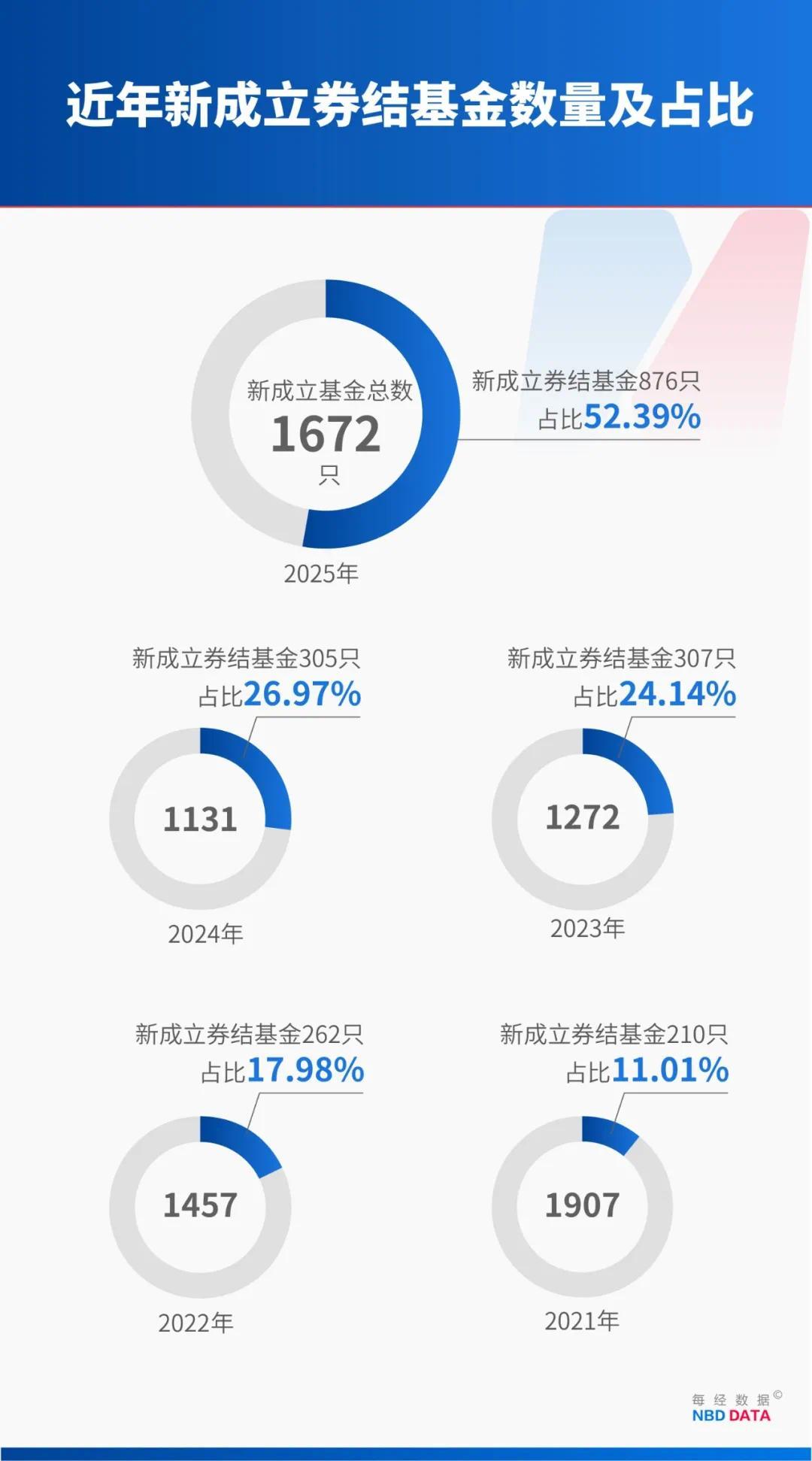
Core Insights - The article highlights a significant shift in the public fund sales landscape in 2025, with the broker settlement model becoming the mainstream choice for fund issuance, surpassing 50% for the first time [3][7][14] Group 1: Industry Changes - By the end of 2025, 52.39% of newly established public funds utilized the broker settlement model, marking a dramatic increase from 27% in 2024 [7][9] - The number of newly established equity mixed funds using the broker settlement model rose from 18.3% in 2021 to 51.71% in 2025, indicating a structural shift towards this model [9][10] - The broker settlement model is seen as a key driver for small and medium-sized brokerages to enhance their visibility and influence in the market [6][14] Group 2: Brokerages' Strategic Adaptations - Small and medium-sized brokerages are increasingly forming partnerships with multiple fund companies to expand their distribution networks and enhance product visibility [12][13] - Brokerages like Huaxin Securities and Huawen Securities are actively developing new broker settlement products and expanding their cooperation with fund managers, reflecting a strategic shift towards comprehensive wealth management services [5][6][14] - The broker settlement model allows brokerages to transition from a transactional role to a more integrated service provider, enhancing their competitive edge [8][14] Group 3: Market Dynamics - The 2024 regulatory changes regarding fund fees have incentivized fund companies to adopt the broker settlement model, as it allows for more flexible commission structures [8][9] - The market environment in 2025 is favorable for actively managed funds, which are more attractive to brokerages due to their potential for higher returns compared to passive index funds [10][11] - The collaboration between fund companies and brokerages is evolving from a one-sided selection process to a more nuanced, mutually beneficial partnership model [13][14]



新基金结算之争:中小机构深度绑定,券商业务占比首超银行
Mei Ri Jing Ji Xin Wen· 2026-01-08 23:12
Core Insights - The public fund sales landscape is undergoing significant changes, with a shift towards broker settlement models becoming a practical strategy for medium and small fund companies in 2025 [1][2] - The penetration rate of broker settlement models in new fund issuance has surpassed 50% for the first time, indicating a major transformation in the industry [6][9] Group 1: Industry Changes - By the end of 2025, 52.39% of newly established public funds utilized broker settlement models, with 876 out of 1672 funds adopting this approach [6][9] - The proportion of equity mixed funds using broker settlement models has increased from 18.3% in 2021 to 51.71% in 2025, marking a significant structural shift [11][15] - The growth in broker settlement models is attributed to regulatory changes that have redefined incentive structures, allowing for more flexible commission arrangements [10][20] Group 2: Broker and Fund Company Dynamics - Medium and small brokerages are increasingly positioning themselves as key players in the broker settlement market, enhancing their visibility and influence in the industry [5][19] - Brokers like Huazhong Securities and Huaxin Securities are actively expanding their product offerings and partnerships with fund companies, reflecting a trend towards deeper collaboration [4][5] - The strategy of involving multiple broker partners for fund issuance is becoming common, allowing fund companies to maximize resource utilization and enhance product exposure [17][18] Group 3: Market Implications - The shift towards broker settlement models is seen as a move from a resource-driven selection process to a more nuanced, comparative advantage-based matching in the market [19][20] - The evolving landscape emphasizes the importance of professional value and deep engagement, moving away from traditional channel-centric approaches [20] - The overall transformation is expected to benefit the asset management industry and investors by focusing on value creation rather than mere resource allocation [20]