汉堡帮手

Search documents
还没到唱空美国经济的时候?一个可靠的前瞻信号并未示警
Jin Shi Shu Ju· 2025-10-20 07:25
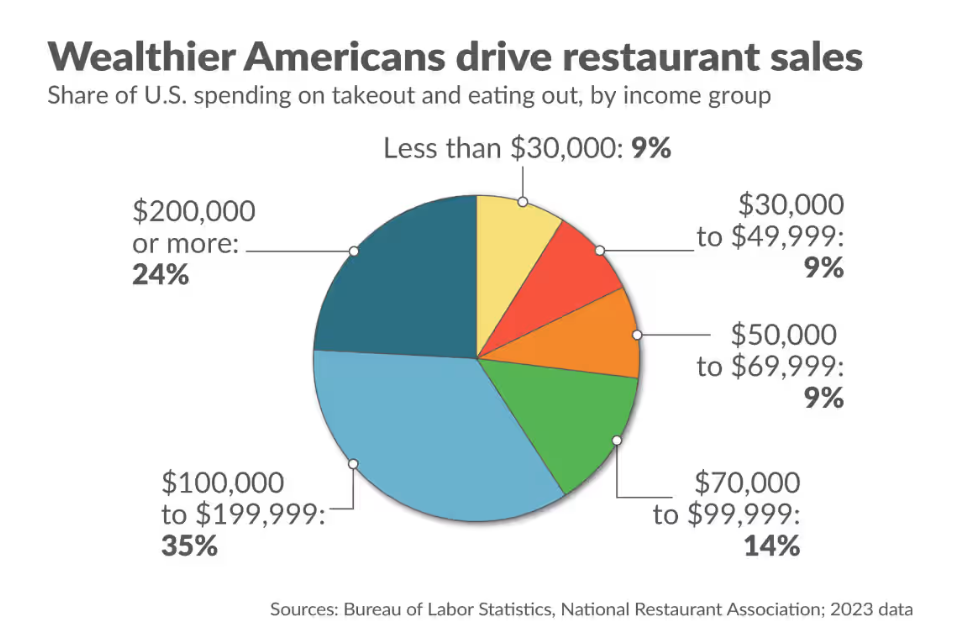
Core Insights - The resilience of the restaurant industry is highlighted as consumers, particularly high-income groups, continue to spend on dining out despite economic pressures [2][3][6] - Sales in the restaurant sector have shown a growth of 6.5% over the past year, surpassing the previous year's growth of 4.3% [2] - The strong performance of the stock market has significantly boosted consumer spending, especially among high-income households [3][6] Sales Performance - Restaurant sales are thriving due to the overall growth of the U.S. economy, which has kept unemployment rates low [2] - High-income Americans are the primary drivers of growth in the restaurant sector, with online reservation platform OpenTable reporting a 12% increase in bookings compared to last year [6] - Fast-food chains are attracting price-sensitive consumers through new promotional offers, as seen with Domino's Pizza's $9.99 special [6] Consumer Behavior Changes - Consumers are adopting new habits to manage expenses, such as opting for smaller portions and sharing meals [8] - The Federal Reserve's economic survey indicates that diners are cutting back on desserts and alcoholic beverages to save money [8] - The restaurant industry has seen minimal job growth, with only 13,000 new positions added in the first eight months of the year, compared to 40,000 in the same period of 2024 [8] Future Trends and Risks - Low-income families are under increased pressure due to rising inflation, leading them to reduce visits to fast-food restaurants [9] - Major chains like McDonald's are experiencing a decline in foot traffic from low-income customers, prompting them to enhance promotional efforts [9] - A potential stock market downturn poses a significant threat, as high-income households, which account for nearly 60% of restaurant spending, may reduce their dining out frequency [10]