
汉字

Search documents
原象:对想象、抽象和象征的关联考察
Xin Lang Cai Jing· 2026-02-08 21:40
Core Argument - The article discusses the significance of the concept of "xiang" (象) in ancient Chinese thought, emphasizing its role in the creation and development of various forms of symbolic culture in China [1] Group 1: Concept of "Xiang" - "Xiang" is an important philosophical concept in ancient China, as outlined in the "I Ching" (周易), where it serves as a precursor to the creation of objects [1] - The description of "xiang" by Han Feizi provides insights into the mechanisms of imagination and offers a framework for analyzing abstraction and symbolism [1] Group 2: Abstraction and Symbolism - Abstraction is characterized as a dynamic process rather than a static representation, leading to the creation of symbols [1] - Various forms of symbolic culture have been developed in ancient China, including patterns (rock paintings), artifacts, visual arts, language (including calligraphy), music, and numerical symbols [1] Group 3: Cultural Significance - The most significant cultural creation in China is considered to be Chinese characters and their calligraphic art, which exemplify the spiritual aspect of "xiang" [1] - The analysis of different cultural phenomena's abstract structures provides an alternative perspective for revealing Chinese philosophy [1]
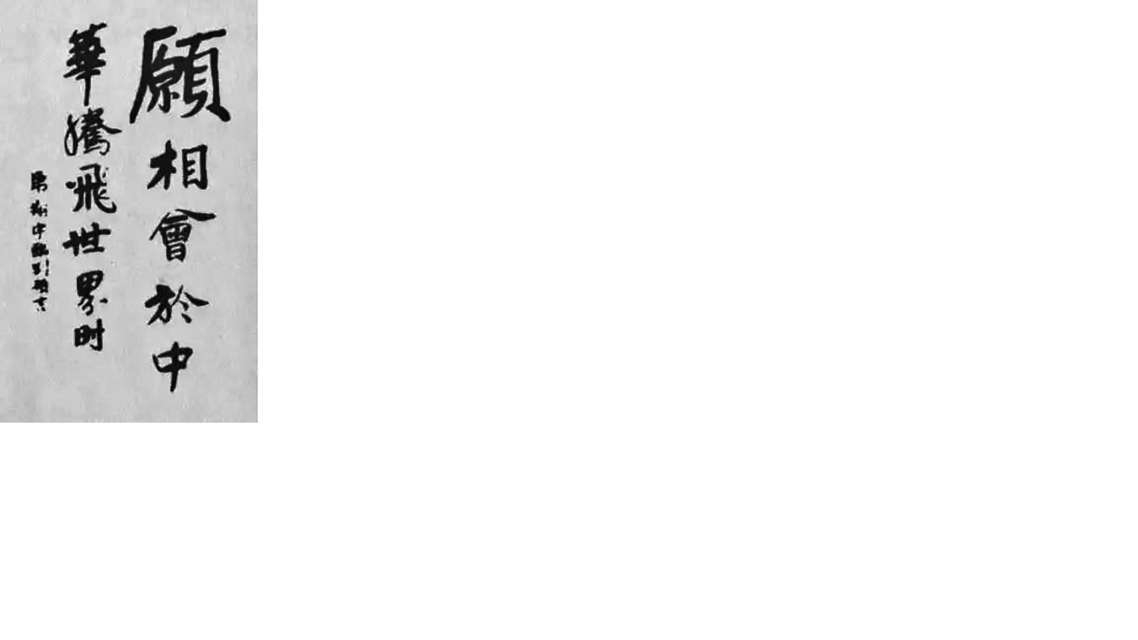
“愿相会于中华腾飞世界时”
Xin Lang Cai Jing· 2026-01-25 23:27
Core Viewpoint - The articles emphasize the importance of Chinese cultural heritage and its role in the revival of the Chinese nation, highlighting the contributions of historical figures like Zhou Enlai and the continuity of Chinese civilization through its unique cultural and philosophical traditions [2][3][4][5][6][7][8]. Group 1: Historical Contributions - Zhou Enlai recognized the significance of ancient Chinese agricultural civilization, which historically led the world in production levels and economic achievements [3]. - The Four Great Inventions of ancient China, such as the compass and papermaking, were pivotal in advancing human civilization and science [3]. - Zhou Enlai highlighted the enduring influence of ancient Chinese philosophical thoughts, particularly Confucianism and Daoism, which continue to resonate today [3][4]. Group 2: Cultural Continuity - Unlike other ancient civilizations, Chinese civilization has never been interrupted, which Zhou Enlai attributes to the continuous use of the Chinese characters and the cultural values they embody [4][5]. - The concept of "Zhongyong" (the Doctrine of the Mean) is central to Chinese culture, promoting harmony and balance in both internal governance and external relations [5][6]. Group 3: Institutional Framework - Zhou Enlai pointed out that historical systems like the equal land system and the imperial examination system contributed to social harmony and order, which are essential for the survival of Chinese civilization [5][8]. - He emphasized the importance of learning from historical experiences to inform contemporary governance and societal values [8]. Group 4: Cultural Development and Reform - Zhou Enlai advocated for the development and reform of the Chinese language, including the simplification of characters and the promotion of Mandarin, to enhance communication and cultural exchange [6]. - He believed that the essence of traditional culture should be inherited and developed to achieve the great rejuvenation of the Chinese nation [6][7]. Group 5: Practical Application of Historical Wisdom - Zhou Enlai's approach to governance was influenced by historical lessons, emphasizing the need for pragmatism and sincerity in leadership [7][8]. - He recognized the value of integrating traditional Chinese medicine with modern practices to advance healthcare [8].

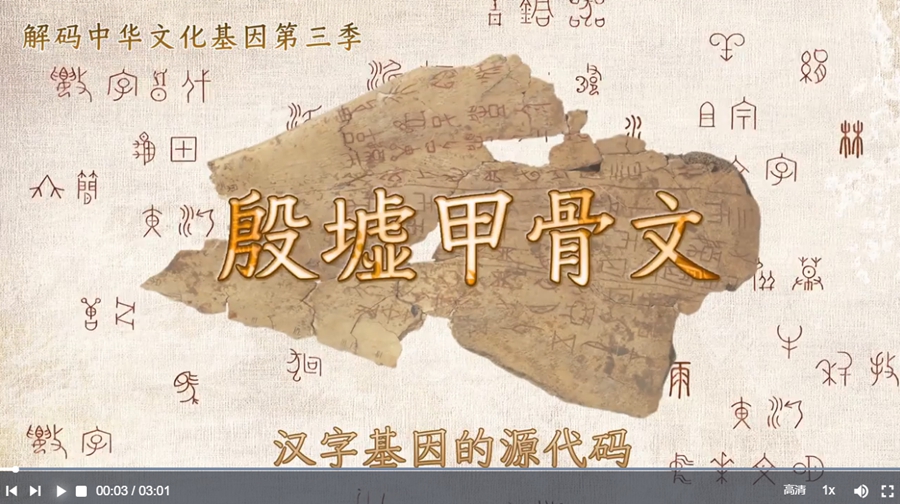
解码中华文化基因|殷墟甲骨文,汉字基因的源代码
Zhong Guo Xin Wen Wang· 2025-11-15 12:38
Core Points - The significance of Chinese characters as a symbol of cultural heritage is emphasized [2] - Oracle bone script is recognized as the earliest mature writing system in China, dating back over 3000 years [2] - The structure of Chinese characters has remained unchanged for over 3000 years, highlighting the continuity of cultural transmission [2] Summary by Categories - **Cultural Heritage** - Chinese characters are a hallmark of cultural transmission in China [2] - The importance of preserving and developing this cultural heritage is stressed [2] - **Historical Significance** - Oracle bone script is identified as the root of Chinese characters and an essential part of traditional culture [2] - The longevity of the character structure reflects a deep cultural lineage [2]
“我与中国的学术之缘”系列访谈之二:外国学者眼中的中国学奥秘
Huan Qiu Shi Bao· 2025-10-26 22:52
Group 1: Cultural Significance of Chinese Tea - The exploration of Chinese tea culture and its historical significance, particularly through the Tea Horse Road, highlights its role in promoting cultural exchange and tourism [2][3] - Chinese tea culture embodies a philosophy that extends beyond mere consumption, encompassing aspects of philosophy, traditional medicine, lifestyle, and ethical family values [2][3] Group 2: Multicultural Understanding and Global Respect - Scholars emphasize the importance of understanding the diversity of Chinese civilization, moving beyond simplistic labels like "Confucianism" to appreciate its complex, multi-religious, and multi-ethnic nature [4][5] - The rise of China has led to a reevaluation of the concept of "civilization" in social sciences, providing a unique perspective for comparative studies between Chinese and Western civilizations [6][7] Group 3: Language and Cultural Exchange - The concept of "Cultural Negotiation Studies" introduced by scholars emphasizes the importance of cultural interaction and dialogue, rather than mere knowledge transfer [8][9] - The unique characteristics of Chinese characters influence the history of language contact and cultural exchange, highlighting the need for understanding cultural context in translation [8][9] Group 4: Dance as a Cultural Lens - Chinese dance is presented as a unique window into understanding Chinese culture, reflecting aesthetic qualities and innovative spirit [10] - The dynamic nature of Chinese dance, which evolves while maintaining its traditional roots, showcases the cultural diversity of China as a multi-ethnic nation [10]