
污水处理服务

Search documents
粤海投资:2025年净利润46.56亿港元 同比增长48.19%
Sou Hu Cai Jing· 2026-03-31 03:06
Core Viewpoint - The company operates in water supply and sewage treatment, with various business segments contributing to its overall performance and financial metrics. Financial Metrics - As of March 30, the company's price-to-earnings ratio (TTM) is approximately 10.52, price-to-book ratio (TTM) is about 1.14, and price-to-sales ratio (TTM) is around 2.61 [1] - The average return on equity for the company in 2025 is projected to be 11.01%, an increase of 3.48 percentage points compared to the previous year [2] Asset Changes - By the end of 2025, the company has seen a 100% reduction in assets classified as held for sale, leading to a decrease of 29.99 percentage points in their proportion of total assets [2] - Intangible assets have increased by 13.53%, raising their proportion of total assets by 7.81 percentage points [2] - Cash and cash equivalents have risen by 21.63%, increasing their share of total assets by 5.57 percentage points [2] - Investment properties have grown by 2.74% compared to the previous period [2] Liability Changes - By the end of 2025, accounts payable and notes payable have increased by 16.29%, raising their proportion of total assets by 4.38 percentage points [2] - Long-term borrowings have decreased by 7.09%, contributing to a 2.9 percentage point increase in their share of total assets [2] - Deferred tax liabilities have risen by 8.9%, increasing their proportion of total assets by 1.68 percentage points [2] - Short-term borrowings have decreased by 14.7%, leading to a 0.74 percentage point increase in their share of total assets [2] Liquidity Ratios - The company's current ratio for 2025 is 1.15, and the quick ratio is 1.12 [5]


光大环境(00257) - 2025 H2 - 电话会议演示
2026-03-20 04:00
2025 Annual Results Presentation March 2026 China Everbright Environment Group Limited Forward-looking Statement Financial Review 01 Financial Review This presentation may contain forward-looking statements. Any such forward-looking statements are based on a number of assumptions about the operations of China Everbright Environment (Group) Limited ("Everbright Environment" or the "Company", together with its subsidiaries, collectively the "Group") and factors beyond the Company's control and are subject to ...
各省市政府工作报告强调降碳减污,“十五五”氢能迈入全产业链发展阶段
Changjiang Securities· 2026-03-05 09:32
Investment Rating - The report indicates a cautious investment outlook for the environmental and hydrogen sectors, emphasizing the importance of government support and fiscal policies in driving growth [2][14]. Core Insights - The report highlights that various provinces are focusing on carbon neutrality and pollution reduction, with significant progress in carbon reduction efforts and wastewater management [2][10]. - The hydrogen sector is entering a full industrial chain development phase, with a focus on green hydrogen production and regional collaboration [2][10]. - The report suggests that the debt resolution efforts by local governments are expected to benefit environmental companies, particularly in terms of receivables from government contracts [7][30]. Summary by Sections Carbon Neutrality - Steady progress is being made in carbon reduction, with many regions emphasizing the construction of zero-carbon parks and participating in national carbon trading markets [10][11]. - The environmental benefits are primarily linked to the restructuring of the energy system and deep decarbonization in end-use sectors, positively impacting waste incineration and biomass industries [10][11]. Water Management - Continuous efforts are being made in wastewater treatment, with specific targets set by several provinces, particularly in rural water management [10][11]. - The integration of plant and network investments is expected to support higher earnings growth for wastewater treatment companies [10][11]. Solid Waste Management - The report discusses the promotion of "waste-free cities" and the enhancement of recycling efforts, with recommendations for leading waste incineration companies [10][11]. - Opportunities are identified in the circular economy, particularly in the recycling of waste metals and plastics [10][11]. Air Quality Management - The focus for 2026 is on reducing PM2.5 concentrations and improving air quality, with coordinated control of multiple pollutants [10][11]. Hydrogen Energy - The hydrogen sector is advancing rapidly, with a focus on green electricity for hydrogen production and comprehensive development across the industrial chain [10][11]. - The report notes that various projects and technologies in the hydrogen sector are expected to progress significantly in 2026 [10][11]. Financial Outlook - The report indicates that 2026 will be a year of deepening debt resolution efforts, with local governments maintaining a cautious approach to GDP growth targets [6][18]. - The cash flow situation for the environmental sector has shown improvement, with a notable increase in operating cash flow [7][30].


亟须借助环保设施向公众开放,全面推进环境科普教育
Xin Lang Cai Jing· 2026-02-25 08:43
Core Viewpoint - The article discusses the importance of public access to environmental facilities, particularly wastewater treatment plants, for sustainable development education and community engagement [5][8][20] Group 1: Current Status of Environmental Facilities - The public has a demand to understand environmental facilities, and the government has provided access points for visits [5][8] - Many facilities have limited open hours, often only around specific environmental awareness days, which restricts public engagement [5][8] - The Xu Jing Wastewater Treatment Plant and Qingpu District Environmental Monitoring Station are among the few facilities that are open for public visits throughout the year, largely due to the enthusiasm of their staff [8][11] Group 2: Challenges and Opportunities - Environmental facilities are primarily designed for production rather than public education, leading to a lack of resources for outreach [8][14] - The enthusiasm of professionals in these facilities can enhance public understanding of environmental issues, but this often relies on voluntary efforts rather than institutional support [8][11] - There is a need for better integration of environmental education into public awareness initiatives, which can help foster a sense of responsibility among citizens [13][20] Group 3: Recommendations for Improvement - Educational programs should be developed in collaboration with environmental facilities to enhance public understanding of ecological issues [14][20] - There is a call for a more systematic approach to environmental education that encompasses the entire water cycle and engages various stakeholders [16][20] - The effectiveness of educational initiatives should be evaluated to ensure quality and impact, potentially using technology for assessment [19][20]
水务行业2026年信用风险展望:推进水价市场化改革、健全多元化投融资机制将助力水务行业进入智慧化及高质量发展新阶段
Da Gong Guo Ji· 2026-02-24 06:48
Investment Rating - The report indicates a stable credit quality outlook for the water industry, with a focus on the need for further market-oriented water pricing reforms and diversified financing mechanisms to support the industry's transition to a smart and high-quality development phase [2][43]. Core Insights - The water supply industry in China is experiencing a slowdown in overall growth, with a shift from scale expansion to quality improvement, highlighting the increasing demand for intelligent and personalized services [2][18]. - The report emphasizes the importance of national water network construction and pipeline renovation as key development directions for the industry, alongside the need for a diversified financing mechanism to ensure funding supply [2][13]. - The industry is facing pressure from stricter wastewater discharge standards, which increases operational costs for water companies, while the financing demand remains robust, enhancing the motivation for refinancing and expansion [2][21]. Supply Capacity Analysis - In 2024, the total water consumption in China slightly increased, with water efficiency steadily improving. The average annual precipitation was 717.7 mm, and the total water resources reached 31,123.0 billion cubic meters, which is 12.7% higher than the long-term average [4]. - The overall growth rate of the water supply industry is slowing down due to negative population growth and a high urbanization rate, with the urban and county water supply penetration rates nearing saturation [5][8]. - The investment in water supply facilities has decreased, with fixed asset investments in cities, counties, and towns declining by 7.95%, 5.20%, and 11.50% respectively in 2024 [12]. Demand and Innovation Factors Analysis - The demand for high-quality water supply is increasing, with a notable shift towards personalized and intelligent services. The report anticipates rapid growth in the high-quality water supply segment [17][18]. - The rural water supply is transitioning from "having water" to "having good water," with a focus on standardization and management models for rural water supply [19]. - The integration of water services with IoT and AI technologies is identified as a core trend for future industry development, enhancing service delivery and operational efficiency [20]. Industry Chain Position Analysis - Water companies lack pricing power, with water prices being regulated by the government, which limits their ability to transfer costs and impacts profitability [21][22]. - The industry is characterized by a diverse competitive landscape, including market-oriented water service groups, local specialized water companies, and emerging technology firms [24]. Credit Situation Analysis - The profitability of water companies has declined, with government subsidies playing a significant role in supporting profits. In the first nine months of 2025, the net profit of sample companies was 280.37 billion yuan, with 24.89% of profits derived from government subsidies [25][26]. - The financing demand in the water market remains strong, with an increase in bond issuance and a shift towards longer-term financing structures [28][32]. - The credit quality of the water industry is stable, with no bond defaults reported, although there is a noticeable differentiation in the bond issuance structure [41].
滇池水务预期2025年归属于公司权益持有人的利润约2.123亿元至1.808亿元 同比减少
Zhi Tong Cai Jing· 2026-02-13 08:51
Core Viewpoint - Dianchi Waterworks (03768) anticipates a decrease in pre-tax profit for the year ending December 31, 2025, estimated between RMB 255.8 million and RMB 217.9 million, a reduction of RMB 58.6 million to RMB 96.5 million compared to the previous year [1] Financial Performance - The expected profit attributable to equity holders of the company for the same period is projected to be between RMB 212.3 million and RMB 180.8 million, down from approximately RMB 263.2 million for the year ending December 31, 2024, indicating a decrease of RMB 50.9 million to RMB 82.4 million [1] Reasons for Profit Decrease - The decline in profit is primarily attributed to the sale of a subsidiary in 2024, which will lead to a reduction in revenue for 2025, resulting in a year-on-year profit decrease [1] - An increase in expected credit impairment losses for 2025 is also anticipated [1] - Additionally, a reduction in engineering investments is expected to contribute to a year-on-year decline in profits from the engineering construction business [1]
通讯丨中企为内罗毕重注“清凉之水”
Xin Hua She· 2026-02-13 02:59
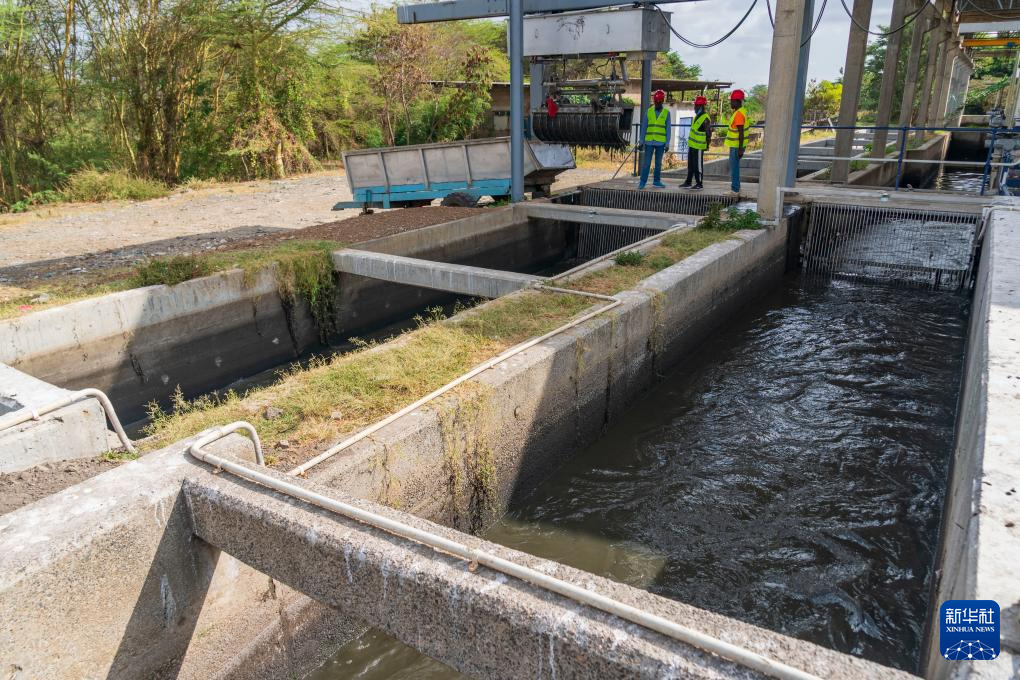
Core Insights - The article highlights the significant investment by Chinese companies in the rehabilitation and expansion of the Dandora wastewater treatment plant in Nairobi, Kenya, addressing the city's growing water resource challenges and pollution issues [4][10]. Group 1: Project Overview - The Dandora wastewater treatment plant has been crucial for Nairobi, handling approximately 80% of the city's wastewater since the 1970s, but has faced capacity issues due to population growth and aging equipment [4][8]. - In 2022, Jiangxi Coal Group won the bid for the plant's second-phase rehabilitation project, with an investment of 20.23 billion Kenyan Shillings (approximately 1.08 million RMB) financed by the Kenyan government through the African Development Bank [4][8]. Group 2: Project Implementation - The project officially commenced on February 21, 2023, focusing on upgrading the inflow channels, pre-treatment structures, and cleaning approximately 600,000 cubic meters of sludge from anaerobic tanks [6][8]. - New equipment tailored to local pollution characteristics has been introduced, including automated cleaning robots and advanced screening systems, significantly enhancing treatment precision [8][10]. Group 3: Expected Outcomes - Upon completion in April 2025, the plant's daily processing capacity will double from 160,000 cubic meters to 320,000 cubic meters, making it one of the largest wastewater treatment facilities in East Africa [8][10]. - The project aims to transition to local operation within two years post-completion, with a focus on training local technicians to ensure sustainable management [10][12]. Group 4: Environmental and Social Impact - The Dandora plant is not only an environmental facility but also serves as an educational site for local schools, promoting public awareness of environmental issues [12]. - The area has seen a resurgence of wildlife, with various bird species returning, transforming the previously polluted site into a habitat for wildlife, thus restoring its historical significance as "cool water" [12][13].
重庆水务集团股份有限公司 第六届董事会第二十四次会议决议公告
Zhong Guo Zheng Quan Bao - Zhong Zheng Wang· 2026-02-12 22:57
Core Viewpoint - The company has conducted a board meeting to approve the merger of its subsidiaries and the use of idle raised funds for cash management, aiming to enhance fund efficiency and shareholder returns [2][4][21]. Group 1: Board Meeting Decisions - The board meeting was held on February 12, 2026, with all seven directors present, either in person or via video [2]. - The board approved the merger of Chongqing Water Group Public Engineering Consulting Co., Ltd. with Chongqing Public Utilities Construction Co., Ltd., with the former inheriting all assets, debts, and rights of the latter [3]. - The board also approved the use of up to RMB 50 million of idle raised funds for cash management, focusing on high-safety, liquid, principal-protected financial products [4][12]. Group 2: Cash Management Details - The cash management approval allows for the investment of idle funds starting from February 24, 2026, for a period of 12 months, with the option for rolling use [4][15]. - The funds for cash management are sourced from temporarily idle raised funds from convertible bonds issued to unspecified investors [16]. - The company aims to improve fund efficiency, reduce financial costs, and increase returns for shareholders through this cash management strategy [14][21]. Group 3: Regulatory Compliance and Oversight - The decisions made in the board meeting were in compliance with relevant laws and regulations, ensuring no detriment to the company's operations or shareholder interests [22]. - The independent directors and audit committee have the authority to supervise the use of funds, ensuring adherence to the approved investment strategy [20][22].

金科环境股份有限公司关于《锡东工业污水处理项目特许经营协议》终止的进展公告
Shang Hai Zheng Quan Bao· 2026-02-09 18:55
Core Viewpoint - The termination of the "Xidong Industrial Wastewater Treatment Project" franchise agreement is due to the inability of the company to collect wastewater treatment fees sufficient to ensure normal operation and investment returns, leading to a buyback agreement with the designated entity [2][4][27]. Group 1: Overview of Franchise Agreement and Termination - The franchise agreement was signed in September 2023, with a 30-year term, allowing the company to manage the wastewater treatment project [3]. - The agreement stipulated that if the project could not operate normally for three consecutive months due to insufficient fee collection, the designated entity would have the right to buy back the project [3][4]. Group 2: Buyback Agreement Details - The buyback agreement was signed in December 2025, with a total transaction price of RMB 158.1871 million [2][8]. - As of the announcement date, the company has received the first payment of RMB 116.2 million [2][5]. Group 3: Financial and Asset Transfer Information - The total asset value of the project company as of March 31, 2025, was RMB 194.9142 million, with a net asset value of RMB 56.6192 million [7]. - The buyback payment structure includes three installments, with specific conditions for each payment [9][11][12]. Group 4: Impact on the Company - The termination of the franchise agreement is not expected to have a significant impact on the company's operating performance or financial status, and it will help optimize the asset structure and reduce financial risks [27].

中国水务行业展望
Zhong Cheng Xin Guo Ji· 2026-02-05 05:36
Investment Rating - The report maintains a stable outlook for the Chinese water industry, indicating that the overall credit quality of the industry is not expected to change significantly in the next 12 to 18 months [4][50]. Core Insights - The investment focus in the water industry is expected to shift towards major water conservancy projects and the renovation of urban and rural water supply and drainage networks, supported by policy funding [5][27]. - The industry is facing limited growth in water supply scale due to the inflection point in water usage population and the guidance of water-saving policies [5][13]. - The adjustment of water prices is anticipated to improve the industry's cost structure, although the short-term collection situation may not see substantial improvement [5][50]. - The integration of sewage treatment at the county and township levels is expected to accelerate, indicating continued demand growth [5][22]. Summary by Sections Industry Fundamentals - The water industry is recognized as a critical strategic sector for national livelihood, with policies aimed at sustainable water resource utilization and enhancing public service capabilities [7]. - Major investments in water conservancy are projected to reach 7 trillion yuan during the 14th Five-Year Plan, focusing on key projects such as cross-basin water diversion and flood control [8][27]. - The establishment of a standardized public-private partnership (PPP) model is expected to enhance financing channels and operational efficiency [9][11]. Operational Analysis - The water supply coverage continues to rise, but growth in supply volume is expected to slow down due to demographic changes and water-saving policies [13][15]. - The adjustment of water prices has accelerated, which may alleviate cost pressures for water companies, although profitability remains constrained [15][17]. Investment Analysis - The investment structure has shifted, with a clear focus on major water conservancy projects and the renovation of urban and rural drainage systems, as traditional investments in new water supply and sewage treatment facilities have peaked [23][24]. - The total investment in urban drainage facilities is projected to grow, supported by government policies aimed at eliminating gaps in sewage networks [27]. Credit Analysis - The water industry comprises numerous enterprises, primarily local, with low market concentration and significant regional protection [28]. - The bond issuance scale for water enterprises is expected to continue growing, with a favorable financing environment anticipated in 2026 [32][33]. - The overall debt levels in the industry are rising, but external financing channels remain open, supporting the industry's credit stability [38][46].