
沃渔通

Search documents
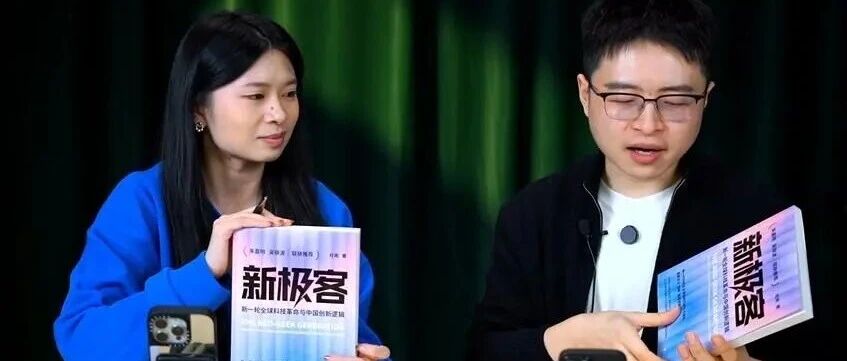
新书| 杜雨博士携新书《新极客》做客吴晓波频道,解密00后创业潮
未可知人工智能研究院· 2025-12-03 03:02
Core Viewpoint - A new technological revolution led by Generation Z is reshaping the global innovation landscape, characterized by the emergence of "new geeks" who integrate technology, business, and humanities to drive innovation [1][3]. Group 1: Characteristics of New Geeks - New geeks are practitioners of technological inclusivity, exemplified by projects like "Yiying" AI model that enhances garment design efficiency and quality control in textile manufacturing [5]. - They are believers in open-source collaboration, with over 3 million active open-source projects in China, where Z generation developers account for over 70% of contributors [6]. - New geeks are promoters of digital-physical integration, focusing on practical industry applications, such as reducing operational time in telecommunications through digital twin technology [7]. Group 2: The Rise of Post-00 Entrepreneurs - The emergence of post-00 entrepreneurs is attributed to three factors: lowered technical barriers, increased policy support, and upgraded market demand [9]. - These entrepreneurs exhibit a mature mindset, focusing on long-term goals rather than short-term trends, and are capable of addressing technical challenges with innovative solutions [10]. - China's innovation logic is transitioning from a model of "catching up" to one of "leading," driven by scenario-based innovation and open-source collaboration [10]. Group 3: Unique Advantages of the Chinese Market - Innovation in China often starts from market needs, creating a vibrant testing ground for technology applications across various sectors [12]. - The positive cycle of "technology - industry - market" allows new geeks to quickly validate and optimize their innovations, as seen in the development of the open-source Harmony operating system [12]. Group 4: Ecosystem Empowerment - A robust ecosystem supports innovation, with R&D funding exceeding 3.6 trillion yuan, fostering a conducive environment for new geeks [14]. - Patient capital is emerging in China, willing to support long-term, high-potential technology projects, contrasting with short-term profit-seeking investments [14]. - The open-source movement is breaking down technological monopolies, enabling Chinese developers to participate in global technology rule-making [14]. Group 5: Cultural DNA - The new geeks embody a spirit of innovation driven by a sense of national responsibility, aiming to use technology for societal benefit [16]. - This combination of personal ideals and national destiny provides a unique motivational force for Chinese innovators [16]. Group 6: Challenges and Long-term Commitment - New geeks face challenges such as ensuring technological reliability, navigating ethical boundaries, and achieving commercial viability [18]. - Four guiding principles for overcoming these challenges include maintaining a focus on core technology, embracing open-source collaboration, prioritizing user needs, and balancing innovation with ethical considerations [19][20][21]. Conclusion - The collaboration between Dr. Du Yu and Blue Lion has produced a significant work that highlights the potential of new geeks in leading a new era of innovation in China, emphasizing the importance of their contributions to the global technological landscape [22][24].

以创新为笔描绘青春画卷
Zhong Guo Qing Nian Bao· 2025-05-25 21:24
Core Insights - The article highlights the innovative contributions of young technology workers in China, particularly focusing on three individuals from China Unicom who are driving transformation in traditional industries through technology [1][5]. Group 1: Innovations in Traditional Industries - He Shanshan's team developed the "Yiying" AI model that can complete clothing designs in just 3 seconds, enabling personalized customization [2]. - The team utilized 5G and IoT technologies to enhance operational efficiency in textile workshops, allowing for automated detection of yarn breakages [2]. - The "5G LAN factory" created by He Shanshan's team controls core production processes using 5G-A technology [2]. Group 2: Advancements in Marine Communication - Chi Kexun's "Woyu Tong" products reduced marine communication costs from 500 RMB per 1.2GB to a more accessible level, benefiting fishermen and tourists [2]. - The team developed a 5G-based marine ranch observation network that integrates IoT, AI, and big data, achieving significant cost savings compared to traditional methods [2]. Group 3: Digital Twin Technology in Communication - Zhu Mengyuan's team created "digital twin" technology that allows for virtual planning and operation of data centers, significantly reducing the time required for design work [3]. - The team implemented a "secondary clustering" method to improve AI's ability to recognize similar equipment, streamlining operational processes [3]. Group 4: Transition from Research to Industry - The article emphasizes the need for a shift from technical thinking to user-oriented thinking for successful industrial innovation [4]. - The "Digital Master" system developed by He Shanshan's team improved yarn quality by 40% through intelligent algorithms [4]. - Chi Kexun's team utilized a "problem-backtracking" method to design solutions based on real-world fishing operations, leading to an 80% cost reduction [4]. Group 5: Support for Young Innovators - China Unicom's "Youth Talent Support Program" provides a structured mentorship system to nurture young talent, with 16 individuals recognized by the Chinese Association for Science and Technology [5]. - The company encourages collaboration among experts from various fields to tackle challenges effectively [5]. Group 6: Spirit of Exploration - The article concludes with a message encouraging young technology workers to embrace exploration and align their aspirations with national needs, fostering confidence and strength [6].

联通科技新青年:以创新为笔 描绘青春画卷
Zhong Guo Qing Nian Bao· 2025-05-17 10:20
Core Insights - The article highlights the innovative contributions of three young technology professionals from China Unicom, showcasing their efforts in transforming traditional industries through technology and addressing national needs [1][5][6] Group 1: Innovations in Communication and Industry - The "Yiying" AI model developed by He Shanshan enables personalized clothing design in just 3 seconds, revolutionizing the fashion industry [1] - The team led by He Shanshan implemented 5G and IoT technologies in textile workshops, significantly improving operational efficiency and allowing for real-time monitoring of production issues [1] - The "Digital Twin" technology created by Zhu Mengyuan allows for virtual management of base stations, reducing the time required for planning and maintenance from days to hours [3] Group 2: Marine Communication Breakthroughs - The "Woyu Tong" series developed by Chi Kexun has drastically reduced marine communication costs from 500 RMB per 1.2GB to a more accessible level, enhancing connectivity for fishermen and tourists [2] - Chi Kexun's team has integrated 5G technology with IoT and AI to create a comprehensive marine observation network, achieving significant cost savings compared to traditional methods [2] Group 3: Youth Talent Development and Support - China Unicom has established a "Youth Talent Support System" to nurture young innovators, providing tailored mentorship and resources to enhance their capabilities [5] - The company has initiated various programs to promote youth innovation, including the "Five Chains Integration" strategy, which focuses on enhancing personnel, funding, and organizational support for young talent [5] - The article emphasizes the importance of transitioning from technical thinking to user-centric approaches in driving industrial innovation [4]