开源协作

Search documents
去年前11个月我国软件业务收入同比增长13.3%,软件ETF(159852)去年吸金近44亿元
Mei Ri Jing Ji Xin Wen· 2026-01-06 07:32
Core Viewpoint - The A-share market showed strong performance with the Shanghai Composite Index rising by 1.5%, reaching a nearly ten-year high, driven by significant gains in software concept stocks [1] Group 1: Market Performance - The software sector saw notable increases, with stocks like Tonghuashun rising over 12%, Zhinan Zhen over 9%, and Caifu Trend over 8% [1] - The software ETF (159852) tracking the CSI Software Service Index increased by 2.46% due to the positive market sentiment [1] Group 2: Industry Fundamentals - The Ministry of Industry and Information Technology reported that from January to November 2025, China's software and information technology services industry performed well, with software business revenue reaching 139.777 billion yuan, a year-on-year growth of 13.3% [1] - The total profit of the software industry was 16.954 billion yuan, reflecting a year-on-year increase of 6.6% [1] - Software business exports amounted to 56.89 billion USD, with a year-on-year growth of 8.1%, maintaining positive growth for nine consecutive months [1] Group 3: Industry Trends - Analysts suggest that China's software and information technology services industry is transitioning from scale expansion to high-quality development, driven by the increasing demands for reliability, security, and intelligence in digitalization [1] - Emerging technologies such as generative artificial intelligence (AIGC), large models, cloud-native solutions, and open-source collaboration are becoming key engines for industry transformation and upgrading [1][2] Group 4: Future Outlook - In the context of escalating global technological competition, the need for self-controlled foundational software is essential for national security and sustainable industrial development [2] - Future foundational software companies will face higher technical requirements and stronger competitive pressures, but this also presents more market opportunities [2]
新书| 杜雨博士携新书《新极客》做客吴晓波频道,解密00后创业潮
未可知人工智能研究院· 2025-12-03 03:02
Core Viewpoint - A new technological revolution led by Generation Z is reshaping the global innovation landscape, characterized by the emergence of "new geeks" who integrate technology, business, and humanities to drive innovation [1][3]. Group 1: Characteristics of New Geeks - New geeks are practitioners of technological inclusivity, exemplified by projects like "Yiying" AI model that enhances garment design efficiency and quality control in textile manufacturing [5]. - They are believers in open-source collaboration, with over 3 million active open-source projects in China, where Z generation developers account for over 70% of contributors [6]. - New geeks are promoters of digital-physical integration, focusing on practical industry applications, such as reducing operational time in telecommunications through digital twin technology [7]. Group 2: The Rise of Post-00 Entrepreneurs - The emergence of post-00 entrepreneurs is attributed to three factors: lowered technical barriers, increased policy support, and upgraded market demand [9]. - These entrepreneurs exhibit a mature mindset, focusing on long-term goals rather than short-term trends, and are capable of addressing technical challenges with innovative solutions [10]. - China's innovation logic is transitioning from a model of "catching up" to one of "leading," driven by scenario-based innovation and open-source collaboration [10]. Group 3: Unique Advantages of the Chinese Market - Innovation in China often starts from market needs, creating a vibrant testing ground for technology applications across various sectors [12]. - The positive cycle of "technology - industry - market" allows new geeks to quickly validate and optimize their innovations, as seen in the development of the open-source Harmony operating system [12]. Group 4: Ecosystem Empowerment - A robust ecosystem supports innovation, with R&D funding exceeding 3.6 trillion yuan, fostering a conducive environment for new geeks [14]. - Patient capital is emerging in China, willing to support long-term, high-potential technology projects, contrasting with short-term profit-seeking investments [14]. - The open-source movement is breaking down technological monopolies, enabling Chinese developers to participate in global technology rule-making [14]. Group 5: Cultural DNA - The new geeks embody a spirit of innovation driven by a sense of national responsibility, aiming to use technology for societal benefit [16]. - This combination of personal ideals and national destiny provides a unique motivational force for Chinese innovators [16]. Group 6: Challenges and Long-term Commitment - New geeks face challenges such as ensuring technological reliability, navigating ethical boundaries, and achieving commercial viability [18]. - Four guiding principles for overcoming these challenges include maintaining a focus on core technology, embracing open-source collaboration, prioritizing user needs, and balancing innovation with ethical considerations [19][20][21]. Conclusion - The collaboration between Dr. Du Yu and Blue Lion has produced a significant work that highlights the potential of new geeks in leading a new era of innovation in China, emphasizing the importance of their contributions to the global technological landscape [22][24].


“同心圆”里的科技力量:开源鸿蒙“在一起就可以”的五年实践与未来
凤凰网财经· 2025-11-28 12:54
Core Viewpoint - The article emphasizes the significance of the open-source HarmonyOS project in driving technological innovation and collaboration across various industries, showcasing its potential to transform China's technological landscape through collective efforts and shared resources [1][19]. Group 1: Innovation Anchor - The open-source HarmonyOS has evolved over five years, focusing on industry needs to build a robust technological foundation, with over 130 million lines of code developed [3][6]. - Key technological breakthroughs include the "distributed soft bus" technology, which enables cross-device collaboration by virtualizing hardware capabilities into a unified resource pool [4][6]. - The system's architecture reduces attack surfaces and ensures data security throughout its lifecycle, while its "elastic deployment" capability allows for flexible adaptation to various device resources [4][6]. Group 2: Co-Creation Mechanism - The core of HarmonyOS's success lies in the "co-creation" model, which transitioned from a proprietary system to a shared industry resource through contributions from various stakeholders [7][8]. - Over 9,700 contributors from leading software companies and academic institutions have enriched the ecosystem, transforming technological advancements into reusable public assets [6][10]. - The "co-build, share, and govern" mechanism ensures equitable participation, open access to technology, and collaborative decision-making, fostering a sustainable ecosystem [10][11]. Group 3: Practical Applications - The "same circle" model illustrates how HarmonyOS's technology serves as a foundation for various industries, enabling customized solutions that address specific challenges [11][14]. - Examples include the "Mine Hong" smart mining solution, which enhances safety and efficiency by allowing remote operation of autonomous mining vehicles [13][14]. - The technology is also applied in healthcare and emergency response, demonstrating its versatility and impact across different sectors [14]. Group 4: Future Outlook - The open-source HarmonyOS aims to penetrate deeper into niche markets, such as smart healthcare in rural areas and interconnectivity for small manufacturers, addressing diverse needs and cost sensitivities [15][17]. - Future initiatives will focus on lowering development barriers, integrating AI with distributed capabilities, and cultivating talent through a comprehensive educational framework [17][18]. - The ongoing commitment to collaboration and innovation positions HarmonyOS as a key player in China's technological advancement, with a vision for continuous growth and adaptation [19].
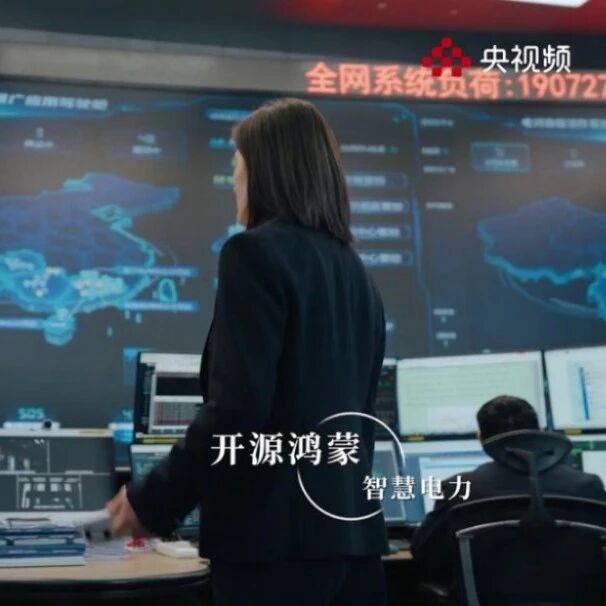
共塑智能汽车的未来发展范式 理想汽车和星环OS生态伙伴正式签约
Qi Lu Wan Bao· 2025-09-17 07:39
Core Insights - The establishment of the Star Ring OS community aims to create a unified, efficient, and reliable technical platform for computing, communication, and control functions in vehicles, facilitating the transition of smart cars into the AI era [1][3][5] Group 1: Community Formation and Objectives - The Star Ring OS community was officially launched with 16 ecosystem partners from various sectors, including automotive chips, software services, hardware, and vehicle manufacturing [1][3] - The community will focus on key technology breakthroughs and long-term technical roadmap development, promoting the application and innovation of smart automotive operating systems [3][5] - The guiding principles of the community emphasize openness, neutrality, sharing, and co-construction, with a governance model that includes a guiding committee and specialized interest groups [9] Group 2: Technical Features and Development - Star Ring OS is a self-developed automotive operating system by Li Auto, designed to support intelligent driving and smart cockpit technologies, with a focus on open-source collaboration to avoid fragmentation and reduce R&D costs [3][5][6] - The operating system features a unified software architecture that includes AI computing systems, real-time systems, middleware, and security systems, ensuring high efficiency and reliability [6][7] - The community has established a complete development toolchain and technical support to facilitate efficient development and rapid mass production, enhancing user experience [7][8] Group 3: Ecosystem and Collaboration - Since its open-source announcement, Star Ring OS has gained recognition from over 30 companies and communities, forming a preliminary ecosystem network [8][9] - The community's rapid growth in developer contributions has led to a significant reduction in problem resolution time, from an average of 50 days to 10 days, enhancing community engagement [9]

深度|英伟达黄仁勋对话欧洲最大AI独角兽Mistral CEO: 开源是技术民主化的基石;AI将对每个国家的GDP产生双位数影响
Z Potentials· 2025-04-11 04:20
Core Viewpoints - The discussion emphasizes the strategic value of sovereign AI and the necessity for countries to actively invest in AI development as a common human endeavor rather than a privilege of a few tech companies [3][5][4] - AI is recognized as a general-purpose technology that can transform various sectors, including public services, agriculture, and defense, necessitating tailored national AI strategies [4][6] - Open-source collaboration is highlighted as a cornerstone for technological democratization, accelerating progress and enabling countries to deploy models on their own infrastructure [3][27] Group 1: Sovereign AI and National Strategy - Sovereign AI is essential for countries to maintain cultural identity and digital sovereignty, as no one understands a nation's needs better than its own citizens [3][5] - The limitations of centralized AI models are discussed, emphasizing the need for customization based on local preferences and requirements [3][6] - Countries must view AI as a new layer of infrastructure, akin to electricity, and invest in building their own capabilities to avoid dependency on foreign technologies [7][8] Group 2: Open Source and Collaboration - Open-source models are crucial for accelerating technological advancements and fostering a collaborative ecosystem among research labs [27][28] - The partnership between NVIDIA and Mistral in developing models like Mistral NeMo illustrates the benefits of combining resources and expertise to create superior AI solutions [28][29] - Open-source technology enhances security through transparency and community involvement, reducing risks associated with centralized control [31][32] Group 3: Economic Impact and Digital Workforce - AI is projected to have a significant impact on GDP, similar to the historical influence of electricity, making it imperative for nations to develop their own AI capabilities [6][7] - The concept of digital labor is introduced, where AI systems are seen as integral to the workforce, requiring nations to actively shape and optimize these technologies [8][9] - The importance of local talent development and infrastructure is emphasized to ensure that AI systems align with national values and regulations [7][10] Group 4: Company Strategies and Ecosystem - Companies like NVIDIA prioritize developer-centric strategies, focusing on creating an ecosystem that supports innovation and collaboration [42][43] - The flexible organizational structure of NVIDIA allows it to adapt to rapid technological changes while minimizing bureaucracy [33][34] - The unique positioning of companies in the AI landscape is crucial for establishing partnerships with cloud service providers and driving mutual success [40][41]