油橄榄叶提取物

Search documents
视频丨“洋果子”炼成“金果子” 陇南油橄榄是如何被“吃干榨尽”的?
Yang Shi Xin Wen Ke Hu Duan· 2025-11-23 15:55
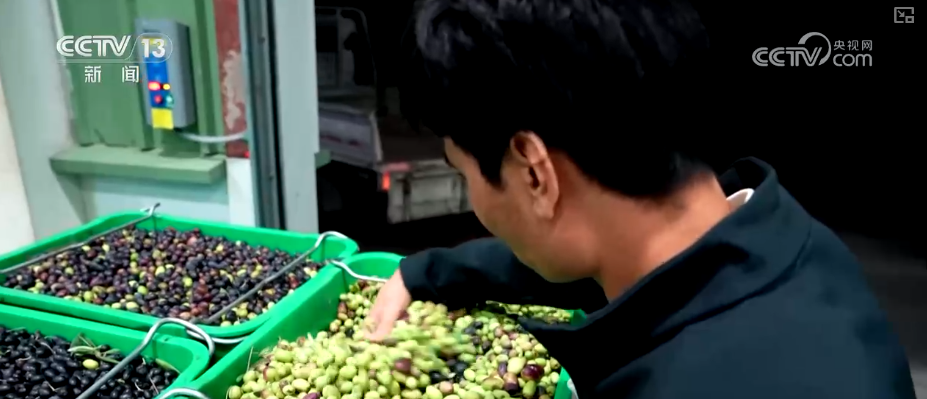
Core Viewpoint - The olive oil industry in Longnan, Gansu, has successfully adapted the Mediterranean olive tree to local conditions, creating a refined industrial chain that connects with international markets. Group 1: Olive Oil Production and Processing - The olive harvesting period in Longnan has begun, with a new "order reservation + fruit basket distribution" model implemented to ensure quality and prevent bottlenecks during collection [5][7]. - The processing of fresh olives is completed within 10 days, utilizing an 8-hour cold pressing method at temperatures below 27°C, reflecting a shift from extensive to refined management practices [9]. - The company has transitioned to a more precise operation, focusing on single variety pressing and adhering to strict corporate standards during the extraction process [10]. Group 2: Adaptation and Research - Longnan has stabilized over 100 olive varieties, with 11 being widely promoted as superior strains, showcasing a successful adaptation of this foreign species [13][24]. - The local Economic Forest Research Institute is engaged in breeding programs to develop varieties better suited to the region, utilizing radiation and molecular breeding techniques [15][18]. - The region's climate presents challenges compared to the Mediterranean, necessitating specific irrigation strategies to enhance olive oil quality [20][22]. Group 3: Market Expansion and Quality - Longnan olive oil is not only popular domestically but is also exported to Europe and Southeast Asia, attracting international buyers [12]. - The local industry has participated in revising national olive planting standards, aiming for more precise and fair quality grading [26][28]. - The market share of domestic extra virgin olive oil has increased to approximately 30%, indicating a growing recognition of local products [30]. Group 4: By-products and Economic Impact - Olive by-products, previously considered waste, are now being transformed into high-value products, achieving a comprehensive utilization rate of 70% [34]. - The local economy benefits from diversified sales channels, including online platforms, enhancing farmers' income and promoting sustainable practices [38]. - The integration of agriculture with tourism and technology has led to the establishment of a comprehensive agricultural experience center, attracting 150,000 visitors annually and increasing local farmers' income by 2,600 yuan per capita [40].


“金果子”迸发致富大能量 “洋树种”本土化蝶变成百姓致富“聚宝盆”
Yang Shi Wang· 2025-11-23 08:45
Core Viewpoint - The olive oil industry in Longnan, Gansu, has successfully adapted the Mediterranean olive tree to local conditions, creating a thriving economic sector with a refined industrial chain that connects with international markets [1][11]. Group 1: Olive Oil Production and Processing - The olive harvesting season in Longnan has begun, with a focus on maintaining quality through immediate processing after picking [1][5]. - A new collection model, "order reservation + fruit basket distribution," will be implemented in 2025 to prevent quality degradation due to concentrated harvesting [5]. - The entire process from harvesting to shelf-ready products can be completed within 10 days, showcasing a shift from extensive management to refined operations [7]. Group 2: Market Expansion and Quality - Longnan olive oil is not only popular domestically but is also exported to Europe and Southeast Asia, attracting international buyers [9]. - The region has developed over 100 stable olive varieties, with 11 being widely promoted as superior strains [11]. - The local olive oil quality is reported to exceed that of imported oils, although competitive pricing remains a challenge [17]. Group 3: Technological Advancements and Research - Longnan's olive cultivation has benefited from decades of technological advancements, including radiation and molecular breeding to develop local varieties [12]. - The region's climate and soil conditions have been adapted through irrigation strategies to enhance olive oil quality [14][15]. - The implementation of a "three-year doubling action plan" aims to enhance the entire olive oil industry chain, from genetic resources to marketing [16]. Group 4: By-products and Economic Impact - Olive by-products, previously considered waste, are now being transformed into high-value products, achieving a 70% utilization rate of by-products [20][22]. - The diversification of products includes cosmetics, food items, and creative products, significantly increasing the economic benefits of the olive industry [24]. - The integration of agriculture with tourism and technology has led to the establishment of a comprehensive agricultural experience center, boosting local income [28].