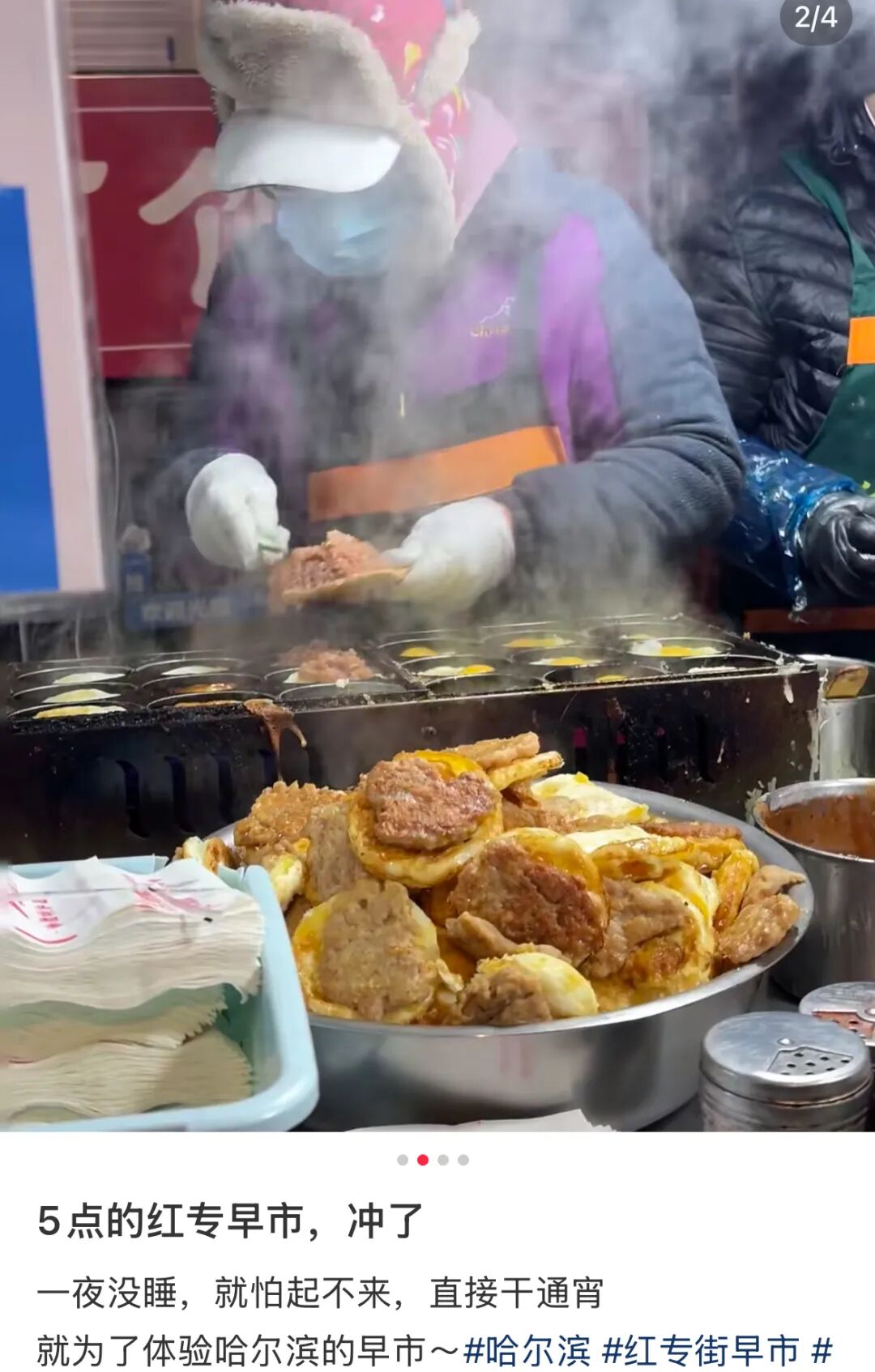
油煎包

Search documents
单日10万人涌入,曹洼大集怎么就火了?
3 6 Ke· 2025-12-04 03:55
Core Insights - The Cao Wa Market in Linyi, Shandong has become a viral sensation, attracting over 100,000 visitors in a single day and generating direct consumption of 5 to 6 million yuan [1][2] - The market covers an area of 170 acres, equivalent to 16 standard soccer fields, featuring over 2,000 stalls and more than 5,000 workers [2] - Online engagement has surged, with the "cloud market" concept achieving over 400 million views across various platforms, including 350 million on Douyin alone [2][5] Group 1: Market Dynamics - The market's appeal lies in its low prices, with items like oil-fried buns priced at 0.5 yuan and a full meal for 100 yuan, showcasing a stark contrast to prices in first-tier cities [7][9] - The market serves as a "price haven," allowing visitors to enjoy affordable, fresh food without the premium associated with urban settings [9][10] - The atmosphere of the market, characterized by genuine human interactions and a lack of commercialization, resonates with visitors seeking authentic experiences [13][21] Group 2: Challenges and Sustainability - Despite the current popularity, the market faces the challenge of maintaining visitor interest and avoiding the "flash in the pan" phenomenon that many viral attractions experience [14] - Key areas for improvement include enhancing sanitation, managing traffic flow, and regulating stall operations to ensure a positive visitor experience [15][16][19] - The market must preserve its unique charm and authenticity, avoiding the pitfalls of standardization that can diminish its appeal [21][22]


在这里钱花不完:一线工资、四线物价、十分奢侈
3 6 Ke· 2025-12-01 03:18
Core Viewpoint - The resurgence of traditional markets, such as the Cao Wa Market in Shandong, is attracting a significant number of young visitors, indicating a shift in consumer behavior towards more authentic and affordable shopping experiences [1][10][17]. Group 1: Market Dynamics - The Cao Wa Market spans 170 acres with over 2,000 stalls, drawing daily crowds of over 10,000 people, and millions more online [1][12]. - Similar markets in Beijing, like Han Village and Shahe, see daily foot traffic of 10,000 to 30,000, with peaks during holidays reaching over 40,000 [3][4]. - The appeal of these markets lies in their vibrant atmosphere and the "smoky" essence of everyday life, which contrasts sharply with the sterile environment of urban supermarkets [7][8]. Group 2: Consumer Behavior - Young consumers are increasingly abandoning supermarkets in favor of markets, seeking a more genuine shopping experience that evokes childhood memories [9][17]. - The affordability of goods in these markets is a significant draw, with prices remaining low compared to urban supermarkets, where consumers often face inflated prices [10][12][22]. - The experience of bargaining and the lively interactions at markets provide a sense of relaxation and community that urban life often lacks [5][7]. Group 3: Economic Implications - The trend reflects a broader shift in consumer attitudes, where young people are opting for "one-line salary, four or five-line consumption," allowing them to enjoy life without the financial strain typical of urban living [17][20]. - The cost of living in small towns is significantly lower, with prices for basic goods being a fraction of those in major cities, creating a sense of "wealth freedom" for urban dwellers visiting these markets [20][22][24]. - This shift towards market shopping and county tourism represents a pragmatic approach to achieving a fulfilling lifestyle amidst the pressures of urban existence [17][24].