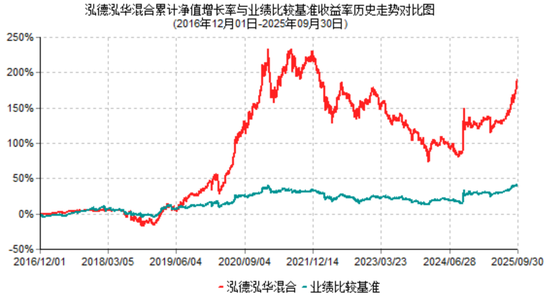
泓德泓华混合

Search documents
长盛基金郭堃卸任副总经理!“专注于投资管理工作”再添新例
Sou Hu Cai Jing· 2026-01-16 04:20
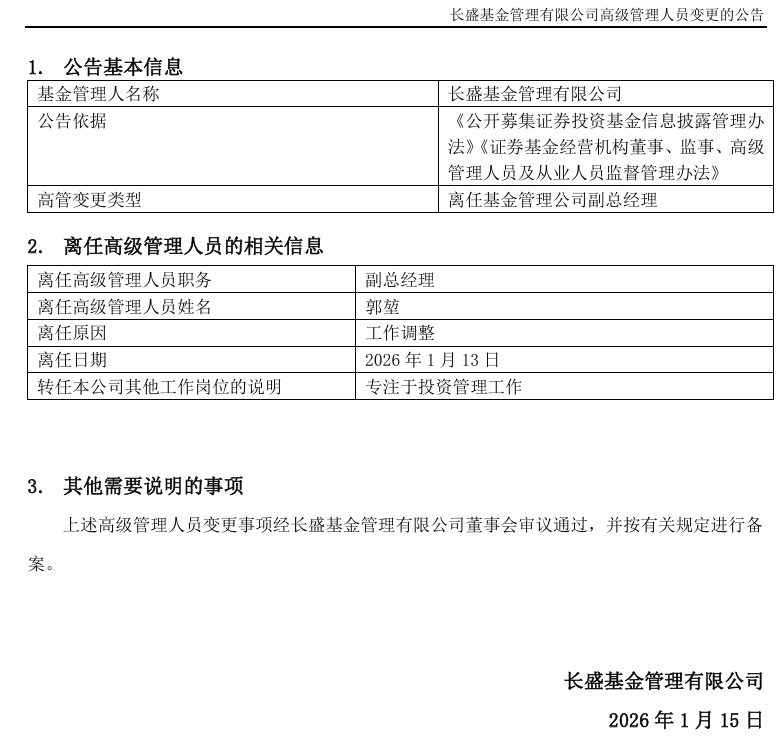
Core Viewpoint - The recent resignation of Guo Kun as the Deputy General Manager of Changsheng Fund marks a trend where successful fund managers are choosing to return to their core investment roles, moving away from administrative responsibilities [1][6][12]. Group 1: Management Changes - Guo Kun resigned from his position as Deputy General Manager on January 13, 2026, due to "work adjustments" and will focus on investment management [1][3]. - This resignation is part of a broader trend in the industry where many fund managers are stepping down from executive roles to concentrate on investment [6][12]. Group 2: Performance and Background - Guo Kun has a strong track record, having previously managed funds at Hongde Fund with impressive returns, such as 30.7% and 35.9% for different products [9][11]. - After joining Changsheng Fund, Guo's management of the Changsheng Tongsheng Growth Preferred Mixed Fund resulted in a cumulative return of 95.57% since May 2020, significantly outperforming peers [9][11]. - As of January 15, 2026, Guo managed a total of 7 funds with a combined scale of 6.078 billion yuan, although some products experienced performance fluctuations under the pressure of dual responsibilities [11]. Group 3: Industry Trends - The trend of fund managers returning to investment roles is influenced by regulatory changes emphasizing long-term performance over scale, as outlined in the 2025 "Action Plan for Promoting High-Quality Development of Public Funds" [6][7]. - The conflict between management duties and investment focus is a significant factor driving this shift, as administrative tasks can detract from research and decision-making time [7][12].

2025年基金三季报划重点!泓德基金秦毅:重点关注成长、稳健收益和困境反转三类板块
Xin Lang Ji Jin· 2025-11-03 05:15
Group 1 - The core viewpoint of the articles highlights the strong performance of global capital markets driven by major central banks' easing monetary policies and the AI investment boom, with A-shares and Hong Kong stocks leading the way [3] - The performance of the A-share market is characterized by a structural advantage in growth styles, particularly in the "dual innovation" sectors represented by the ChiNext and STAR Market, which outperformed the main board [3] - The Hong Kong stock market also showed strong performance, with the technology sector recovering in Q3 after a weak Q2, as evidenced by the Hang Seng Technology Index outperforming the Hang Seng Index [3] Group 2 - The Hong Kong market's rise was supported by continuous inflows of southbound funds, which became a driving force for the market's upward trend [3] - The mixed fund, Hongde Honghua, optimized its holdings in the technology sector in Q3 after increasing its allocation in the previous quarter, indicating a strategic shift towards growth sectors [3][4] - The fund manager, Qin Yi, emphasized a focus on growth sectors, particularly in technology and new energy, as the global landscape evolves towards two major tech systems between China and the US, benefiting companies in the AI supply chain [3][4] Group 3 - The fund manager also pointed out the potential in stable income sectors, where some stocks have become attractive despite lower growth potential, offering good valuation and stability [4] - There is an emerging opportunity in cyclical sectors, which have generally underperformed due to weak domestic demand, but leading companies in these sectors are showing resilience and could benefit significantly once demand improves [4] - The formation of MACD golden cross signals indicates positive momentum for certain stocks, suggesting potential upward trends in the market [4]