
波塞冬无人潜航器

Search documents
普京:特别军事行动目标必须实现
Zhong Guo Xin Wen Wang· 2025-12-18 01:44
Core Viewpoint - President Putin emphasized the necessity of achieving the objectives of the special military operation and highlighted the strategic advantages gained by the Russian military in the ongoing conflict with Ukraine [1][2] Group 1: Military Strategy and Objectives - The Russian military has gained and maintained strategic initiative along the entire front line of the Russia-Ukraine conflict, with capabilities to accelerate offensive actions in the special military operation zone [1] - Putin stated that the primary goal is to achieve the objectives of the special military operation, preferring diplomatic means but indicating readiness to use military force if substantial dialogue is rejected by opposing parties and their foreign supporters [2] - The establishment and expansion of security buffer zones will continue to be a priority [2] Group 2: Military Modernization and Capabilities - The Russian army and navy have rapidly equipped themselves with modern weaponry, including high-precision missile systems, artillery, drones, and robots, with the air and space forces receiving advanced missiles and air-launched weapons [1] - The 2027-2036 national armament plan is being developed to ensure rapid and high-quality modernization of the Russian military, focusing on air defense, missile defense systems, command and control systems, electronic warfare systems, and drone systems [2] - Emphasis is placed on maintaining technological superiority by integrating robotics, information technology, and new materials into the military, as well as expanding the use of artificial intelligence in control and autonomous combat systems [2] Group 3: Strategic Weapons Development - The "Zircon" strategic cruise missile and "Poseidon" unmanned underwater vehicle have completed performance testing, ensuring Russia's strategic balance and global standing for decades to come [1] - The "Zircon" hypersonic ballistic missile system was first deployed in combat in November of the previous year and is expected to be operational by the end of this year [1] - New-generation spacecraft will be equipped for the orbital satellite constellation to provide secure communication channels and enhance intelligence quality and precise navigation data [2]
普京披露更多细节
中国能源报· 2025-11-05 10:48
Core Viewpoint - The article discusses the advancements in Russia's military capabilities, particularly focusing on the "Burevestnik" nuclear-powered cruise missile and the "Poseidon" unmanned underwater vehicle, which are expected to enhance national security and strategic balance for decades to come [1][3]. Group 1: Burevestnik Nuclear-Powered Cruise Missile - The "Burevestnik" missile has a range that exceeds all known missile systems globally and boasts high precision in strikes [3]. - It features a unique operation method with a compact nuclear reactor that can be activated in just a few seconds [3]. - Russia has initiated the development of a new generation of nuclear-powered cruise missiles, with potential flight speeds exceeding three times the speed of sound, possibly reaching hypersonic speeds [3]. Group 2: Poseidon Unmanned Underwater Vehicle - The "Poseidon" vehicle utilizes advanced materials and components designed for underwater environments, allowing for high-speed travel and operational depths of up to 1,000 meters [5]. - It is reported to be significantly faster than all modern surface vessels and is equipped with a nuclear power system capable of launching torpedoes with nuclear warheads [5]. Group 3: Broader Military Developments - Russia's plans for developing advanced weapon systems and modernizing its defense industrial complex are being progressively realized [5]. - The "Zircon" medium-range missile has begun mass production and deployment [5]. - The "Sarmat" heavy intercontinental ballistic missile is set for combat testing within the year and is expected to be operational by next year [5].

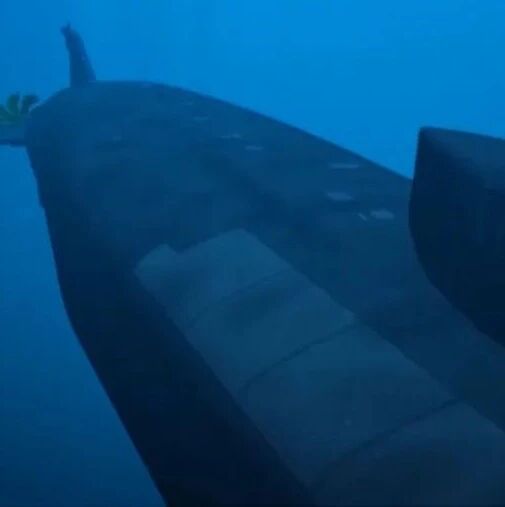
普京:“海燕”和“波塞冬”可保数十年战略平衡,俄军事核技术将用于建造月球基地
Mei Ri Jing Ji Xin Wen· 2025-11-05 07:33
Group 1 - The core message highlights the successful development of Russia's "Burevestnik" nuclear-powered cruise missile and "Poseidon" unmanned underwater vehicle, which are claimed to surpass all known missile systems in range and precision [2][3] - The "Burevestnik" missile features a unique small nuclear reactor that can be activated in seconds, while the "Poseidon" can operate at depths of up to 1,000 meters and is faster than modern surface vessels [2][3] - Both systems utilize advanced technologies that can be applied in various sectors, including small-scale nuclear energy, Arctic power plants, space exploration, and mining in remote areas [5] Group 2 - Russia's defense industry is reportedly making progress with the mass production of the "Zircon" medium-range missile and the upcoming testing of the "Sarmat" heavy intercontinental ballistic missile [5] - The U.S. lacks an effective missile defense system to intercept the "Burevestnik," necessitating a complete overhaul of its defense strategy to protect its territory [6] - The delivery of the "Patriot" air defense missile system from Germany to Ukraine enhances Ukraine's air defense capabilities, with a complete system costing over $1 billion [8]
普京:海燕“核动力巡航导弹射程”超过世界上所有已知导弹系统“!”海燕“和”波塞冬“可保数十年战略平衡
Mei Ri Jing Ji Xin Wen· 2025-11-05 07:15
Core Viewpoint - Russian President Putin emphasized the significance of the "Zircon" nuclear-powered cruise missile and the "Poseidon" unmanned underwater vehicle, stating that these weapons will ensure security and strategic balance for decades to come [1] Group 1: Weapon Systems - The "Zircon" missile has successfully completed tests, boasting a range that exceeds all known missile systems globally and high accuracy in strikes [1] - The "Poseidon" operates on new principles and algorithms that are expected to enhance the performance of unmanned devices [1] Group 2: Domestic Production - Both the "Zircon" missile and "Poseidon" utilize domestically produced materials, highlighting Russia's focus on self-sufficiency in defense technology [1] Group 3: Strategic Development - Russia is actively developing its nuclear and strategic capabilities, aligning with the efforts of other nuclear powers [1] - The ongoing projects in advanced weapon systems and modernization of the armed forces are being progressively realized [1]
普京:“海燕”和“波塞冬”两款武器装备可保数十年战略平衡
Xin Hua She· 2025-11-05 00:20
Core Points - Russian President Putin awarded developers of the "Zircon" nuclear-powered cruise missile and "Poseidon" unmanned underwater vehicle, stating these weapons will ensure security and strategic balance for decades to come [1] - The "Zircon" missile has successfully completed tests, boasting a range that exceeds all known missile systems and high accuracy, with a unique compact nuclear reactor that can start in seconds [1] - Russia has initiated the development of a new generation of nuclear-powered cruise missiles, potentially achieving speeds exceeding three times the speed of sound [1] - The "Poseidon" underwater vehicle utilizes advanced materials for underwater environments, allowing for high-speed travel and depths of up to 1,000 meters, and is faster than all modern surface vessels [1] - The "Poseidon" is equipped with a nuclear power system and can launch torpedoes with nuclear warheads [1] - The development of "Poseidon" and "Zircon" is interrelated, with technological innovations complementing each other, all utilizing domestically produced materials [1] Industry Applications - New technologies from these developments can be applied in small-scale nuclear energy utilization, Arctic power plant construction, deep space exploration, and powering heavy launch vehicles and future lunar stations [2] - These advancements can also benefit mining, underwater ocean exploration, power and heating for remote areas, shipbuilding, navigation, and the development of powerful computing systems and digital infrastructure [2] - Russia's plans for advanced weapon systems and modernization of its armed forces are progressing, with the "Hazel" medium-range missile entering mass production and deployment [2] - The "Sarmat" heavy intercontinental ballistic missile is set for combat testing this year and will officially enter service next year [2]
从“海燕”到“波塞冬” 俄密集官宣捷报有何考量?
Yang Shi Xin Wen· 2025-10-31 01:35
Core Points - Russia has successfully tested the "Poseidon" unmanned underwater vehicle, marking a significant advancement in its military capabilities [2][4] - The "Poseidon" is claimed to surpass the capabilities of Russia's most advanced "Sarmat" intercontinental ballistic missile, with unmatched maneuverability and depth capabilities [2][4] - The recent announcements of successful tests for both "Poseidon" and the "Tsirkon" nuclear-powered cruise missile signal Russia's ongoing technological innovations in its nuclear strike system [8] Summary by Sections Weapon Development - The "Poseidon" unmanned underwater vehicle can operate at depths of approximately 1,000 meters and achieve speeds of 100 to 130 kilometers per hour, making it difficult for traditional anti-submarine weapons to intercept [4] - It can carry nuclear warheads with a yield of up to one million tons, and its compact size allows for deployment on specially modified submarines [4] Strategic Implications - The successful tests of "Poseidon" and "Tsirkon" within a short timeframe are interpreted as a strong message to strategic adversaries, particularly in light of NATO's military exercises and the U.S. missile defense initiatives [8] - Analysts suggest that Russia's dual approach to its sea-based nuclear strike capabilities, combining traditional ballistic missiles with advanced unmanned systems, enhances its strategic deterrence [6] Political Context - The announcements come amid heightened tensions with NATO and the U.S., with Russia aiming to assert its strategic capabilities despite ongoing military pressures [8] - The Russian government emphasizes that these advancements are not intended to escalate tensions but rather to reinforce its position in international negotiations [10]
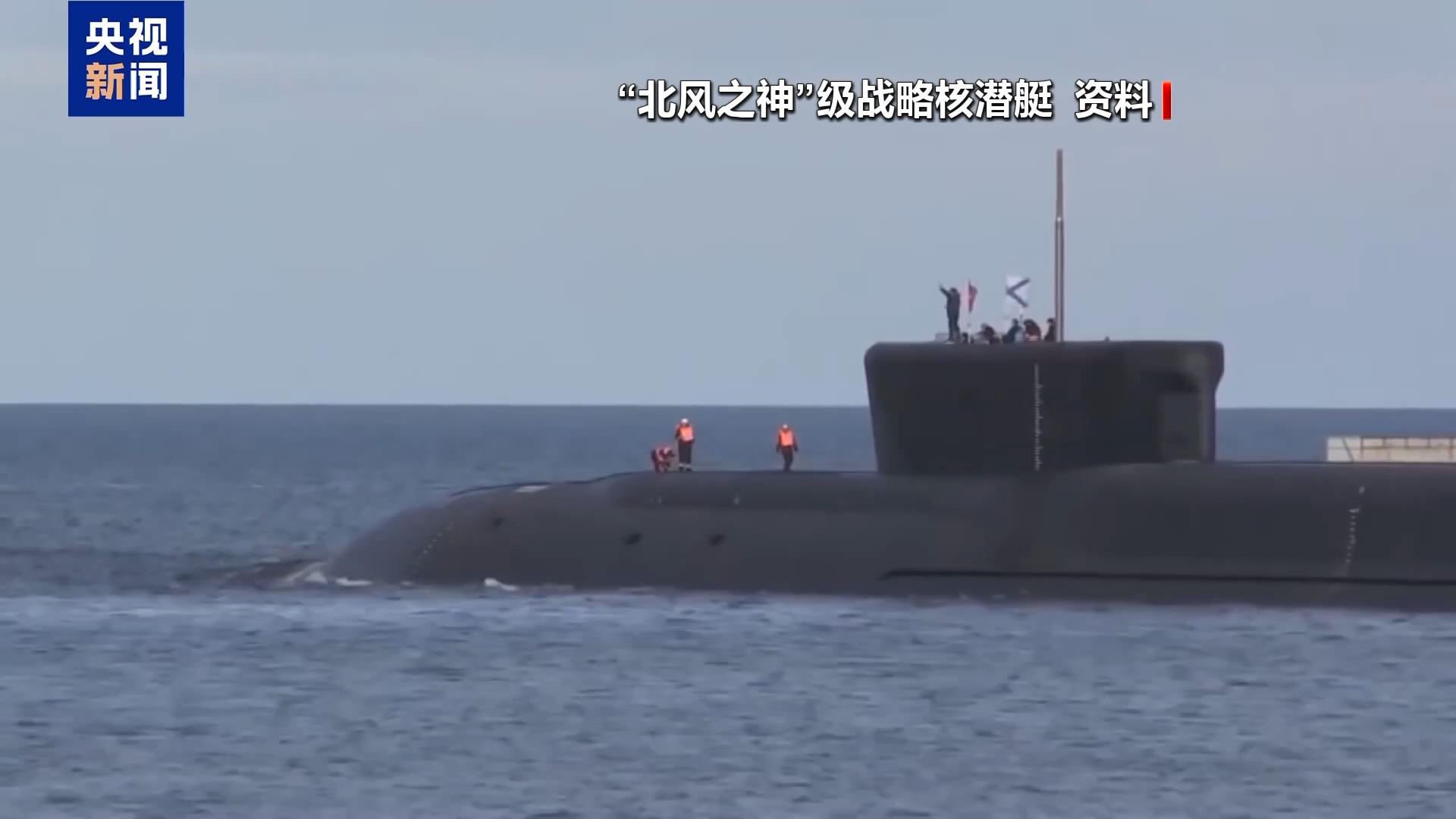
普京:“海燕”核动力巡航导弹启动时间短且射程无限
财联社· 2025-10-30 13:49
Core Points - Russia has successfully tested the "Burevestnik" nuclear-powered cruise missile, which has a short launch time and unlimited range [1][2] - The "Poseidon" underwater drone has also been tested, featuring a nuclear power system and successfully launched from a submarine [1][2] Group 1 - The "Burevestnik" missile's nuclear power system is comparable in power to a nuclear submarine reactor but is only one-thousandth the size [1] - The missile can be activated in seconds, unlike traditional nuclear reactors that require hours or days to start [1] - This technology may also be applied to the national economy, particularly for energy solutions in the Arctic and lunar exploration [1] Group 2 - The "Poseidon" underwater drone can travel at high speeds in deep sea and is capable of launching nuclear warhead-equipped torpedoes [2] - The successful launch of "Poseidon" from a submarine marks a significant advancement in underwater military technology [1][2] - The development of these technologies is crucial for enhancing and solidifying Russia's defense capabilities [1]

普京宣布:巨大成功!
中国能源报· 2025-10-30 10:53
Core Viewpoint - The successful testing of the "Poseidon" unmanned underwater vehicle equipped with a nuclear power system represents a significant breakthrough for Russia's military capabilities [1]. Group 1 - Russian President Putin announced the successful completion of tests for the "Poseidon" unmanned underwater vehicle, highlighting its nuclear power capabilities [1]. - The "Poseidon" vehicle is claimed to have unmatched speed and depth compared to any similar devices globally, indicating a technological edge [1]. - Putin emphasized that there are currently no comparable devices and that there is no quick way to surpass this technology in the near future [1].

普京:“海燕”核动力巡航导弹启动时间短且射程无限
Xin Hua She· 2025-10-30 04:39
Core Points - Russia has successfully tested the "Zircon" nuclear-powered cruise missile, which has a short launch time and unlimited range [1] - The "Poseidon" underwater drone has also been tested, marking the first successful launch from a submarine using a "starting engine" [1][2] - These advancements are aimed at enhancing Russia's strategic military capabilities and may also have applications in the national economy, particularly in energy security in the Arctic and lunar exploration [1] Summary by Category Military Advancements - The "Zircon" missile features a nuclear power system comparable to that of a nuclear submarine but is significantly smaller, allowing for rapid activation in seconds [1] - The "Poseidon" drone, equipped with a nuclear power system, can operate at high speeds and depths, making it currently unmatched and difficult to intercept [1] Strategic Implications - These developments are part of Russia's efforts to strengthen its defense capabilities and ensure national security [1] - The technologies developed may also be utilized for civilian purposes, such as energy solutions in the Arctic region and future lunar missions [1]
“巨大成功”!普京宣布重磅消息
券商中国· 2025-10-30 00:32
Group 1 - The core viewpoint of the article highlights the successful testing of the "Poseidon" unmanned underwater vehicle equipped with a nuclear power system, as stated by Russian President Putin, marking a significant breakthrough in military technology [1] - Putin emphasized that the speed and depth capabilities of the "Poseidon" vehicle are unmatched globally, suggesting that there are no comparable devices expected to emerge in the near future [1]
