
浴室柜及相关产品

Search documents
又要创造历史?特朗普下月或亲赴美最高法院“督战”
第一财经· 2025-10-16 07:08
Core Viewpoint - The article discusses President Trump's potential visit to the Supreme Court for a significant case regarding tariffs, emphasizing the importance of tariffs for national defense and economic stability [3][4]. Group 1: Legal Context - The Supreme Court is set to hear arguments on November 5 regarding Trump's request to overturn lower court rulings that determined he lacked the authority to impose tariffs under the International Emergency Economic Powers Act (IEEPA) [3][6]. - Trump's administration argues that the IEEPA grants the president the power to regulate imports in response to "any unusual and extraordinary threat," while opponents claim the law does not explicitly mention tariffs [6][7]. - Trump's chief lawyer contends that the Supreme Court has previously dismissed similar arguments and that decisions regarding national emergencies should be made by the president and Congress [6][7]. Group 2: Ongoing Tariff Actions - Despite the legal challenges, Trump continues to announce new tariffs, including a 100% tariff on imported brand-name drugs and a 50% tariff on cabinets and related products [7][8]. - The administration has also proposed a 25% tariff on heavy trucks to protect American manufacturers [7][8]. - Legal experts note that the Trump administration is rapidly advancing its tariff agenda, indicating a shift towards a dual-track tariff strategy regardless of the Supreme Court's decision [8].

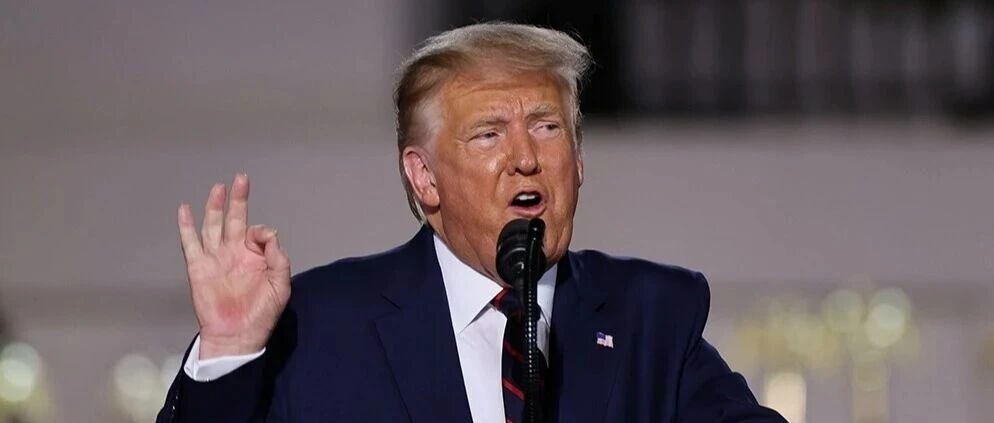
又要创造历史?特朗普下月或亲赴现场 “督战”最高法院关税案辩论
Di Yi Cai Jing· 2025-10-16 06:16
Group 1 - President Trump plans to attend the Supreme Court oral arguments regarding tariffs, emphasizing the importance of tariffs for national defense and security [1] - The Supreme Court is set to hear arguments on November 5 regarding Trump's request to overturn lower court rulings that found he lacked authority under the International Emergency Economic Powers Act (IEEPA) to impose tariffs [1][2] - The lower courts ruled that the power to impose tariffs belongs to Congress, and the appeals court allowed Trump's tariffs to remain in effect during the Supreme Court's review [1][2] Group 2 - Trump's administration argues that the IEEPA grants the president the authority to regulate imports in response to "any unusual and extraordinary threat," although plaintiffs contend that the law does not explicitly mention tariffs [2] - Trump's chief lawyer, John Sauer, argues that the Supreme Court has previously rejected similar claims and that the IEEPA has its own limitations [2] - Legal experts suggest that despite the ongoing Supreme Court case, Trump may continue to announce additional tariff measures [2][4] Group 3 - Trump has announced significant tariffs, including a 100% tariff on imported brand-name drugs, a 50% tariff on cabinets, and a 25% tariff on heavy trucks to protect U.S. manufacturers [3] - The administration's actions regarding tariffs have been described as unusually swift, with a recent decision to impose tariffs on copper made in just 144 days [4] - The law firm White & Case indicates that the Trump administration appears to be adopting a dual-track tariff strategy, suggesting that tariffs will remain a significant aspect of regulatory and enforcement actions in the foreseeable future [4]