海军装备

Search documents
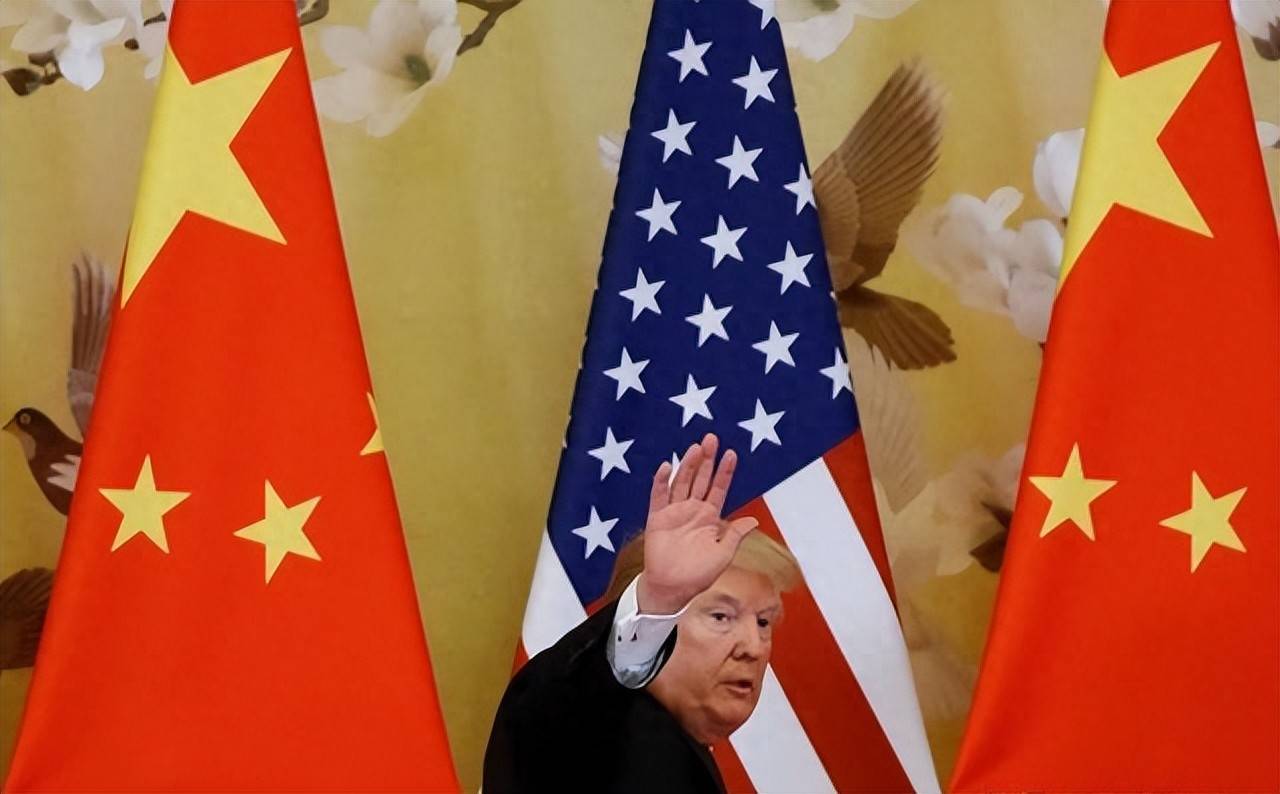
马年春节之际,美国给中国拜年,特朗普提台湾问题,放关键信号?
Sou Hu Cai Jing· 2026-02-21 07:22
Group 1 - The trade conflict between the US and China escalated significantly starting in early 2025, with the US imposing a 25% tariff on Chinese electronic devices and steel, leading to a total tariff amount reaching several hundred billion dollars [1] - In retaliation, China imposed tariffs on a range of US goods, including soybeans and corn, resulting in a direct drop of over 20% in trade volume between the two countries [1] - The economic impact was severe, with farmers in the US Midwest reporting losses and Chinese factories experiencing a significant decrease in orders, leading to stock market volatility and rising unemployment rates [1] Group 2 - By mid-2025, the US government began to reconsider its confrontational approach, recognizing that it could harm economic growth and affect voter support ahead of the 2026 elections [3] - High-level negotiations took place in October 2025 during the APEC summit in Busan, where both sides agreed to stabilize bilateral relations, with the US gradually reducing tariffs and China committing to increase purchases of US energy and agricultural products [3] - Following the negotiations, the Dow Jones index rose by 2%, indicating a positive market reaction to the easing of tensions [3] Group 3 - In December 2025, the US approved a military sales package worth $11.15 billion to Taiwan, which China strongly opposed, viewing it as interference in its internal affairs [5] - Despite a slight improvement in bilateral relations entering 2026, the US was reportedly considering an additional $20 billion in military sales, including upgrades to fighter jets and naval equipment, which raised alarms in China [5] - China reiterated that the Taiwan issue is a core interest and any military sales would negatively impact economic cooperation between the two nations [5] Group 4 - Amidst rising tensions, US diplomats released light-hearted videos to ease the atmosphere, which were well-received by the public and sparked discussions about improving relations [7][9] - President Trump indicated that he had communicated with China regarding the military sales, suggesting a potential for policy adjustment to stabilize relations ahead of his planned visit to China [9][10] - The situation remains complex, with the US using military sales as a means to counterbalance China, while Taiwan seeks international support through these purchases, and China maintains a firm stance on its territorial claims [10]

A股重大资产重组,获上交所受理!
券商中国· 2025-05-08 15:45
Core Viewpoint - The merger between China Shipbuilding and China Shipbuilding Industry Corporation is progressing, with the Shanghai Stock Exchange accepting the application for the issuance of shares to purchase assets, marking a significant step towards reducing industry competition and creating a global shipbuilding leader [5][7]. Summary by Sections Merger Announcement - On May 8, both China Shipbuilding and China Heavy Industry announced that the Shanghai Stock Exchange has accepted the application for China Shipbuilding to issue shares for asset acquisition [1][5]. Merger Details - The merger involves China Shipbuilding issuing A-shares to all shareholders of China Heavy Industry at a swap ratio of 1:0.1335 (adjusted to 1:0.1339), with share prices set at 37.84 yuan for China Shipbuilding and 5.05 yuan for China Heavy Industry (5.032 yuan after ex-dividend) [2][5]. Market Capitalization - As of May 8, China Shipbuilding's total market capitalization was 134.799 billion yuan, while China Heavy Industry's was 98.961 billion yuan, bringing the combined market cap to over 230 billion yuan [3]. Industry Context - The merger aims to eliminate overlapping business areas and reduce competition between the two companies, which are both subsidiaries of China Shipbuilding Group [7]. This consolidation is expected to enhance operational efficiency and protect the interests of minority shareholders. Global Positioning - The merger is anticipated to create a new leader in the global shipbuilding industry, with China expected to maintain its top position in three major shipbuilding metrics by 2024, accounting for 57.01%, 76.96%, and 66.54% of the global total [7]. Financial Performance - For 2024, China Shipbuilding is projected to achieve a revenue of 78.584 billion yuan, a 5.01% increase year-on-year, with a net profit of 3.614 billion yuan, up 22.21% [8]. China Heavy Industry is expected to report a revenue of 55.436 billion yuan, an 18.7% increase, and a net profit of 1.311 billion yuan, marking a return to profitability [8]. Strategic Importance - The merger is seen as a strategic move to strengthen the capabilities of both companies in the context of increasing demands for advanced naval equipment and national defense technology, positioning them as key players in China's maritime defense [9].