淮山面

Search documents
广货行天下|阳山淮山从“深山土特产”到“湾区金名片”
Nan Fang Nong Cun Bao· 2026-01-30 01:33
Core Viewpoint - Yangshan's specialty product, Huai Shan, has transformed from a "mountain product" to a "Bay Area gold card," showcasing its quality and market potential in the Guangdong-Hong Kong-Macao Greater Bay Area [10][11][90]. Group 1: Product Quality and Recognition - Yangshan Huai Shan has gained recognition as a national geographical indication product and has received multiple awards, including "Guangdong People's Favorite Specialty" and "National Green Food A-Level Product" [9][10][39]. - The current planting area of Yangshan Huai Shan is over 6,140 acres, with an annual output of 13,000 tons and a total output value of nearly 270 million yuan, making it a crucial support for the county's economy and rural revitalization [12][15][16]. Group 2: Agricultural Practices and Innovations - Yangshan emphasizes quality as the foundation for its brand, implementing eco-friendly planting techniques to enhance the growth environment, resulting in a 20% increase in the size of Huai Shan [30][31]. - The introduction of a standardized management model among cooperative farmers ensures that every Huai Shan meets high market standards [31][56]. Group 3: Market Expansion and Sales Strategies - The annual external sales of Yangshan Huai Shan reach 20 million pounds, with sales exceeding 80 million yuan, primarily targeting the Greater Bay Area market [65]. - The establishment of a local company to facilitate production and sales connections, along with embracing e-commerce and diverse marketing strategies, has significantly broadened sales channels [63][64]. Group 4: Future Development and Strategic Goals - Yangshan aims to continue leveraging the "Guangdong Goods Going Global" initiative to enhance the brand's recognition and market value, focusing on stabilizing planting areas and optimizing regional layouts [88][90]. - The integration of planting, processing, research, and tourism into a "Huai Shan+" economy is expected to promote deep integration of primary, secondary, and tertiary industries, positioning Huai Shan as a key player in rural revitalization [89][90].


福建明溪:一根淮山“链”出富民产业
Zhong Guo Xin Wen Wang· 2026-01-19 05:59
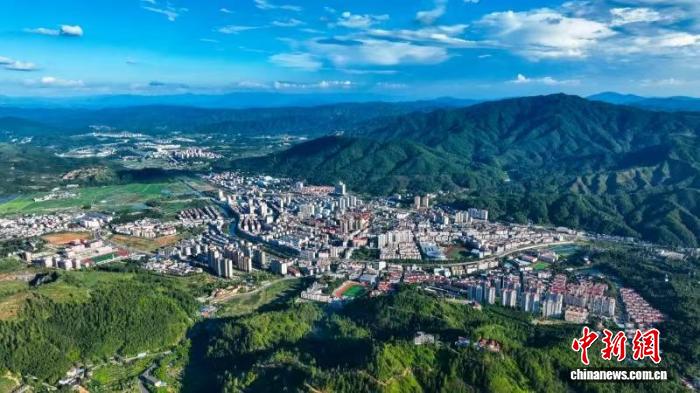
Core Viewpoint - The article highlights the development of the yam industry in Mingxi County, Fujian, as a key driver for rural revitalization, emphasizing the successful cultivation and marketing of high-quality yams. Group 1: Industry Development - Mingxi County is recognized as "the hometown of Chinese yams," with local authorities promoting yam cultivation as a distinctive leading product for rural revitalization [2]. - The main production area for yams is in Chengguan Township, where yams are considered the "golden product" for the "one village, one product" agricultural initiative [2]. - The yam planting area has reached over 1,000 acres, generating an annual output value of 20 million yuan [2]. Group 2: Community Engagement - The establishment of the Green Source Fruit and Vegetable Cooperative has facilitated the promotion of quality seedlings and provided technical support to local farmers [2]. - A "cross-village joint construction" model has been implemented, involving over 200 households from four villages, fostering collaborative development in yam cultivation [2]. Group 3: Economic Impact - Farmers in Chengguan Township, such as Chen Fugeng, anticipate significant income from yam cultivation, with projections of 70,000 yuan from six acres by 2025 [2]. - Local partnerships with companies like Mingxi Shengming Food Factory and Sanqing Agricultural Tourism Company have been established, leading to the procurement of approximately 4,000 pounds of yams annually, contributing over 100,000 yuan to villagers' income [3]. Group 4: Marketing and Sales - The township is actively engaging in online and offline sales channels, including e-commerce platforms and live streaming, to market "Lion Rock Yams" and their processed products to regions like Xiamen and Quanzhou [3]. - The processing of yams into products such as yam noodles, yam pastries, and yam rolls has effectively increased the added value of the products [3].
(乡村行·看振兴)福建明溪:一根淮山“链”出富民产业
Zhong Guo Xin Wen Wang· 2026-01-19 05:56
Core Viewpoint - The article highlights the development of the yam industry in Mingxi County, Fujian Province, emphasizing its role in rural revitalization and economic growth through cooperative farming and value-added processing [2][3]. Group 1: Industry Development - Mingxi County is recognized as the "Hometown of Chinese Yam," with local authorities promoting yam cultivation as a key industry for rural revitalization [2]. - The yam planting area in the region has reached over 1,000 acres, generating an annual output value of 20 million yuan [2]. - The establishment of the "Green Source Fruit and Vegetable Professional Cooperative" has facilitated the promotion of quality seedlings and technical support for farmers [2]. Group 2: Economic Impact - Farmers in the region, such as Chen Fugeng, anticipate significant income from yam cultivation, with projections of 70,000 yuan from 6 acres by 2025 [2]. - The cooperative model has transformed individual farming efforts into collective development, benefiting over 200 households in the area [2][3]. - Collaborations with local food processing companies have led to the production of yam-based products, enhancing the economic benefits for farmers [3]. Group 3: Marketing and Sales - The village has established long-term partnerships with local companies to purchase approximately 4,000 pounds of yam annually, contributing over 100,000 yuan to villagers' income [3]. - Efforts to expand sales channels include leveraging e-commerce platforms and live streaming to market "Lion Rock Yam" and its processed products to broader regions [3].